Why ribs are a different rub problem
Three things about a rack of ribs change what the seasoning has to do.
- Ribs are thin. A pork shoulder is a fist-thick lump that takes twelve hours; a rack of baby backs is an inch of meat on bone that is done in five. There is far less interior for seasoning to reach, so almost all of a rib rub’s work happens on the surface. That makes the bark ingredients — sugar, paprika, salt — proportionally much more important than they are on a big cut.
- Ribs cook in a narrow, low band. USDA’s own smoking guidance puts the smoker between 225°F and 300°F, and ribs are almost always cooked at the bottom of it. Sugar behaves perfectly well at 225–275°F. Push past roughly 300°F for a long stretch and it stops caramelizing and starts burning, which is the single most common way a sweet rub goes wrong.
- Ribs usually get sauced. And barbecue sauce is mostly sugar. A sweet rub under a sweet sauce is not automatically a mistake, but it is doubling down — and if you are going to glaze in the last half hour, a savory rub underneath gives the finished rack somewhere to go besides sweeter. Our BBQ sauce for ribs page covers the other half of that decision.
The four rubs on their makers’ ingredient statements
| Rub | Sugar | Flavor direction | Comfortable up to | Best rib use |
|---|
| Killer Hogs The BBQ Rub | Yes — brown sugar and sugar are first and second | Sweet and savory, mild heat | About 275°F | Classic unsauced or lightly sauced pork ribs |
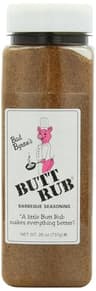
| Bad Byron’s Butt Rub | None in the maker’s stated blend | Savory, mildly smoky — onion, garlic, paprika, chipotle | Any rib temperature | Sauced ribs, or hot-and-fast cooks |
| Kosmos Dirty Bird | Yes — sugar second, brown sugar fourth | Sweet and spicy, red-pepper forward | About 275°F | Ribs you want heat on, and smoked wings |
| SuckleBusters SPG | A little — turbinado is fourth | Salt, black pepper, garlic; no heat | Any rib temperature | Beef ribs and dino ribs |
The “comfortable up to” column is our editorial read of the ingredient statements, not a figure any maker publishes. None of these four prints a maximum cooking temperature on the bottle. What they do publish is the ingredient order, and sugar near the top of a list is the thing that decides it.
Pork ribs or beef ribs? They want opposite rubs
Worth separating, because “ribs” covers two completely different cooks.
Pork ribs — baby backs, spares, St. Louis cut — are mild, fatty and cooked low. Sugar belongs here: it caramelizes into the bark, balances the smoke and it is why Kansas City-style ribs taste the way they do. Our baby back vs spare ribs guide covers which rack to buy; both take the same rub.
Beef ribs are the opposite animal in every sense. They are enormous, intensely beefy and cooked far longer, and sugar does them no favours — the Texas answer is salt, pepper and little else, which is exactly what SuckleBusters SPG is. If beef ribs are what you are cooking, buy that one and read how to smoke beef ribs instead.
How much rub, and when to put it on
More than you think, and not as far in advance as you have been told.
Pull the membrane first. The silverskin on the bone side of a rack will not take seasoning and will not render. Lift a corner with a butter knife, grab it with a paper towel and pull. This matters more than which rub you bought — our rib cooking guide walks through it.
Season both sides generously. A rack of ribs has a lot of surface for its weight, and under-seasoning is far more common than over-seasoning. You want an even coat where the meat is still visible through it, not a crust of powder.
Binder is optional. Yellow mustard, oil or a splash of water all work to make the rub stick, and none of them changes the taste of the finished rack. Skip it if you do not have it.
Timing: an hour, or overnight, with a caveat. Rub applied just before the cook works fine. Applied an hour ahead, salt starts drawing moisture to the surface and the rub turns tacky, which helps bark form. Overnight is a dry brine and it changes the texture of the meat — good on a shoulder, slightly more ham-like on a thin rack of ribs. We would not do it on baby backs.
Can you use the same rub on everything?
Mostly, yes, and if you own one bottle it should be a sweet-and-savory pork rub. Killer Hogs on ribs, on pulled pork, on chicken and on pork chops will serve you for a year of cooking without complaint.
Where one bottle stops working is at the two extremes: beef, which wants pepper and no sweetness, and high heat, where sugar is a liability. That is a two-bottle solution — a sweet rub and a savory one — and it is the shape of almost every experienced cook’s shelf. If you want to see how that logic plays out across every cut rather than just ribs, the general rub roundup is the page for it.
And none of this makes ribs tender. Rub is flavor; tenderness is time and temperature, and ribs are done when they pass the bend test rather than when a clock says so. USDA lists 145°F as the safe minimum for pork with a three-minute rest, and ribs go a long way past that for texture — the difference USDA itself calls doneness versus safety.