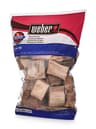
Apple: mild, sweet, and hard to overdo
Apple is a fruit wood, and it smokes exactly the way that sounds: light, slightly sweet, and clean, with none of the heavy bite that stronger woods can leave. Its best quality for a beginner is how forgiving it is — you can run apple for hours and it is very difficult to make food taste over-smoked. That takes the fear out of your first cooks, because the usual beginner mistake, drowning good meat in harsh smoke, is almost off the table.
Apple shines on pork and poultry, where its sweetness plays into the meat rather than fighting it: think pork loin, chops, chicken and turkey. It is also a smart choice for a first brisket, because it lets you learn the cook without a strong wood taking over. The one honest downside is that on very long cooks or big beef cuts, some people find apple alone a little too subtle — which is exactly where hickory comes in.
Hickory: bold, classic, and easy to overdo
Hickory is the wood most people picture when they think “barbecue.” It is strong, savory and slightly bacon-like, and it gives that deep, traditional Southern smoke flavor that a lot of us are chasing in the first place. Used well, it is superb. The catch is right there in its strength: hickory is easy to overdo, and too much of it turns bitter and acrid in a hurry, especially on longer cooks.
That boldness makes hickory a natural on ribs, pulled pork and beef, cuts with enough fat and flavor to stand up to a stronger smoke. The trick is restraint: use less than you think you need, add wood early rather than constantly, and let the smoke do its work over the first few hours. Treated with a light hand, hickory is what makes a rack of ribs taste like the real thing.
Which wood for which meat
Here is the quick version, keeping in mind these are starting points, not rules — taste is personal, and half the fun is finding your own.
| Meat | Apple | Hickory |
|---|
| Pork (chops, loin) | Excellent — sweet and gentle | Good — classic, go light |
|---|
| Poultry | Excellent — won’t overpower | Use sparingly |
|---|
| Ribs | Nice and mild | Classic choice |
|---|
| Pulled pork | Mild, sweet result | Traditional, bold |
|---|
| Beef (brisket, ribs) | Good for a first cook | Excellent — stands up to it |
|---|
Can you mix apple and hickory?
Yes, and it is one of the best moves a beginner can make. Blending the two gives you hickory’s classic backbone with apple’s sweetness rounding off the edges, so you get real barbecue flavor without the risk of it turning harsh. A 50/50 mix is a great starting point; if you want it milder, tilt toward apple, and if you want more punch, add a little more hickory. Using apple to soften hickory is a classic way to enjoy a bold wood while you are still learning how much smoke you like.
Start mild and work toward bold
Smoking woods sit on a spectrum from mild to strong: fruit woods like apple and cherry at the gentle end, hickory and oak in the middle, and mesquite at the aggressive end. The single most useful habit for a beginner is to start mild and work up. It is easy to add more smoke on your next cook; you cannot pull it back out of a brisket you have already over-smoked. Beginning with apple, then trying an apple-hickory blend, then straight hickory, teaches your palate what each wood does without wrecking any dinners along the way.
Chase thin blue smoke, whichever wood you use
One rule matters more than which wood you pick: aim for thin, wispy blue smoke rather than thick white or gray clouds. Billowing white smoke is what makes food taste bitter, and it will overdo even mild apple, while clean thin smoke lets bold hickory behave. Keep your fire getting enough air, add a sensible amount of wood rather than burying the coals, and hold the smoker in the USDA-recommended 225–300°F range. One more practical note before you buy: apple and hickory both come as chunks for charcoal smokers and chips for electric ones, so match the format to your smoker — our wood chips vs chunks guide explains which you need.