How Much Meat Per Person for BBQ?
Every answer you will find to this is somebody's rule of thumb. This one shows its working: USDA's measured cooking yields, a clearly labeled serving assumption, and an honest account of the part nobody has measured.
How this is funded:we earn a commission if you buy through our links, at no extra cost to you. It never changes which smoker we recommend, and we’ll tell you when we’d skip one. Full disclosure.
Here is the short version, and then the working, because the working is the reason to trust the short version.
Plan on 1/3 lb of finished meat per adult with sides, and buy roughly twice that in raw weight. Ten people, one meat, sides on the table: about 3.5 lb finished, so buy 7 lb raw. That is the answer. What follows is which parts of it are measured, which parts are convention, and how to adjust it for your own table rather than taking a stranger’s number on faith.
The two numbers, and where each one comes from
Every answer to this question is really two numbers multiplied together, and almost nobody separates them. They have completely different standards of evidence behind them.
Number one: how much finished meat a person eats
This is our assumption, not a published standard. No food authority publishes a barbecue portion size, and we are not going to dress one up as though they had. What we use, and what you are free to change:
- 1/3 lb (about 5 oz) of finished meat per adult when there are sides and it is a normal meal.
- 1/2 lb (8 oz) per adult when the meat is basically the whole event, or the crowd is hungry, or you want leftovers.
- 1/4 lb per sandwich, if you are serving it on buns with slaw and pickles doing some of the work.
- Small children at half an adult; teenagers at a little over one.
If your friends eat more than that, use a bigger number. The point of showing the arithmetic is that you can.
Number two: how much weight the cut loses
This half has actually been measured, by USDA’s Agricultural Research Service, which published a Table of Cooking Yields for Meat and Poultry recording how much weight cuts lose to moisture and fat under defined cooking protocols. These are the real figures, with sample sizes:
| Cut, as USDA describes it | Method | Cooking yield | Range |
|---|---|---|---|
| Beef, brisket, flat half, lean and fat, trimmed to 1/8″ fat | Braised | 69% (n=20) | 65–76% |
| Pork, fresh, shoulder, arm picnic, lean and fat | Braised | 74% (n=12) | 70–78% |
| Pork, fresh, spareribs, lean and fat | Baked or roasted | 76% (n=12) | 68–79% |
| Pork loin, back ribs, bone-in, lean and fat | Baked or roasted | 82% (n=12) | 74–90% |
| Turkey, from whole, non-enhanced, dark meat with skin | Roasted | 69% (n=1) | Not published |
| Turkey, retail breast, non-enhanced, with skin | Roasted | 72% (n=1) | Not published |
Why the real-world number is worse than USDA’s
Read those figures and you would expect to buy 1.4 lb raw for every pound finished. In practice everyone who cooks barbecue plans closer to 2 lb. That gap is not USDA being wrong — it is USDA measuring a different thing, and it is worth being precise about what.
USDA measured cooking loss, on the cut as prepared for the protocol. It did not measure:
- Trimming. A whole packer brisket arrives with a fat cap that you cut down to about a quarter inch before it goes on, and that is pounds of weight leaving before cooking even starts. USDA’s brisket figure begins with a flat already trimmed to 1/8″.
- Bone. A pork butt has a blade bone in it and a rack of ribs is mostly bone by weight. None of that arrives on a plate.
- Rendered fat you discard. Twelve hours at 250°F renders far more intramuscular fat than a braise does, and on pulled pork most of it is pulled out and thrown away.
- The barbecue cook itself. USDA braised and roasted. Nobody has published a measured yield for a twelve-hour smoke, so we are not going to quote one.
So: the 50% planning convention is a convention, clearly labeled. What USDA’s table gives you is the floor — proof that cooking alone takes roughly a quarter to a third of the weight, before you have removed a single bone. The rest of the gap is trim and bone, which varies by how your butcher cut it and how aggressively you trim, and which is exactly why a single universal number was never going to be honest.
The planner
Finished weight first, then raw. Adjust the per-person figure to your crowd before you use it.
| People | Finished meat (at 1/3 lb each) | Raw to buy (bone-in, fatty cuts) | In practice |
|---|---|---|---|
| 4 | 1.3 lb | ~3 lb | A small butt, or one rack of ribs plus sides |
| 8 | 2.7 lb | ~5–6 lb | One pork butt, or two racks of ribs |
| 12 | 4 lb | ~8 lb | One large butt, or a brisket flat |
| 20 | 6.7 lb | ~13–14 lb | Two butts, or one whole packer brisket |
| 30 | 10 lb | ~20 lb | Three butts, or a packer plus a butt |
Two adjustments worth making. If you serve two meats, do not double the total — split the same total between them, because people take some of each rather than a full portion of both. And ribs are planned by rack: half a rack per adult with sides, a full rack if ribs are the whole event. Bone weight makes pounds a near-useless unit there.
Now check it fits in the cooker
This is where the arithmetic meets reality, and it is the step people skip until the morning of. Two 8 lb pork butts need more grate than one, and 20 lb of meat is a different cooker to 5 lb. Our smoker sizing guide turns pounds into square inches, and if the answer is that your smoker is too small, the fix is usually two smaller cuts rather than one huge one — they also cook faster.
USDA’s guidance to leave room for air rather than packing a cooker solid applies here too: a smoker crammed edge to edge cooks unevenly, because the hot air has nowhere to move.
What changes when you scale a cook up
Cooking 20 lb of meat is not the same job as cooking 5 lb, and three specific things get harder. These are the picks that address them, chosen from published specs and honest fit (how we pick), with prices pulled live.
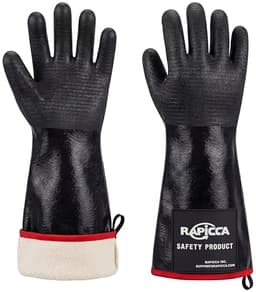
RAPICCA 932°F Heat-Resistant BBQ Gloves (14-inch)
Two 8 lb pork butts have to come off a hot cooker and then be pulled by hand while they are still hot enough to shred properly. Long-cuffed heat gloves turn the most awkward part of cooking for a crowd into a two-minute job, and they are the thing nobody owns until the first time they need them.
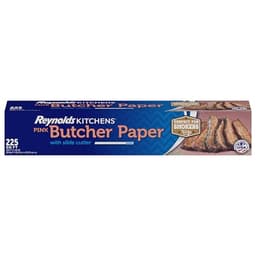
Reynolds Kitchens Pink Butcher Paper with Slide Cutter (225 sq ft)
A big cook is a lot of wrapping — through the stall, and again to rest and hold everything while the last piece finishes. The larger roll is the one to own if you are cooking for twenty rather than four; Reynolds is also the only maker here that publishes a temperature recommendation at all.

Inkbird WiFi & Bluetooth 6-Probe Thermometer
Two butts and a brisket do not finish together, and a single probe tells you about one of them. Six probes means every piece plus the pit, so you pull each one when it is actually ready rather than when the biggest one is.
Price as of September 17, 2026. #ad How we’re funded
Finish early, then hold
The last piece of crowd-cooking advice is a scheduling one and it is worth more than any of the arithmetic above. Plan the cook to finish two hours early, then hold it. Wrapped and insulated, a pork butt or a brisket stays hot and gets better for hours — see how to rest smoked meat for the safe way to do it.
The alternative is thirty people standing in your kitchen while you stare at a brisket that has decided to stall for another ninety minutes. Every experienced cook has done this exactly once.
A note on food safety. Temperatures on this page follow USDA safe-minimum guidance. Always confirm doneness with a food thermometer, not by time or color. We’re enthusiasts sharing what we’ve researched, not professional pitmasters — when in doubt on safety, follow the USDA.
Frequently asked questions
How much pulled pork per person?
Plan on about 1/3 lb (5 oz) of finished pulled pork per adult when there are sides, or 1/2 lb if it is the only thing on the table. Working back from that: a bone-in pork butt loses weight to cooking, to bone and to fat you pull out, and the widely used planning convention is that you buy roughly twice the finished weight you want. So 12 adults at 1/3 lb each is about 4 lb finished, which means buying an 8 lb butt. The doubling is a convention, not a measured figure — we explain exactly which part of it USDA has measured and which part nobody has.
How much brisket per person?
The same serving assumption — about 1/3 lb finished per adult with sides — and the same doubling convention, because a whole packer loses a great deal to trimming and rendered fat on top of the cooking loss. For 10 people that is roughly 3.5 lb finished, so a 7 to 8 lb brisket, or a 12 lb packer if you want leftovers. USDA's measured figure for a brisket flat is a 69% cooking yield, but that measurement starts from a trimmed flat, not from the untrimmed packer you carry home.
How many ribs per person?
Plan by rack, not by pound — it is the one cut where the bone makes weight almost useless as a planning unit. Half a rack per adult as part of a meal with sides, a full rack if ribs are the whole event and your guests are enthusiastic. A rack of St. Louis spare ribs has 11 to 13 bones, so half a rack is five or six ribs, which is a generous portion alongside anything else.
Does raw weight or cooked weight matter more?
You plan in cooked weight and you shop in raw weight, and the gap between them is the entire problem. USDA's Agricultural Research Service has actually measured the cooking half of that gap — a brisket flat comes out at 69% of its raw weight, a pork picnic shoulder at 74% — but those measurements do not include the fat you trim off before it goes on, or the bone you take out afterwards. Which is why the practical convention runs closer to half, not three-quarters.
How much meat do I need for 20 people?
Using the assumptions on this page — 1/3 lb finished per adult with sides — 20 people is about 7 lb of finished meat, which means buying roughly 14 lb raw of a bone-in, fatty cut like pork butt or a whole packer brisket. In practice that is two 7 lb pork butts or one large packer. If you serve two meats, do not double it: split the same total between them.
Should I cook extra?
A little, and less than you think. Smoked meat reheats extremely well, so leftovers are a feature rather than waste — but every extra pound is more fuel, more time and more cooker space, and running out is the only genuinely bad outcome. Adding 20% to the figure you calculate covers a heavier-eating crowd without turning a six-hour cook into a ten-hour one.
Do kids and teenagers count as adults?
Treat young children as half an adult and teenagers as slightly more than one. That is a planning convention rather than data, and it is the sort of adjustment the arithmetic on this page is designed to let you make yourself rather than hiding it inside a single number.
Where do the numbers on this page come from?
The cooking yields are measured figures from USDA's Agricultural Research Service Table of Cooking Yields for Meat and Poultry, cited in our sources. The serving size per person and the raw-to-finished doubling are stated conventions, labeled as ours on the page rather than presented as data — because no authority publishes a barbecue portion size, and we would rather say so than invent a citation for it.
Sources
- USDA ARS — Table of Cooking Yields for Meat and Poultry (Release 2) — USDA Agricultural Research Service measurements of how much weight cuts of meat and poultry lose to moisture and fat during cooking, under defined laboratory protocols. Figures quoted on our page, read from the Release 2 data table downloadable here: beef brisket flat half trimmed to 1/8 inch fat, braised — 69% cooking yield (n=20, range 65-76%); pork shoulder arm picnic, braised — 74% (n=12, range 70-78%); pork spareribs, baked or roasted — 76% (n=12, range 68-79%); pork loin back ribs bone-in, baked or roasted — 82% (n=12, range 74-90%); turkey from whole, non-enhanced, dark meat with skin, roasted — 69%; turkey breast retail part, non-enhanced, with skin, roasted — 72%. These are cooking losses only, measured on the cut as prepared for the protocol — they are NOT barbecue yields and do not account for trimming or bone (accessed September 18, 2026)
- USDA FSIS — Smoking Meat and Poultry — USDA guidance to keep the smoker between 225°F and 300°F, use two thermometers (food + smoker), and refrigerate within 2 hours (accessed July 22, 2026)
- USDA FSIS — Safe Minimum Internal Temperature Chart — USDA safe minimum internal temperatures: 145°F for beef/pork/lamb steaks, chops and roasts (with a 3-minute rest), 160°F for ground meats, 165°F for all poultry (accessed July 22, 2026)
Keep reading
What Size Smoker Do I Need?
Once you know how many pounds you are cooking, this turns it into the square inches you need to buy.
Size your smokerHow to Smoke Pulled Pork
The cut this question gets asked about most, and the most forgiving thing to cook for a crowd.
Cook a pork buttHow to Rest Smoked Meat
How to finish early and hold it safely for hours — which is how you cook for a crowd without panicking.
Hold it properlyCost to Run a Smoker
The same honest-arithmetic treatment applied to fuel, from published figures rather than guesses.
See the numbers