The three specs that decide it
- A low temperature floor. Fresh links are usually started gently so the casings dry and take smoke before the fat begins to render. A cooker whose lowest usable setting is 225°F does the whole cook in one gear. This is the spec almost nobody publishes, and the reason the Pit Boss leads this page.
- Height, not floor area. A link is long and wants to hang. A tall cabinet with removable racks lets you run rods across the top; a drum hangs food from hooks by design. A wide shallow grill is the wrong shape no matter how many square inches it claims.
- Volume. Twenty pounds of sausage is a normal batch. Four racks at 960–983 square inches is a different proposition from a two-grate bullet smoker.
The picks against what their makers publish
| Cooker | Fuel | Published range | Published area | How sausage goes in |
|---|
| Pit Boss 3-Series Gas | Propane | 100–300°F | 983 sq in, four racks | On racks, or hung from a rod with racks removed |
| Masterbuilt ThermoTemp 40 | Propane | Not published | 960 sq in, four racks | On racks; thermostatic gas valve holds the number |
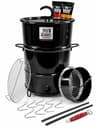
| Pit Barrel Cooker 18.5 | Charcoal (hanging) | 275–310°F expected (maker) | Not published | Hooks and rods — the method, built in |
| Masterbuilt 30-inch Digital | Electric | Up to 275°F (no floor published) | 710 sq in, four racks | On racks; side chip loader |
| Dyna-Glo Vertical Offset | Charcoal | Not published | Not published | Tall body, lots of rack space for the money |
The Pit Barrel is the honest contradiction on this page, and it is here anyway. Pit Barrel states an expected range of 275–310°F when the cooker is properly lit, which is too hot to start snack sticks gently — there is one vent and you do not get to choose. What it is superb at is fresh links: they hang from the hooks it ships with, drippings fall on the coals and come back as smoke, and a batch is done in well under an hour. Pit Barrel publishes capacity by the rack of ribs rather than by the pound of sausage, so we are not going to convert it for you.
Hanging versus racking
Hanging is the traditional method for a reason: a hanging link dries evenly on every side, keeps its round shape and never develops the flat, pale contact stripe a grate leaves. On a drum, hanging is the only option. On a tall gas or electric cabinet you can usually pull the top rack, slide a stainless rod across the rack supports and hang links from butcher’s hooks — which is why cabinet height matters more than the square-inch figure makers advertise.
Racking works perfectly well, with two habits. Turn the links once so both sides see the same heat, and leave a finger of space between them so smoke can circulate — crowded links steam each other and come out grey. If you are going to turn them, use a long pair of tongs rather than a fork; whether to flip meat in a smoker covers why sausage is one of the few cases where the answer is yes.
The temperature the cook actually ends on
Whatever you start at, the finish is a number rather than a time. USDA lists the safe minimum internal temperature for ground meats at 160°F, and all poultry — including poultry sausage — at 165°F. Sausage is ground meat, so the surface bacteria of the original cut are now distributed throughout the link, which is exactly why it does not get the lower whole-cut treatment.
Check it with a thermometer and not by cutting a link open, which dumps the juice you are trying to keep. USDA is plain that a food thermometer is the only reliable way to know food has reached a safe temperature; a thin instant-read probe suits a sausage better than a thick one because it leaves a smaller hole. Our thermometer roundup covers what to buy.
And do not prick the casings to “let the fat out.” That is the single most common way home-smoked sausage ends up dry, and our smoked sausage guide walks through the cook properly, including the fresh-versus-pre-cooked distinction that changes everything about the timing.
What we are not claiming
None of these cookers is a dedicated sausage smoker with a published low-temperature program, a humidity control or a cold-smoke attachment, and we have not run twenty pounds of links through any of them. What we have done is read what each maker publishes about range, racks and capacity and sorted on the two specs sausage genuinely cares about. Here is exactly how we pick.
For more on the gas cabinets above, the Masterbuilt MPS 230S review covers the smaller, simpler propane smoker in the same family — a sensible first cabinet if a 983 sq in box is more than you need.
If you are buying a first smoker generally and sausage is only one of the things you want to cook, start with best smokers for beginners instead — and if capacity is the real driver, our large-family roundup sorts cookers purely on published square inches.