Chips, not chunks — and this is not a preference
A chunk is a fist-sized piece of hardwood. It needs a real fire under it to smolder, which is why chunks belong on charcoal. An electric smoker does not have a fire; it has a rod that gets hot. Put a chunk in a chip tray and you will mostly get a warm piece of wood and a very disappointed cook three hours later.
Chips are cut small enough to start smoldering off radiant heat alone, which is exactly what a tray over an element provides. The trade is lifespan: a tray of chips is spent in well under an hour, which is why our chip-reloading guide lands on roughly every 45 to 60 minutes. If you want the full argument about the two formats, including which cookers take which, that is in wood chips vs chunks.
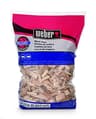
Two of the five bags below — both Western listings and the Jack Daniel’s — name electric smokers outright on the listing. The two Weber bags do not name a cooker type at all. That is a labeling difference, not a performance one: chips are chips, and Weber sells the same species as chunks under a separate SKU for people with charcoal.
What actually matters when you buy chips
Four things, in the order they affect your cook:
- Format.Chips. See above. The single most common reason a new electric-smoker owner gets no smoke is wood that is too big for the heat available — one of the seven causes in our no-smoke troubleshooting guide.
- Species. Mild fruit woods (apple, cherry) are very hard to overdo. Hickory and mesquite are strong enough to ruin chicken if you are heavy handed. Oak sits in the middle. That is genuinely the whole hierarchy.
- Pack size, matched to how sure you are. A two-pound bag is a few cooks. A four-bag multipack is a season of one flavor. Buying the multipack before you know what you like is the most common way to end up with a shed full of mesquite.
- Whether the bag is sold by weight or by volume.This one is a trap. Weber sells by the pound; Western and Jack Daniel’s sell by the cubic inch. The two numbers cannot be compared, so a “bigger” bag may not be, and neither maker publishes the other figure.
What does notmatter: premium-sounding adjectives. Nothing on this shelf publishes a moisture content or a chip dimension, so phrases like “all natural” and “flavorful” are unfalsifiable. Western’s “heat treated” claim is the closest thing to a real statement any of these bags makes, and even that is a statement about kiln drying rather than a measurement.
The five bags on published figures
| Chips | Wood | Strength | Pack (as published) | Names electric smokers? |
|---|
| Weber Apple | Apple | Mild | 2 lb (by weight) | No |
| Western Variety Pack | Apple, cherry, hickory, mesquite | Mild to very strong | 4 bags | Not on the title |
| Weber Hickory | Hickory | Strong | 2 lb (by weight) | No |
| Western Hickory 2-pack | Hickory | Strong | 2 × 180 cu in (by volume) | Yes — charcoal, gas and electric |
| Jack Daniel’s Barrel Oak | Oak (used whiskey barrels) | Medium | 4 × 180 cu in (by volume) | Yes — charcoal, gas and electric |
Species, pack size and cooker wording are read from each listing’s own title on 2026‑10‑19. “Strength” is our editorial read of how assertive each wood is, not a published figure — no maker on this page rates its own wood.
How long does a bag actually last?
This is the question nobody answers, so here is the arithmetic rather than a claim. A tray takes about half a cup to a cup of chips, and you reload roughly every 45 to 60 minutes for the first three or four hours of a cook — after that the meat stops taking on much smoke and you can stop feeding it.
Call it four loads of three-quarters of a cup, so roughly three cups of chips for a full smoke phase. A 180-cubic-inch bag works out at about twelve and a half cups by straight unit conversion, which is somewhere around four cooks per bag. The Weber bags are sold by weight and no volume is published for them, so the same sum cannot honestly be done — we are not going to invent a density for wood chips.
The practical consequence: a single two-pound bag is a trial, not a supply. If you smoke most weekends you will go through chips faster than you expect, which is the real argument for the multipacks — and the real argument against buying a multipack of a wood you have not tasted yet.
Which wood for which meat
Short version, for a cabinet smoker where the smoke is lighter than a charcoal cooker’s to begin with:
- Pork shoulder and ribs— hickory, or apple if you want it gentler. Both work; hickory is what most people mean when they say it tastes like barbecue. More in best wood for pork and best wood for ribs.
- Chicken and turkey— apple or cherry. Poultry takes smoke quickly and a strong wood turns it bitter. See best wood for chicken.
- Beef and brisket— oak or hickory. Beef can take a heavier wood than anything else you will cook; best wood for brisket goes deeper.
- Fish — alder or a fruit wood, always light. Best wood for salmon covers it.
If you are still choosing between species in the abstract, our wood guide for beginners is the better starting point than any single bag.
Three things not to pay for
Soaking. Do not soak chips, and do not pay extra for chips sold as pre-soaked or extra-moist. Water has to boil off before wood can smolder, which cools the tray and delays smoke rather than extending it. Our chips versus chunks guide takes the soaking myth apart properly.
Overfilling.Packing the tray does not buy you a longer smoke; it smothers the chips underneath, which then smolder dirty. A dirty smolder is the acrid flavor people blame on cheap wood. Half a cup to a cup, clean smoke — see thin blue smoke for what you are aiming at.
Flavor-infused novelty chips. Whiskey barrel oak is the one exception on this page, and it is a real one: the wood genuinely came from barrels. Chips sprayed with a flavoring are a different thing, and none of them publishes what the flavoring is.
If reloading the tray is the part you hate
It is a legitimate complaint. Four reloads across a brisket means four trips outside, and on many cabinets it means opening a door and dumping heat. Two ways out, neither of which involves different chips:
- A smoke tube.Fill it with pellets, light one end and it smolders for hours with no reloading at all — and it works inside an electric cabinet. Our smoke tube roundup ranks them.
- Use the side loader. Most digital cabinets have a chip loader tube so you can feed the tray without opening the main door. If yours does, use it; if it does not, batch the job with spritzing or wrapping.
And if you are not sure an electric smoker is the right cooker for you at all, that question is answered properly in our electric smoker roundup and in pellet vs electric, where the reloading chore is one of the deciding factors.
A note on temperature, because wood does not change it
Whichever bag you buy, the cooker still needs to run in USDA’s 225–300°F smoking band, and the food still has to reach a safe internal temperature — 165°F for poultry, 145°F with a three-minute rest for whole cuts of pork and beef. Smoke flavor is a seasoning decision. Doneness is a thermometer decision, and the two are unrelated: see best meat thermometers if you are still cooking by time.