What makes a sauce work on ribs specifically
Three properties, in this order.
- It has to cling. A rack of ribs is a nearly vertical surface once it is standing on its bones, and anything watery ends up in the drip pan. Tomato paste, corn starch and xanthan gum are the ingredients that do this work; if none of them appear on the label, the bottle is a mop sauce, not a glaze.
- It has to set, not burn. Sugar is what turns a brushed-on coat into a lacquer, and sugar is also what blackens. Where the sweetener sits on the ingredient list tells you how much margin you have.
- It has to taste like something. Ribs are not subtle. A sauce that reads as nothing more than sweet ketchup on a sandwich tends to disappear completely against smoke and a pork rub.
What each maker states is in the bottle
Ingredients are listed in descending order by weight, so the position of the sweetener is the single most useful thing on the label. Here is what these four makers publish.
| Sauce | Body | Where the sweetener sits | Size | Allergens (maker) |
|---|
| Killer Hogs The BBQ Sauce | Thick — tomato paste plus modified corn starch and xanthan gum | First (brown sugar), plus HFCS further down | Two 16 oz bottles | Contains anchovies (fish) via the Worcestershire |
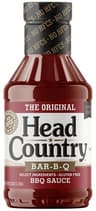
| Head Country Original | Medium — not published online | Not published online; maker states no HFCS | 20 oz | Maker states gluten free and free of allergens |
| Stubb’s Original | Thin — tomato puree and vinegar lead | Third (sugar), no HFCS | 36 oz on this listing | Maker states gluten free, non-GMO, kosher |
| Cattlemen’s Carolina Tangy Gold | Medium, mustard-based rather than tomato | Second (sugar), plus corn syrup | 18 oz | Declares wheat and soybeans (soy sauce) — not gluten free |
Two honest notes on that table. Head Country does not publish an ingredient statement online at all — it is on the bottle only — so its row is thinner than the others and we are not going to fill the gap with a guess. And the Killer Hogs sauce contains anchovies through its Worcestershire, which is a genuine problem if you are cooking for someone with a fish allergy and exactly the sort of thing nobody checks until it matters.
The last-30-minutes rule
Almost every burnt, bitter rack of ribs comes from sauce going on too early. Brush it on for the final 20 to 30 minutes of the cook and no longer. That is enough time for the sugars to tack up and go glossy, and not enough for them to carbonize.
Two coats beat one thick coat. Brush a thin layer, give it ten minutes, brush again. If you want the glaze tighter than the smoker can make it, the usual move is a short, hot finish — and that is the one moment where the thinner, sugar-third Stubb’s bottle is genuinely safer than the thick sweet one. Warming the sauce first also helps it brush out thinly instead of sitting in blobs.
One food-safety point that catches people out: if you have been using a bottle as a mop while the ribs cook, do not pour the leftovers into a serving bowl. Sauce that has been in contact with a brush that touched undercooked pork needs to be boiled before it goes on the table, or set aside clean at the start.
Sauce is optional, and the rub is not
Competition ribs are glazed; Memphis dry ribs are not sauced at all, and plenty of people prefer them. If your ribs have been disappointing, sauce is rarely the fix — the rub, the cooker temperature and the bend test matter far more. Our step-by-step rib guide walks through the cook itself, and our best BBQ rub for ribs covers the bottle that does the heavy lifting underneath any glaze — and makes the case that if you are saucing, the rub below it should probably be the savory one rather than another sweet layer.
If you are shopping for the cooker rather than the bottle, our best smokers for ribs page sorts cookers on rack length and the ability to hold a steady 250°F, which is what a rack of ribs actually needs. And if you would rather dress pulled pork than glaze ribs, the general sauce roundup has a vinegar bottle that is a much better match for shredded shoulder.