Can You Smoke Frozen Meat?
You can put frozen meat in a smoker and it will eventually cook. The question is whether a cooker running at 225°F is a safe or sensible way to thaw something — and for anything thicker than a burger, the answer is no.
How this is funded:we earn a commission if you buy through our links, at no extra cost to you. It never changes which smoker we recommend, and we’ll tell you when we’d skip one. Full disclosure.
Do not smoke frozen meat. Thaw it in the refrigerator first, and if you are out of time, use cold water and cook it immediately. This is not a quality preference; it is the one shortcut low-and-slow genuinely does not forgive, and the reason has nothing to do with the meat. It is the temperature of the cooker.
USDA’s smoking guidance keeps a smoker between 225°F and 300°F. That is a wonderful temperature for turning collagen into gelatin over eight hours and a terrible temperature for thawing anything, because it is barely warmer than a hot day. Put a frozen pork shoulder in a 250°F cooker and the outer inch warms up and stays warm, wet and slow-cooking for hours while the center is still solid. The oven version of the same shortcut works precisely because an oven runs at 400°F and blasts through that phase.
What FDA actually says about defrosting
FDA is specific and short on this. “There are three safe ways to defrost food: in the refrigerator, in cold water, and in the microwave.” It also says to “never thaw food at room temperature, such as on the counter top,” and that “food thawed in cold water or in the microwave should be cooked immediately.”
A smoker is not on that list, and notice the detail in the last sentence: even the two fast methods come with a condition attached, because both of them leave part of the food warmer than refrigerated. A cooker holding 225°F for six hours is further outside that guidance than either.
The three methods, and which one suits barbecue
| Method | Speed | Can you wait before cooking? | Good for |
|---|---|---|---|
| Refrigerator | Slowest | Yes | Everything, and the only realistic method for a brisket or pork butt |
| Cold water, submerged | Much faster | No — cook immediately | Ribs, chicken, steaks when you are out of time |
| Microwave | Fastest | No — cook immediately | Small, thin items; it part-cooks the edges of anything large |
For barbecue, the refrigerator is the only method that fits the way these cooks work. A brisket goes on at 5 a.m.; you cannot be running a cold-water thaw at 4 a.m. and you certainly cannot microwave a packer. FDA publishes no timetable on the page we read, so plan generously rather than precisely — a full day in the fridge for a pork shoulder, more than one for a big brisket, and more again for a turkey.
Why frozen also makes worse barbecue
Set the safety argument aside for a moment, because the cooking argument is almost as strong.
- Rub will not stick. Seasoning slides off a frozen surface and then dissolves into the meltwater. You end up with most of your rub in the drip pan.
- Smoke will not stick either. Smoke compounds adhere to a tacky, slightly dry surface. A thawing cut runs a film of water over its own outside for hours, which is the opposite condition. Paler bark, less smoke flavor, longer cook.
- You lose control of timing entirely. A frozen start makes the cook unpredictable in a way nothing else does, and the usual response — turning the smoker up — defeats the point of smoking in the first place.
- No dry brine. Salting the meat the night before is the single cheapest improvement available to a beginner, and a frozen cut cannot be salted. Our dry brine guide covers what you are giving up.
The exceptions, honestly
There are two, and they have the same reason behind them: the item is thin enough that it thaws almost at once, so it never spends meaningful time in the range that matters.
Burger patties are genuinely fine from frozen — people cook them that way constantly, and a quarter-inch patty is thawed within minutes of hitting heat. Cook to the 160°F USDA lists for ground meats. Our smoked burger guide covers the rest. Thin fish fillets are the second case, with the caveat that a frozen fillet sheds a lot of water and a wet fillet does not take smoke well.
What does not qualify, despite being small: frozen chicken wings. They come as a solid clump rather than as individual pieces, which means they cannot be seasoned, cannot be spaced for airflow, and the ones in the middle of the clump stay frozen long after the outer ones are done. They also flood the cooker with water, which is fatal to the one thing wings are judged on. Our wing guide is built around dry skin for exactly this reason.
The only way to know where you are: temperature
A frozen or recently thawed start makes every time estimate on this site useless, which leaves temperature as the only honest instrument. FDA puts it bluntly: “Color and texture are unreliable indicators of safety. Using a food thermometer is the only way to ensure the safety of meat, poultry, seafood, and egg products for all cooking methods.” USDA says the same thing and recommends two thermometers for smoking — one in the food and one reading the chamber.
The targets are worth knowing by heart: 145°F with a three-minute rest for whole cuts of beef, pork and lamb, 160°F for ground meats, 165°F for all poultry. Tough cuts like brisket and pork shoulder go far past those numbers for tenderness, which is a separate thing from safety.
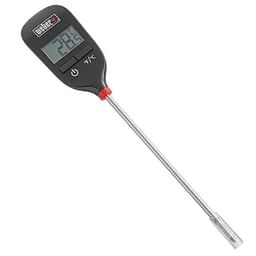
Weber Instant-Read Thermometer
If your cook has gone off-script — a late thaw, an unplanned start, a cut that is behaving strangely — the thing you need is a fast reading in the thickest part, not a monitoring system. This is the cheapest honest way to get one, and the reason we tell every beginner to own one even if they also buy a leave-in probe.
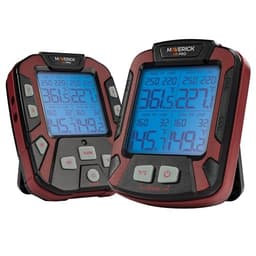
Maverick XR-50 Extended Range 4-Probe Wireless Thermometer
Four probes means meat and pit on the same receiver, which is exactly what USDA recommends for smoking and what a thawed-late cut makes necessary: you cannot plan the timing, so you watch it instead. It is radio rather than Bluetooth, so the reading follows you inside the house while the cook runs long.
So what should you actually do tonight?
If the meat is frozen and the cook is tomorrow: move it to the refrigerator now, on a tray, and accept that a big cut may need the day after instead. If the cook is in three hours: cold water, submerged, changed regularly, and it goes straight on the smoker when it is thawed. If the cook is in twenty minutes and the meat is a brisket: cook something else and move the brisket to the weekend. That is not a counsel of perfection — it is the only answer that does not involve either bad barbecue or a real risk.
The cuts where this bites hardest are the big solid ones. A chuck roast and a prime rib are both dense blocks that thaw from the outside in, so a frozen core sits there for hours while the outside cooks. And smoked meatloaf is ground meat, which USDA puts at 160°F rather than 145°F — mixing bacteria through a loaf and then cooking it from frozen is the version of this with the least margin in it.
And once it is thawed, the rest of the site takes over: smoke times and temperatures for planning the day, how to control temperature for keeping the cooker where you want it, and best first cooks if you want something more forgiving than whatever is in the freezer.
A note on food safety. Temperatures on this page follow USDA safe-minimum guidance. Always confirm doneness with a food thermometer, not by time or color. We’re enthusiasts sharing what we’ve researched, not professional pitmasters — when in doubt on safety, follow the USDA.
Frequently asked questions
Can you smoke frozen meat?
You should not smoke a frozen cut of any size. A smoker runs at 225–300°F, which is far too cool to thaw something quickly, so the outside of the meat sits warm and wet for hours while the middle is still ice — the worst possible combination. Thin, fast items like burger patties are the exception, because they thaw almost immediately. Thaw everything else in the refrigerator first.
Why can't you smoke from frozen when you can roast from frozen?
Because of the oven temperature. A 400°F oven drives heat through a frozen piece of meat quickly enough that the surface does not linger warm for long. A smoker at 225°F does the opposite: the surface spends hours at exactly the temperatures bacteria like best while the core slowly gives up its ice. Same food, very different exposure.
How do you safely thaw meat for smoking?
FDA names three safe methods: in the refrigerator, in cold water, and in the microwave. Never thaw at room temperature on the counter top. Food thawed in cold water or the microwave should be cooked immediately, so the refrigerator is the only method that lets you thaw on your own schedule — which is why a brisket or pork butt needs planning rather than improvisation.
How long does it take to thaw a brisket or pork butt?
Longer than people expect, and FDA publishes no timetable on the page we read, so plan generously: a full day in the refrigerator for a pork shoulder and more than one for a full packer brisket. If you are out of time, the cold-water method is faster — submerged in cold water, changed regularly — but then the meat has to go straight on the smoker.
Can you smoke frozen chicken wings?
Thaw them first. Wings come frozen in a solid clump, so they cannot be seasoned, they cannot be spaced out for airflow, and the ones in the middle stay frozen long after the outside ones are cooked. They also release a lot of water as they thaw, which is exactly what ruins the chance of crisp skin. A few hours in the refrigerator solves all of it.
Can you smoke frozen burger patties?
This is the one genuine exception. A thin patty thaws in minutes rather than hours, so it never spends long in the range that matters, and plenty of people cook frozen patties routinely. Cook them to the 160°F USDA lists for ground meats, measured with a thermometer, and do not expect a rub to stick to a frozen surface.
Does smoke stick to frozen meat?
Poorly, which is the culinary reason on top of the safety one. Smoke compounds adhere to a tacky, slightly dry surface, and a thawing piece of meat is wet — the melting ice runs a continuous film of water over the outside. Rub will not stay on it either. You get a paler, less smoky result for a longer cook.
What if a frozen cut goes on the smoker by mistake?
Do not try to rescue it by leaving the smoker low. Move it into a hot oven to get through the thaw quickly, then finish it however you like, and cook it to a safe internal temperature — 145°F for whole cuts of beef and pork with a three-minute rest, 160°F for ground meat, 165°F for poultry, per USDA. If it has been sitting in a cool smoker for hours already, throw it out rather than gamble.
Sources
- FDA — Safe Food Handling — FDA states 'There are three safe ways to defrost food: in the refrigerator, in cold water, and in the microwave', that you should 'Never thaw food at room temperature, such as on the counter top', and that 'Food thawed in cold water or in the microwave should be cooked immediately.' On doneness: 'Color and texture are unreliable indicators of safety. Using a food thermometer is the only way to ensure the safety of meat, poultry, seafood, and egg products for all cooking methods.' On leftovers: 'Refrigerate or freeze meat, poultry, eggs, seafood, and other perishables within 2 hours of cooking or purchasing. Refrigerate within 1 hour if the temperature outside is above 90° F.' The page carries a safe-minimum-internal-temperature table but states no danger-zone range and no bacterial multiplication rate (accessed October 11, 2026)
- USDA FSIS — Smoking Meat and Poultry — USDA guidance to keep the smoker between 225°F and 300°F, use two thermometers (food + smoker), and refrigerate within 2 hours (accessed July 22, 2026)
- USDA FSIS — Safe Minimum Internal Temperature Chart — USDA safe minimum internal temperatures: 145°F for beef/pork/lamb steaks, chops and roasts (with a 3-minute rest), 160°F for ground meats, 165°F for all poultry (accessed July 22, 2026)
- USDA FSIS — Food Thermometers — USDA on why a food thermometer is the only reliable way to know food has reached a safe temperature, and how to place the probe (accessed July 22, 2026)
Keep reading
Smoke Times and Temperatures
What to cook at, what to pull at, and how long each cut takes from a properly thawed start.
See the chartBest Meat Thermometers
The one accessory that makes every other temperature question answerable, from budget spot-checks up.
See picksDry Brine vs Wet Brine
What to do with the meat once it is thawed, and why salting early changes the result more than any rub.
Season itHow to Smoke a Turkey
The cook where thawing goes wrong most often — and the planning a frozen bird actually needs.
Plan a turkey