Baby Back vs Spare Ribs
Same animal, different muscles, genuinely different cooks. Baby backs are leaner, smaller and faster; spares are fattier, bigger and more forgiving — which is why the rack most people buy first is not the one most pitmasters cook.
How this is funded:we earn a commission if you buy through our links, at no extra cost to you. It never changes which smoker we recommend, and we’ll tell you when we’d skip one. Full disclosure.
Buy spare ribs if you are learning. They carry more fat and more connective tissue, which makes them more forgiving of a cook that runs long or hot, and they cost noticeably less per pound. Buy baby backs when you want a shorter cook and leaner, more tender meat on the bone. Both come from the same pig, both take the same rub and the same method, and the difference between them is anatomy.
That anatomy is the whole page. Baby backs come off the upper back, running along the spine where the loin sits — which is why they are short, curved, lean and expensive, and why “loin back ribs” is the other name for them. Spare ribs come off the belly side, below and behind the baby backs, closer to the breastbone — longer, flatter, fattier, and sold at belly-meat prices rather than loin-meat prices.
Everything else follows from that. More fat means more forgiveness. More connective tissue means more time. A bigger rack means more people fed. And a cheaper cut means you can afford to get it wrong once while you learn, which is not a small consideration.
The two racks side by side
| Baby back ribs | Spare ribs | |
|---|---|---|
| Where from | Upper back, along the spine beside the loin | Belly side, below and behind the baby backs |
| Also called | Loin back ribs, back ribs | Spares; trimmed = St. Louis cut |
| Shape | Short, curved, tapering | Long, flat, more rectangular |
| Fat | Leaner | Fattier — more marbling and connective tissue |
| Typical cook at 225–250°F | About 4–5 hours | About 5–6 hours |
| USDA cooking yield | 82% (loin back ribs, baked or roasted) | 76% (spareribs, baked or roasted) |
| Price per pound | Higher | Lower |
| Forgiving of a mistake | Less — lean meat dries fast | More |
The yield row is worth pausing on, because it is real measured data rather than barbecue folklore. USDA’s Agricultural Research Service measured cooking yields under defined laboratory protocols and recorded pork spareribs at 76% and pork loin back ribs at 82% when baked or roasted. Those are cooking losses only — they do not account for trimming or bone — and they were not measured on a smoker. But the direction is clear and useful: spares shed noticeably more of their raw weight than baby backs, because there is more fat there to render out. Budget accordingly when you are buying for a crowd.
What to look for at the counter
Whichever rack you buy, three things separate a good one from a bad one and none of them is the brand on the packaging.
- Even thickness across the rack. A rack that is thick at one end and nearly bare at the other cooks unevenly no matter what you do, and “shiners” — bones showing through the meat where the butcher cut too close — are a sign the rack was trimmed badly. Look along the length before you pick it up.
- Meat on top of the bone, not just between them. On baby backs especially, you are buying the layer of loin meat sitting over the bones. A rack with very little of it is mostly bone you are paying loin prices for.
- Fat distributed, not slabbed. Marbling through the meat is what you want on spares. A thick sheet of hard fat on the surface is not the same thing and mostly ends up in the pan.
And one decision at the counter that is worth making deliberately: untrimmed spares versus St. Louis cut. St. Louis cut is spare ribs with the sternum, cartilage and the belly flap trimmed off, leaving a neat rectangle that cooks evenly and looks right on a plate. You are paying someone to do two minutes of knife work and you are losing the trimmings. Buy untrimmed if you want the best value and do not mind trimming — the rib tips you cut away are genuinely good cooked alongside the rack, and plenty of people rate them above the ribs.
Cooking them: what actually differs
Less than you would think. Both racks want the membrane pulled off the bone side, both want a generous coat of rub, both cook at 225–250°F, and both are judged by feel rather than by a number. Our rib cooking guide covers the whole method and it does not change between the two.
The differences are three:
- Time. Spares need an hour or two more. If you are running both racks for a mixed crowd, put the spares on first.
- The wrap. Spares take a wrap better, because there is enough fat in them that the softening effect of a wrap does not tip them into mush. Baby backs wrapped too long go soft and lose the bite people actually want from a rib.
- The end of the cook. Baby backs are lean, and lean meat goes from right to dry in about twenty minutes. Start checking them earlier than you think. Spares will sit happily for another half hour.
What does not differ is doneness. Ribs are done when the rack bends and the surface cracks as you lift it from one end — the bend test — not at a particular internal temperature. USDA’s safe minimum for pork is 145°F with a three-minute rest, and ribs go far past that for texture. USDA itself draws that distinction between doneness and safety: the safety figure is a floor, and tough cuts are taken well above it to break down connective tissue.
Which to buy first
Spares. Three reasons, in order of how much they matter.
They are more forgiving. Fat and collagen are a buffer. A rack of spares that spent forty minutes longer in the cooker than it should have is still good; a rack of baby backs in the same situation is dry. When you are learning to hold a temperature, that buffer is worth a lot — and our temperature control guide is honest about how long that skill takes.
They are cheaper. Your first few racks are tuition. Pay less for it.
They feed more people. A full rack of spares is a bigger piece of meat than a rack of baby backs, which matters when the reason you bought a smoker is to cook for other people.
Buy baby backs when you want ribs on a weeknight, when you are cooking for people who prefer leaner meat, or when you have a small cooker — a shorter, more curved rack fits a 14-inch bullet smoker or a kettle that a full rack of spares simply will not.
Seasoning and space
Both racks take the same rub, and ribs are the cut where a sweet rub genuinely belongs: they cook in the narrow 225–275°F band where sugar caramelizes into bark rather than burning.
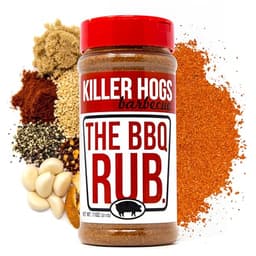
Killer Hogs The BBQ Rub (11 oz)
Brown sugar and sugar are the first two ingredients on the maker’s own statement, which is exactly what you want on a rack cooked low — sugar is what turns a dusty coating into the dark, slightly sticky bark that makes ribs look finished. The same bottle works on baby backs, spares and pulled pork.
The other practical difference between the two racks is how much room they take up. A full rack of spares laid flat is close to the size of a baking sheet, and two of them fill most beginner cookers. If you are running a mixed cook, or feeding more than four people, standing the racks on edge is the only way to fit them.
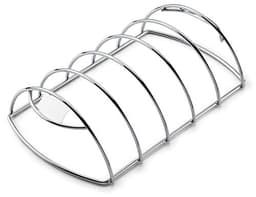
Weber Rib Rack (Holds 5 Racks)
Five slots turns one grate into five vertical lanes, which is the difference between cooking two racks of spares and cooking five. It is plated steel, Weber states it is dishwasher safe, and it is the only rack in our roundup whose listing names what it fits — useful, since almost none of them publish dimensions.
Price as of October 20, 2026. #ad How we’re funded
What about beef ribs?
A completely different animal and a completely different cook. Beef ribs are enormous, intensely beefy and seasoned with salt and pepper rather than sugar — the sweet rub that is right for pork is wrong for them. If that is what is in your fridge, read how to smoke beef ribs and best brisket rub instead.
And if you have not bought a cooker yet, best smokers for ribs sorts cookers on whether they will hold a steady low temperature for six hours and whether a full rack of spares will physically fit in them — which, on a small cooker, is the question that decides which of these two racks you can buy at all.
A note on food safety. Temperatures on this page follow USDA safe-minimum guidance. Always confirm doneness with a food thermometer, not by time or color. We’re enthusiasts sharing what we’ve researched, not professional pitmasters — when in doubt on safety, follow the USDA.
Frequently asked questions
What is the difference between baby back ribs and spare ribs?
Where they come from on the pig. Baby backs are cut from the upper back, along the spine where the loin sits, so they are shorter, more curved, leaner and more tender. Spare ribs come from the belly side, lower down and further back, so they are longer, flatter, fattier and have more connective tissue. That one anatomical difference drives everything else: cook time, yield, price per usable ounce and how forgiving each rack is.
Which is better, baby back or spare ribs?
Spare ribs, for most smoking, and we would say that even though baby backs outsell them. Spares carry more intramuscular fat and more connective tissue, which means they tolerate a longer cook and punish a mistake less — exactly what a beginner needs. Baby backs are leaner and more tender off the shelf, which also means they dry out faster if you overshoot. Buy spares to learn on; buy baby backs when you want a quicker cook.
Which ribs are meatier, baby back or spare?
A full rack of spare ribs carries more meat in total, simply because it is a larger piece — more bones and longer ones. Baby backs have more meat sitting on top of the bone, which is what people mean when they call them meatier, but the rack overall is smaller. Per rack, spares feed more people; per bone, baby backs eat better.
Do spare ribs take longer to cook than baby backs?
Yes, usually by an hour or two. Baby backs are thinner and leaner and typically run around four to five hours at 225–250°F; spares are thicker and have more connective tissue to break down and typically run five to six. Neither is a timer though — ribs are done when the rack passes the bend test, and the clock is only there to tell you roughly when to start checking.
What are St. Louis cut ribs?
Spare ribs with the sternum, cartilage and the flap of meat along the edge trimmed away, leaving a neat rectangular rack. They are the same cut and cook the same way; you are paying someone to do the trimming and losing the trimmings. If you buy untrimmed spares you can do it yourself in two minutes with a knife — and the rib tips you cut off are excellent cooked alongside the rack.
How many ribs do you need per person?
Plan on roughly half to two-thirds of a rack of spares per adult, or around three-quarters of a rack of baby backs because the rack is smaller. USDA's cooking-yield research gives a useful reality check on shrinkage: pork spareribs come in at a 76% cooking yield baked or roasted, and pork loin back ribs at 82% — so the rack loses a fifth to a quarter of its raw weight before anyone eats it. Our how much meat per person guide works the arithmetic for a crowd.
Which ribs are cheaper?
Spare ribs, almost always, by a clear margin per pound — and the gap widens when you account for the fact that the rack is bigger. Baby backs sit next to the loin, which is a premium cut, and they are priced accordingly. If you are feeding a crowd on a budget, untrimmed spares are the best value in the rib case by some distance.
Do you cook baby backs and spare ribs differently?
Same method, different timings and slightly different handling. Both get the membrane pulled, both take the same rub, both cook at 225–250°F, and both are done on feel rather than temperature. The differences: spares need longer, spares tolerate a wrap better because there is more fat to protect, and baby backs need watching toward the end because the lean meat goes from right to dry quickly.
Can you cook baby backs and spare ribs at the same time?
Yes, and it is a good way to feed a mixed crowd — just put the spares on an hour or two before the baby backs, because they need the extra time. The practical limit is grate space: two full racks of spares laid flat fill most cookers, so if you are running both you almost certainly want a rib rack to stand them on edge.
Sources
- USDA ARS — Table of Cooking Yields for Meat and Poultry (Release 2) — USDA Agricultural Research Service measurements of how much weight cuts of meat and poultry lose to moisture and fat during cooking, under defined laboratory protocols. Figures quoted on our page, read from the Release 2 data table downloadable here: beef brisket flat half trimmed to 1/8 inch fat, braised — 69% cooking yield (n=20, range 65-76%); pork shoulder arm picnic, braised — 74% (n=12, range 70-78%); pork spareribs, baked or roasted — 76% (n=12, range 68-79%); pork loin back ribs bone-in, baked or roasted — 82% (n=12, range 74-90%); turkey from whole, non-enhanced, dark meat with skin, roasted — 69%; turkey breast retail part, non-enhanced, with skin, roasted — 72%. These are cooking losses only, measured on the cut as prepared for the protocol — they are NOT barbecue yields and do not account for trimming or bone (accessed September 18, 2026)
- USDA FSIS — Safe Minimum Internal Temperature Chart — USDA safe minimum internal temperatures: 145°F for beef/pork/lamb steaks, chops and roasts (with a 3-minute rest), 160°F for ground meats, 165°F for all poultry (accessed July 22, 2026)
- USDA FSIS — Doneness Versus Safety — USDA on the difference between a safe internal temperature and the higher 'done/tender' temperature cooks pull tough cuts to (accessed July 22, 2026)
- USDA FSIS — Smoking Meat and Poultry — USDA guidance to keep the smoker between 225°F and 300°F, use two thermometers (food + smoker), and refrigerate within 2 hours (accessed July 22, 2026)
Keep reading
How to Smoke Ribs
The full cook for either rack — membrane, rub, the 3-2-1 question and the bend test.
Cook ribsBest BBQ Rub for Ribs
Both racks take the same seasoning — and sugar is the whole argument.
See rubsBest Rib Rack for a Smoker
How to fit four racks where one used to go, which matters most when you are cooking spares.
See racksHow Much Meat per Person
The arithmetic for a crowd, including what a rack actually weighs once it is cooked.
Do the math