Can You Smoke Two Meats at Once?
Yes, and most people should — a smoker holding one pork shoulder is a smoker running at a fraction of its capacity for the same fuel and the same ten hours. There is one rule about rack order that is genuinely a safety matter, and after that it is arithmetic.
How this is funded:we earn a commission if you buy through our links, at no extra cost to you. It never changes which smoker we recommend, and we’ll tell you when we’d skip one. Full disclosure.
Yes — and the rule that is not optional is rack order. Raw poultry goes on the lowest rack, below everything else, so nothing it drips onto is food you are about to serve. Everything else about cooking two or three cuts together is planning: stagger the start times, leave room for air to move, and put a probe in each piece.
This is one of the easiest wins in barbecue. A long cook costs the same fuel and the same ten hours whether the chamber holds one pork shoulder or four pieces of meat, and the marginal cost of the second cut is close to nothing. Most people with a 30-inch cabinet or a 22-inch bullet smoker are routinely running at a quarter of capacity without noticing.
The one genuine rule: raw poultry on the bottom
Put the raw chicken, turkey or wings on the lowest rack, every time, with nothing underneath them you intend to eat.
The reason is cross-contamination rather than flavour. Raw poultry juices run, and in a smoker they run downward onto whatever is beneath. USDA is unambiguous about this category of risk: bacteria present in raw meat and poultry and their juices can contaminate safely cooked food, which is why the same agency warns against reusing a platter or utensils that held raw meat. The same logic applies vertically inside a cooker — a brisket resting on the shelf below a chicken is a platter with a drip source over it.
It is worth saying what the rule does notrequire. Once poultry is cooked through, it stops being the hazard. And the other meats in the cooker are reaching high internal temperatures themselves, which is the main protection — but a brisket’s surface, which is where drips land, is exactly the part you will slice and serve without further cooking. Put the bird on the bottom and the question disappears.
The same ordering logic solves two smaller problems while it is at it. The lowest rack in most cabinets is the hottest, which suits poultry; and putting the cut you will take out last toward the top means you never reach past finished food with a pair of tongs.
What actually transfers between cuts
Much less than barbecue folklore suggests. Three things move around a chamber and only one of them meaningfully carries flavour.
- Smoke. Hits everything equally. It does not matter what else is in the cooker; your ribs get the same smoke they would get alone.
- Rendered fat. This is the real transfer, and it is downward only. Pork fat dripping onto pork is a free improvement. Pork fat dripping onto a delicate smoked salmon is not what you want, which is the one combination worth separating.
- Moisture. A full chamber is a more humid chamber, which generally helps — it slows surface drying and can soften bark slightly. Our water pan guide covers the same mechanism deliberately applied.
What does not happen is chicken tasting of brisket. If two cuts come out tasting alike, that is because you put the same rub on both, not because they shared a cooker.
Timing: work backwards, not forwards
The real skill in a multi-meat cook is the schedule, and it is simple arithmetic done in the right direction. Start from the time you want to eat and subtract.
| Cut | Rough cook at 250°F | Goes in | Rack position |
|---|---|---|---|
| Brisket or pork shoulder | 10–14 hours | First | Middle or top |
| Beef ribs | 7–9 hours | Second | Middle |
| Spare ribs | 5–6 hours | Third | Top, on edge in a rack |
| Baby back ribs | 4–5 hours | Fourth | Top, on edge in a rack |
| Whole chicken | 3–4 hours | Late | Bottom |
| Sausage, wings | 1–3 hours | Last | Bottom (poultry) or middle |
Those timings are rough by design and our smoke times and temperatures page has the fuller version. Two planning notes that matter more than the numbers:
Give the big cut a buffer, not a deadline. A brisket can finish two hours early or two hours late and there is no reliable way to know in advance — the stall sees to that. Plan for it to be done early and hold it; a wrapped cut in an empty cooler stays hot and safe for hours, which our resting guide covers. Holding a finished brisket is easy; rushing an unfinished one is impossible.
Expect a slower cook overall. Loading more cold mass into a chamber drops the temperature further and the cooker takes longer to recover, and a fuller chamber moves air less freely. Add a margin rather than a fixed percentage, and cook to feel and temperature rather than to the clock.
One cooker temperature for everything
This surprises people, and it is the thing that makes multi-meat cooking practical: almost everything in barbecue is cooked in the same narrow band. USDA’s own smoking guidance describes keeping the chamber between 225°F and 300°F, and a brisket, a pork shoulder, ribs, sausage and a chicken are all perfectly happy somewhere inside it. Set 250°F and run.
Where the cuts genuinely differ is the finishing temperature, and that is about the meat rather than the cooker. USDA’s safe minimums are 145°F for whole cuts of beef and pork with a three-minute rest, 160°F for ground meats and 165°F for all poultry — and the tough cuts go far beyond those for texture, which is the doneness-versus-safety distinction USDA itself draws. A pork shoulder is safe at 145°F and only pulls apart around 200°F.
The one combination that fights itself is poultry with a big cut. Crisp chicken skin wants a hotter cooker than a shoulder does, and you cannot have both temperatures at once. Either run the whole cook at 275°F and accept softer skin, or pull the bird and finish it hot in an oven or on a grill — the same workaround our best smokers for chicken page recommends for cookers with a low ceiling.
Knowing what is going on in each piece
With one cut, you can get away with checking occasionally. With three, you cannot — they do not finish in a predictable order, and the only way to avoid opening the door repeatedly is to be able to see every piece at once from wherever you are.
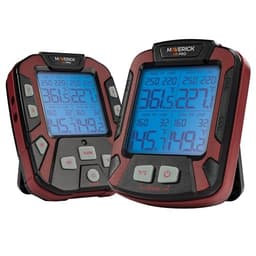
Maverick XR-50 Extended Range 4-Probe Wireless Thermometer
Four probes is the number that matters here: one in the chamber and three in different cuts, all reporting to a handheld receiver, so you know which piece is ready without opening the door to find out. USDA already recommends two thermometers for any smoke — a multi-probe unit is the version of that advice that survives contact with three cuts finishing at different times.
And handle the cuts with the right tools in the right order. USDA warns plainly that bacteria from raw meat and poultry juices can contaminate safely cooked food through shared platters and utensils, so the tongs that loaded the raw chicken are not the tongs that take the finished brisket out. Two pairs, or a wash in between — our tongs roundup makes the same argument at more length.
When the cooker is simply too full
There is a real limit and it is about airflow, not weight. A smoker cooks by convection — hot air circulating around the food — and food packed edge to edge turns a shelf into a baffle. The piece in the middle of a crowded grate cooks slower than the piece at the edge, the shelf below gets shielded, and no amount of extra time evens it out.
Leave a finger’s width between pieces, and the same between the food and the chamber wall. If that does not leave enough room, the cheapest fix by a long way is to stop using the grate horizontally.
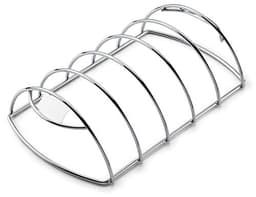
Weber Rib Rack (Holds 5 Racks)
Standing ribs on edge turns one grate into five vertical lanes, which means the ribs stop occupying a whole shelf and something else can use it. On a 22-inch bullet smoker or a 30-inch cabinet, that is the difference between cooking one thing and cooking three.
Price as of October 20, 2026. #ad How we’re funded
If you are hitting the limit regularly, the honest answer may be that the cooker is too small for what you are cooking rather than that you are loading it wrong. What size smoker do I need works through the sizing question on published square inches, and best smokers for large families names the cookers with the most room for the money.
Good combinations to start with
- Pork shoulder + ribs. The classic, and the easiest. Same animal, same rub, same temperature; the shoulder goes in first and the ribs join it five hours later. Pork fat dripping onto pork is a feature.
- Brisket + sausage. Texas-style, and the sausage is ready hours before anything else, which gives you something to eat while you wait.
- Anything + a tray of beans or mac and cheese. Sides cook in the same chamber, take on smoke, and use space that would otherwise be empty — smoked mac and cheese is the obvious one. Put them on the bottom only if no raw poultry is down there.
- Chicken + ribs, with the caveat. Chicken on the bottom while raw, and accept that the skin will be softer than it would be in a dedicated hot cook.
The combination we would avoid is anything delicate under anything fatty — fish in particular, which picks up rendered pork fat and is better cooked alone or on a day of its own. Everything else is fair game, and the cooker is sitting there running anyway.
Our step-by-step cook guides each cover one cut from trim to slice, which is the right way to read them when you are planning a load: work out each cut’s own timeline first, then stack them against the clock.
A note on food safety. Temperatures on this page follow USDA safe-minimum guidance. Always confirm doneness with a food thermometer, not by time or color. We’re enthusiasts sharing what we’ve researched, not professional pitmasters — when in doubt on safety, follow the USDA.
Frequently asked questions
Can you smoke two different meats at the same time?
Yes. Cooking two or more cuts in one smoker is standard practice and the fuel and time cost you nothing extra. The three things to plan are rack order — raw poultry always goes on the lowest rack so it cannot drip onto anything below it — start times, because different cuts need different lengths of cook, and capacity, because a crammed chamber stops circulating air properly.
Does the flavor transfer between meats in a smoker?
Barely, and not in the way people imagine. What moves around a chamber is smoke and rendered fat, and the smoke is hitting everything equally regardless of what else is in there. Dripping fat can carry a little character from one cut to another — a shoulder above a rack of ribs will drip pork fat onto pork, which is no bad thing — but nothing in a home smoker makes chicken taste of brisket. Rub is a far bigger influence than neighbours.
Which meat goes on the top rack and which on the bottom?
Raw poultry goes on the bottom, always. That is a food-safety rule rather than a preference: raw chicken and turkey juices can carry bacteria onto food below, and USDA is explicit that bacteria in raw meat and poultry juices can contaminate safely cooked food. Above that, put the cut that finishes highest and the cut you will need to take out last toward the top, so you are not reaching past finished food.
Do different meats need different smoker temperatures?
Not really — one of the quiet advantages of low-and-slow is that almost everything works in the same band. USDA's smoking guidance puts the chamber between 225°F and 300°F, and brisket, pork shoulder, ribs, chicken and sausage are all cooked comfortably inside it. Set the cooker at 250°F and nearly any combination is viable; what differs is how long each cut needs, not what temperature it wants.
How do you time two meats that cook for different lengths?
Work backwards from when you want to eat and stagger the start times. Put the longest cut in first — a brisket or a pork shoulder — and add the shorter ones as the clock catches up, rather than putting everything in at once and pulling things out at random. Big cuts are also the unpredictable ones, so give them a buffer and plan to hold them finished rather than rush them.
Can you smoke chicken and pork together?
Yes, with the chicken on the lowest rack while it is raw. The practical awkwardness is temperature rather than safety: poultry generally wants a hotter cooker for decent skin than a pork shoulder does. The usual compromise is to run the whole cook at 275°F and accept softer skin, or to pull the chicken and finish it hot somewhere else.
How full is too full for a smoker?
When air cannot move freely around every piece. A smoker cooks by convection, so food packed edge to edge on a shelf shields whatever is below it and creates cold spots that no amount of extra time fixes. Leave a finger's width between pieces and between the food and the chamber walls. If you need more room, standing ribs on edge in a rib rack buys more space than any other trick.
Does smoking two meats at once take longer?
Usually a little, for two reasons. More cold mass in the chamber means the cooker takes longer to recover after loading, and a fuller chamber restricts the airflow that carries heat to the food. Add a buffer rather than a fixed figure — and cook to temperature and feel rather than to the clock, which is the right approach with one cut and essential with three.
Do you need separate thermometer probes for each cut?
If you want to know what is happening, yes. Different cuts finish at different temperatures and they do not get there in a predictable order, so one probe in one piece tells you almost nothing about the other. A multi-probe thermometer is the single most useful upgrade for multi-meat cooks — USDA already recommends running two thermometers for any smoke, one in the food and one in the chamber.
Sources
- USDA FSIS — Safe Minimum Internal Temperature Chart — USDA safe minimum internal temperatures: 145°F for beef/pork/lamb steaks, chops and roasts (with a 3-minute rest), 160°F for ground meats, 165°F for all poultry (accessed July 22, 2026)
- USDA FSIS — Grilling and Food Safety — USDA guidance on utensils at the grill, quoted: 'Be sure there are plenty of clean utensils and platters. To prevent foodborne illness, don't use the same platter and utensils for raw and cooked meat and poultry. Harmful bacteria present in raw meat and poultry and their juices can contaminate safely cooked food.' And: 'When taking food off the grill, use a clean platter. Don't put cooked food on the same platter that held raw meat or poultry. Any harmful bacteria present in the raw meat juices could contaminate safely cooked food.' Surfaced by live search of fsis.usda.gov; the site returns HTTP 403 to a direct fetch from our build machine (accessed September 19, 2026)
- USDA FSIS — Smoking Meat and Poultry — USDA guidance to keep the smoker between 225°F and 300°F, use two thermometers (food + smoker), and refrigerate within 2 hours (accessed July 22, 2026)
- USDA FSIS — Food Thermometers — USDA on why a food thermometer is the only reliable way to know food has reached a safe temperature, and how to place the probe (accessed July 22, 2026)
- USDA FSIS — Doneness Versus Safety — USDA on the difference between a safe internal temperature and the higher 'done/tender' temperature cooks pull tough cuts to (accessed July 22, 2026)
Keep reading
Smoke Times and Temperatures
The per-cut chart you need to stagger start times properly.
See the chartHow Much Meat per Person
Work out how much you actually need before you work out how to fit it in.
Do the mathWhat Size Smoker Do I Need?
If two cuts will not fit, this is the page about the cooker rather than the loading.
Read itBest Rib Rack for a Smoker
The cheapest way to free up a whole shelf — stand the ribs up and cook something else underneath.
See racks