What the extra money actually buys
Between $500 and $1,000 the food does not get better. Four other things do, and each one is a legitimate reason to spend — if you will use it.
1. Fuel type you could not otherwise have. This is the biggest one and the most overlooked. Under $500 you choose between managing a charcoal fire yourself or accepting the lighter smoke of pellets. Over $500 a third option appears: gravity-fed charcoal, where a hopper and a fan hold a set temperature while actual charcoal burns. That is the one thing on this list that genuinely cannot be bought for less, and it is why the Masterbuilt is our number two rather than an afterthought.
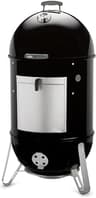
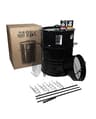
2. Capacity, measured properly. Square inches are only half the story — shape matters more. Weber’s 22-inch bullet publishes 726 sq in across two grates, which is the difference between smoking a brisket and smoking a brisket and a pork butt. A hanging barrel does not publish square inches at all, because food hangs vertically and Pit Barrel measures its capacity in racks of ribs instead. If you are not sure how much room you need, read what size smoker do I need before you spend anything — buying too much cooker is the single most common first-smoker mistake, and a bigger chamber costs more to run forever.
3. Warranty and the parts network. This is where the premium brands earn their money and where cheap cookers quietly cost you. Traeger publishes a three-year warranty on the Pro 780. Weber publishes ten years against rust-through on the Smokey Mountain’s bowl, lid and center ring, five years on plastic parts and two on everything else. Oklahoma Joe’s publishes two years on the Laredo. Masterbuilt publishes one year on the Gravity 600 — the shortest term of anything on this page, on the most complicated machine on it. That contrast is worth more thought than any spec comparison.
4. A cooker that also does something else. A dedicated smoker smokes. A kamado, a gravity-fed cooker and a pellet grill all reach searing temperatures too — Masterbuilt publishes a 700°F ceiling on the Gravity 600 and Traeger publishes 500°F on the Pro 780. If the $1,000 is replacing both a grill and buying a smoker, the math changes completely, and our smoker-grill combos page is a useful cross-check.
The seven picks on published specs
Every figure in this table is the maker’s own, read from its product page or the retail listing on October 2, 2026 and cited at the bottom of this page. Blank cells are not research gaps — they are makers who do not publish the figure.
| Cooker | Fuel | Published cooking area | Published temp range | Published warranty |
|---|
| Z Grills 700-Series | Wood pellets | 700 sq in | 180–450°F | Not published |
| Masterbuilt Gravity 600 | Charcoal, gravity-fed | 600 sq in | 225–700°F | 1 year |
| Traeger Pro 780 | Wood pellets | 780 sq in | 165–500°F | 3 years |
| Weber Smokey Mountain 22 | Charcoal + wood chunks | 726 sq in, two grates | Not published | 10 yr bowl/lid, 5 yr plastic, 2 yr rest |
| Oklahoma Joe’s Laredo 1100 | Charcoal and wood splits | 1,100 sq in total, 558 primary | Not published | 2 years |
| Pit Barrel PBX 22.5 | Charcoal, hanging | Not published (16–20 rib racks) | 275–310°F expected | Not published |
| Kamado Joe Classic I | Lump charcoal | 250 sq in main grate | Not published | Not published |
Two things in that table are worth saying out loud. The cooker with the most published cooking area is the cheapest one on the page, and the cooker with the smallest is the most expensive. Square inches and price are barely related in this category, which is exactly why shopping by price band alone leads people wrong.
Pellet, gravity-fed or charcoal you manage yourself?
Everything on this page falls into one of three ways of controlling heat, and choosing between them matters far more than choosing between brands.
| Pellet | Gravity-fed charcoal | Charcoal you manage |
|---|
| How you set temperature | Type a number | Type a number | Dampers, by feel |
| Smoke flavor | Lighter | Full charcoal | Full charcoal |
| Needs an outlet | Yes | Yes | No |
| Things that can break | Auger, fan, controller | Fan, controller | Almost nothing |
| Cleanup | Vacuum the ash tray | Ash bucket plus grease | Shovel the ash |
| Learning curve | Almost none | Small | Real, and worth it |
If that table makes the first column look like the obvious answer, read our honest take on whether a pellet smoker is worth it and pellet vs charcoal— the lighter smoke is a genuine trade, not a rounding error, and plenty of people who buy a pellet grill end up buying a charcoal cooker as well. Buying the pellet grill first is still the right order for most beginners.
What we would do with the rest of the thousand
Buy our top pick and you have several hundred dollars left. Here is the order we would spend it in, and the reasoning is the same at every budget: spend on what touches the food, not on the cooker’s badge.
- A thermometer, first and without debating it. No smoker on this page tells you when the meat is done. The USDA is unambiguous that a food thermometer is the only reliable way to know, and it asks for two: one in the food, one reading the chamber. Poultry needs 165°F; brisket and pork shoulder become tender far higher, around 200–205°F. Start with our meat thermometer picks, or go straight to a wireless leave-in set if you want to sleep through part of a brisket.
- Fuel, in quantity. A pellet cooker eats pellets and a charcoal cooker eats charcoal, and the cheap stuff is a false economy on a twelve-hour cook. Our pellet guide and charcoal guide cover what actually differs between bags, and what a cook costs to run does the arithmetic.
- Smoking wood, if you bought charcoal. Chunks on coals are where barbecue flavor comes from, and a bag costs very little. Our beginner wood guide names the two species that are hardest to get wrong.
- Heat gloves and the rest of the short list. Our smoker starter kit is the honest version of this: a handful of things genuinely worth owning, and a longer list of gadgets you can skip.
- Then stop. Keep the remainder. The next genuinely useful purchase is usually a second cooker of a different type, a year or two in, once you know what you actually cook.
What “under $1,000” means on this page
Every price you see here is pulled live from Amazon when the page is built, which is the only honest way to run a price-anchored roundup — a number typed into the text would be wrong within a week. Two consequences are worth stating plainly.
Maker list prices and street prices are different things. Traeger publishes a list price of $999.99 for the Pro 780 on its own site; the live Amazon price on the day we wrote this was a couple of hundred dollars lower. Masterbuilt publishes $799.99 for the Gravity 600; Amazon was lower again. Weber publishes $549.00 for the 22-inch Smokey Mountain and that is simply what it sells for — one independent parts retailer’s sale calendar describes Weber as a premium brand whose discounts are “less predictable than on budget grill brands”, with Labor Day the best window and $30–50 off a Smokey Mountain a typical rather than a dramatic saving. Treat a maker’s list price as the ceiling you should never pay, not as the value of the cooker. If you can wait, our Black Friday and Cyber Monday deals hub covers which smoker types historically discount and which almost never do.
One pick sits right at the ceiling. The Kamado Joe Classic I was the most expensive cooker here on the day we checked, close enough to $1,000 that an ordinary price move puts it over. It is on the page because a ceramic kamado is a real reason to spend the whole budget — but check the live price in its card before you commit, and if it has drifted above your limit, the insulated steel AKORN gives you most of the kamado experience for a fraction of it.
Who should not spend $1,000
Anyone who has never smoked anything. If this would be your first cook of any kind, buy less cooker and more practice. The skills that decide whether your ribs are good — holding a temperature, reading the meat, knowing when to wrap — transfer completely to a better cooker later, and they are cheaper to learn on something you are not afraid of scratching. Our how to choose your first smoker guide walks the decision without a price filter at all.
Anyone cooking for two. Most of the capacity on this page is wasted on a household of two, and capacity costs money twice: once to buy and then forever in fuel. A 14-inch bullet or a 30-inch electric cabinet is a better cooker for that life, and both are on our under $300 page.
Anyone who has not checked they can store it. Weber publishes 48.5 inches of height for the 22-inch Smokey Mountain with the lid on. Masterbuilt publishes 52.8 inches of width for the Gravity 600. Oklahoma Joe’s publishes 64.43 inches of width for the Laredo 1100. These are patio-sized objects, and if yours is a balcony, read best smokers for small spaces instead.
Anyone buying on the assumption that money fixes cheap-smoker problems. Some of them it does — thin steel, leaky doors, a thermometer that lies. Others are not price problems at all, and we wrote are cheap smokers worth it to separate the two.
What we left off, and why
Anything over the ceiling on the day. Traeger’s Woodridge Pro and Masterbuilt’s Gravity Series XT were both priced above $1,000 when we checked, so neither belongs on a page called under $1,000, however good they are.
The bigger gravity-fed Masterbuilts. The Gravity Series 800 and 1050 were both purchasable under the ceiling on the day we checked. We featured the 600 because the extra money buys cooking area and a griddle insert rather than a better cooker, and a beginner does not need either. If you want the larger chambers, they are the same machine.
The 18-inch Smokey Mountain, on this page only. It is the Weber we normally recommend, and it is the top pick on our charcoal smokers page. On a $1,000 budget the 22-inch is the better buy, because grate area is precisely the sort of thing the extra money should go on. If you want the two compared properly, see Smokey Mountain 14 vs 18 and our Smokey Mountain review.
Anything we could not confirm was purchasable. Every pick here was resolved to a live listing and checked on October 2, 2026. One well-known pellet grill in this price band came back “Temporarily out of stock” in the same search and is therefore not on the page — we do not feature cookers you cannot buy today.
Used and refurbished cookers. A secondhand Smokey Mountain or kamado is often the best value in barbecue, and we cannot verify a specific used listing for you, so no page here will recommend one. Worth knowing anyway: the cookers with the strongest resale are the simplest ones, which is also an argument for buying simple new.
So how much should you actually spend?
For a first smoker, spend a little over half of a $1,000 budget on a cooker whose control method matches how hands-on you want to be, spend a hundred or so on a thermometer and fuel, and keep the rest. That is our number one pick plus the short accessory list, and it will make barbecue indistinguishable from the barbecue a $1,000 cooker makes.
Spend the full thousand when you have a specific reason you can name out loud: you want charcoal flavor without charcoal management, you want app control and a three-year warranty, you want to smoke a brisket and a pork butt in the same cook, you cook for twenty people, or you want one ceramic cooker you will still own in twenty years. Each of those is on this page, and each is worth the money to the person who needs it. None of them is worth it to someone who does not.
Whichever way you go, the next thing to read is how to control temperature — and then how to season a new smoker, which is the first thing you should do to whatever arrives.