Smoke & Slow

Best BBQ Cookbooks for Beginners

A barbecue book is not chosen by its recipes. It is chosen by which cooker it assumes you own and whether it teaches you the method or just hands you the steps - and those two things sort the whole shelf.

By Stephen V.Last updated How we pick

If you buy one barbecue book, buy Meathead. If you bought an offset, buy Franklin instead. If you have not bought a smoker yet, buy Weber’s Smoke and spend the difference on meat. That is the short answer. The longer one is that the barbecue shelf is sorted by something the covers never tell you: every book quietly assumes a cooker, and a book written around tending a wood fire is half wasted on someone with a pellet grill in the yard — and the other way around.

The second thing the covers do not tell you is whether the book teaches a method or hands you a procedure. A procedure gets Saturday cooked. A method is what lets you work out why last Saturday went wrong, which is the whole difference between a first smoker that gets used and one that ends up under a cover. Beginners usually need the method book first and the recipe book second, and almost every “best BBQ cookbooks” list has that backwards.

We have not cooked every recipe in these books and we do not pretend otherwise (how we pick). What this page does instead is tell you exactly what each book is for — which cooker it assumes, what its publisher says is inside it, how old it is, and who should skip it. The page counts, publication dates and recipe counts below are the publisher’s own published figures, read on the date in our sources; where a publisher does not state a recipe count, we say so rather than counting a table of contents we have not seen. Prices are pulled live. And if you have not chosen the cooker yet, start with our first-smoker picks — that decision changes which book on this page is right for you.

How this is funded:we earn a commission if you buy through our links, at no extra cost to you. It never changes which smoker we recommend, and we’ll tell you when we’d skip one. Full disclosure.

Quick picks

Ranked on published specs, beginner-friendliness and value. Select a row to jump to the full write-up. We haven’t cooked on every one of these — here is exactly what we do instead.

#ProductBest forPrice
1
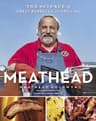
Meathead Goldwyn The Science of Great Barbecue and Grilling

Meathead Goldwyn The Science of Great Barbecue and Grilling

The one book to buy if you are buying one. It is not really a recipe collection — it is an explanation of why meat, fire and smoke behave the way they do, written by the founder of AmazingRibs.com with the physicist Greg Blonder checking the science. That matters more to a beginner than another hundred recipes, because it is the difference between following instructions and understanding what went wrong. HarperCollins counts 118 tested recipes, but the value is in the 300-odd pages around them: dry brining, why searing does not seal in juices, how to calibrate a cooker, what salt does that spices do not, and a long list of received wisdom the book takes apart with evidence. It covers grilling as much as smoking, which is either good value or half a book you did not want.

Best overall
$18.65 · View on Amazon

$40.0053% off

Price as of September 23, 2026. #ad How we’re funded

2
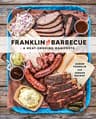
Aaron Franklin Franklin Barbecue: A Meat-Smoking Manifesto

Aaron Franklin Franklin Barbecue: A Meat-Smoking Manifesto

The book about fire, not recipes. Ten Speed Press describes it as a complete meat and brisket-cooking education, and its chapters are exactly that narrow: building or customizing a smoker, finding and curing wood, creating and tending fires, sourcing meat, and cooking. If you have bought an offset — or you are the kind of beginner who wants to know what pitmasters actually do rather than what to make on Saturday — this is the most useful 224 pages in barbecue. If you own an electric cabinet or a pellet grill, be honest with yourself: a large part of this book is about managing a fire you do not have.

Best for fire and offsets
$21.46 · View on Amazon

$32.9935% off

Price as of September 23, 2026. #ad How we’re funded

3
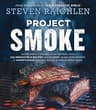
Steven Raichlen Project Smoke

Steven Raichlen Project Smoke

The most recipes per dollar on this page, and the broadest definition of smoking. Workman's description promises a step-by-step guide to cold-smoking, hot-smoking and smoke-roasting, plus rotisserie-smoking, smoke-braising, stovetop smoking and smoking with tea and hay — and 100 recipes that run from smoked nachos to a smoked bacon-bourbon apple crisp. Crucially for a beginner, Raichlen opens by explaining how to choose a smoker or turn the grill you already own into one, so the book does not assume a purchase you have not made. What you do not get is depth on any one cut: this is a book of things to try, not a reference for the twelve-hour brisket.

Best recipe collection
$8.77 · View on Amazon

$24.9965% off

Price as of September 23, 2026. #ad How we’re funded

4
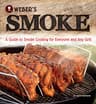
Jamie Purviance Weber's Smoke: A Guide to Smoke Cooking for Everyone and Any Grill

Jamie Purviance Weber's Smoke: A Guide to Smoke Cooking for Everyone and Any Grill

The book for the reader who has not bought a smoker yet. Its whole premise, in HarperCollins's own words, is that if you can grill, you can smoke: over 85 recipes plus basic and advanced smoke-cooking methods for traditional smokers and for standard backyard grills, a wood-flavor pairing section, and Weber's own top ten smoking tips. That makes it the cheapest possible way to find out whether you actually enjoy this before you spend a few hundred dollars finding out. The limits are real — it is a 2012 book, it is Weber-shaped, and many of its recipes are about adding smoke flavor in minutes rather than holding 225°F for twelve hours.

Best before you buy a smoker
$12.69 · View on Amazon

$22.9945% off

Price as of September 23, 2026. #ad How we’re funded

5
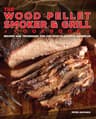
Peter Jautaikis The Wood Pellet Smoker and Grill Cookbook

Peter Jautaikis The Wood Pellet Smoker and Grill Cookbook

The pellet-grill shelf is mostly churn — brand-named titles, hundreds of recipes, no author you can look up. This is the one with an established publisher, a named author with a barbecue blog behind him, and step-by-step photographs. Ulysses Press describes it as covering pellet flavor choice, getting the most out of a smoker-grill, and both low-and-slow and cold smoking, with recipes from Texas BBQ brisket to a pellet-grill cobbler. If you have just brought home a pellet grill and want a book written for the cooker in your yard rather than for a fire you have to tend, this is it. It is also nine years old, and pellet controllers have moved on since.

Best for pellet owners
$15.11 · View on Amazon

$24.9539% off

Price as of September 23, 2026. #ad How we’re funded

6
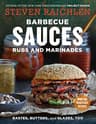
Steven Raichlen Barbecue Sauces, Rubs, and Marinades

Steven Raichlen Barbecue Sauces, Rubs, and Marinades

Not a smoking book — the second book, for the point where the cooking is working and the seasoning is what is holding you back. Workman's revised edition carries more than 200 recipes for rubs, marinades, bastes, butters, glazes, mops, slathers, sambals and chutneys, drawn from Thai, Mexican, Indian, Cajun, Jamaican, Italian and French cooking as well as the American barbecue belt, plus a step-by-step guide to building your own barbecue sauce and more than 30 main dishes to put it on. Buy it when you are tired of the bottle, not before — and know that you will realistically cook six of the 200.

Best second book
$11.49 · View on Amazon

$19.9943% off

Price as of September 23, 2026. #ad How we’re funded

The picks in full

#1Best overall

Meathead Goldwyn The Science of Great Barbecue and Grilling

The one book to buy if you are buying one. It is not really a recipe collection — it is an explanation of why meat, fire and smoke behave the way they do, written by the founder of AmazingRibs.com with the physicist Greg Blonder checking the science. That matters more to a beginner than another hundred recipes, because it is the difference between following instructions and understanding what went wrong. HarperCollins counts 118 tested recipes, but the value is in the 300-odd pages around them: dry brining, why searing does not seal in juices, how to calibrate a cooker, what salt does that spices do not, and a long list of received wisdom the book takes apart with evidence. It covers grilling as much as smoking, which is either good value or half a book you did not want.

What’s good

  • Method and science first — the chapters that explain heat, smoke, salt and thermometers are the part a beginner keeps re-reading
  • 118 tested recipes (HarperCollins; the Amazon listing says 'more than 100'), spanning every regional American style
  • Explicitly covers pellet cookers, charcoal and gas, so it does not assume a cooker you do not own
  • Myth-busting is sourced, not asserted — Prof. Greg Blonder, PhD, is credited on the cover for the food-science work

Trade-offs

  • 400 pages of hardcover is a commitment, and it is a reference more than a weekend read
  • Roughly half of it is grilling rather than low-and-slow smoking
  • The author has since written a newer book (The Meathead Method, 2025), so this is no longer his latest word
  • Costs more than any other book on this page, and the big hardcover format is awkward in a small kitchen
Full titleMeathead: The Science of Great Barbecue and Grilling
AuthorMeathead Goldwyn with Prof. Greg Blonder, PhD (Boston University)
Publisher and dateHarvest / HarperCollins; on sale May 10, 2016 (publisher and listing)
Format and lengthHardback, 400 pages; 8.2 x 1.3 x 10.1 in (publisher and listing)
Recipes118 (HarperCollins); the Amazon listing says 'more than 100'
ISBN-13978-0544018464

Specs read from the product listing, on September 22, 2026. “Not published” means the maker doesn’t state that figure there.

#2Best for fire and offsets

Aaron Franklin Franklin Barbecue: A Meat-Smoking Manifesto

The book about fire, not recipes. Ten Speed Press describes it as a complete meat and brisket-cooking education, and its chapters are exactly that narrow: building or customizing a smoker, finding and curing wood, creating and tending fires, sourcing meat, and cooking. If you have bought an offset — or you are the kind of beginner who wants to know what pitmasters actually do rather than what to make on Saturday — this is the most useful 224 pages in barbecue. If you own an electric cabinet or a pellet grill, be honest with yourself: a large part of this book is about managing a fire you do not have.

What’s good

  • Chapters dedicated to wood, fire management and smoker construction — the material most BBQ books skip entirely
  • Written by the pitmaster of Franklin Barbecue in Austin, with James Beard Award-winning co-author Jordan Mackay
  • Short enough (224 pages) to read cover to cover before your first offset cook
  • The brisket chapter is the reference a lot of the internet is quietly paraphrasing

Trade-offs

  • Heavily offset- and brisket-centric — pellet, electric and propane owners will skip whole chapters
  • Ten Speed publishes no recipe count, and it is genuinely not a recipe book; do not buy it for weeknight ideas
  • Published in 2015, before pellet grills became the default first smoker
  • Some of the fire-management advice only pays off on a cooker with a firebox you can actually tend
Full titleFranklin Barbecue: A Meat-Smoking Manifesto [A Cookbook]
AuthorsAaron Franklin with Jordan Mackay
Publisher and dateTen Speed Press; on sale April 7, 2015, list $32.99 (publisher)
Format and lengthHardcover, 224 pages; 8.27 x 1.02 x 10.28 in (publisher and listing)
RecipesNot published — the publisher describes chapters, not a recipe count
ISBN-13978-1607747208

Specs read from the product listing, on September 22, 2026. “Not published” means the maker doesn’t state that figure there.

#3Best recipe collection

Steven Raichlen Project Smoke

The most recipes per dollar on this page, and the broadest definition of smoking. Workman's description promises a step-by-step guide to cold-smoking, hot-smoking and smoke-roasting, plus rotisserie-smoking, smoke-braising, stovetop smoking and smoking with tea and hay — and 100 recipes that run from smoked nachos to a smoked bacon-bourbon apple crisp. Crucially for a beginner, Raichlen opens by explaining how to choose a smoker or turn the grill you already own into one, so the book does not assume a purchase you have not made. What you do not get is depth on any one cut: this is a book of things to try, not a reference for the twelve-hour brisket.

What’s good

  • 100 recipes across appetizers, mains, sides, desserts and cocktails — the widest range here
  • Opens with choosing a smoker or converting a grill, plus tools, fuels and smoking woods
  • Covers hot-smoking, cold-smoking, smoke-roasting, rotisserie-smoking and stovetop smoking as separate techniques
  • Usually the cheapest book on this page, and a Barbecue Hall of Fame author behind it

Trade-offs

  • Breadth over depth — no single cut gets the twenty pages Franklin gives a brisket
  • Cold-smoking, tea-smoking and hay-smoking are fun, and are not what your first three cooks should be
  • Less useful as a temperature-and-doneness reference than Meathead
  • A 336-page trade paperback will not lie flat on a counter the way a spiral-bound book does
Full titleProject Smoke: Seven Steps to Smoked Food Nirvana, Plus 100 Irresistible Recipes
AuthorSteven Raichlen (Barbecue Hall of Fame, 2015)
Publisher and dateWorkman Publishing Company; published May 10, 2016, list $24.99 (publisher)
Format and lengthTrade paperback, 336 pages; 8.05 x 0.75 x 9.25 in (publisher and listing)
Recipes100 (publisher)
ISBN-13978-0761181866

Specs read from the product listing, on September 22, 2026. “Not published” means the maker doesn’t state that figure there.

#4Best before you buy a smoker

Jamie Purviance Weber's Smoke: A Guide to Smoke Cooking for Everyone and Any Grill

The book for the reader who has not bought a smoker yet. Its whole premise, in HarperCollins's own words, is that if you can grill, you can smoke: over 85 recipes plus basic and advanced smoke-cooking methods for traditional smokers and for standard backyard grills, a wood-flavor pairing section, and Weber's own top ten smoking tips. That makes it the cheapest possible way to find out whether you actually enjoy this before you spend a few hundred dollars finding out. The limits are real — it is a 2012 book, it is Weber-shaped, and many of its recipes are about adding smoke flavor in minutes rather than holding 225°F for twelve hours.

What’s good

  • Written for grills as well as dedicated smokers — the rare BBQ book that does not assume a purchase
  • Over 85 recipes, and many are short smoke-flavor cooks rather than all-day projects
  • A wood section that pairs each smoking wood's flavor with the food it suits
  • 192 pages and usually the second-cheapest book here — low commitment in every sense

Trade-offs

  • Published April 2012, so there is nothing in it about pellet grills
  • Weber-centric: the equipment references assume a kettle or a Weber gas grill
  • Many recipes chase quick smoke flavor rather than true low-and-slow barbecue
  • HarperCollins's own store listed it unavailable on the day we checked; the Amazon listing we link to was in stock
Full titleWeber's Smoke: A Guide to Smoke Cooking for Everyone and Any Grill
AuthorJamie Purviance
Publisher and dateHarvest / HarperCollins; on sale April 3, 2012, list $22.99 (publisher)
Format and lengthPaperback, 192 pages; 9.25 x 0.61 x 10 in (publisher and listing)
RecipesOver 85 (publisher)
ISBN-13978-0376020673

Specs read from the product listing, on September 22, 2026. “Not published” means the maker doesn’t state that figure there.

#5Best for pellet owners

Peter Jautaikis The Wood Pellet Smoker and Grill Cookbook

The pellet-grill shelf is mostly churn — brand-named titles, hundreds of recipes, no author you can look up. This is the one with an established publisher, a named author with a barbecue blog behind him, and step-by-step photographs. Ulysses Press describes it as covering pellet flavor choice, getting the most out of a smoker-grill, and both low-and-slow and cold smoking, with recipes from Texas BBQ brisket to a pellet-grill cobbler. If you have just brought home a pellet grill and want a book written for the cooker in your yard rather than for a fire you have to tend, this is it. It is also nine years old, and pellet controllers have moved on since.

What’s good

  • Written specifically for pellet smoker-grills — pellet flavor choice, performance and cold smoking
  • Step-by-step photographs rather than a wall of text, per the publisher
  • A named author (Peter Jautaikis of the Smokin' Pete's BBQ blog) and an established publisher, which most pellet cookbooks lack
  • Hardback at a budget paperback price, and it covers desserts and cheese as well as meat

Trade-offs

  • Published May 2016 — today's WiFi controllers, app probes and high-smoke modes are not in it
  • The publisher does not state a recipe count anywhere, so you are buying on the sample list
  • Recipe-led rather than method-led; it will not teach you the underlying science the way Meathead does
  • Little in it transfers if you later move to charcoal or an offset
Full titleThe Wood Pellet Smoker and Grill Cookbook: Recipes and Techniques for the Most Flavorful and Delicious Barbecue
AuthorPeter Jautaikis (Smokin' Pete's BBQ)
Publisher and dateUlysses Press; published May 17, 2016, list $24.95 (publisher)
Format and lengthHardback, 192 pages; 7.7 x 0.7 x 9.55 in (publisher and listing)
RecipesNot published — the listing names ten, including Texas BBQ Brisket and St. Louis Baby Back Ribs
ISBN-13978-1612435596

Specs read from the product listing, on September 22, 2026. “Not published” means the maker doesn’t state that figure there.

#6Best second book

Steven Raichlen Barbecue Sauces, Rubs, and Marinades

Not a smoking book — the second book, for the point where the cooking is working and the seasoning is what is holding you back. Workman's revised edition carries more than 200 recipes for rubs, marinades, bastes, butters, glazes, mops, slathers, sambals and chutneys, drawn from Thai, Mexican, Indian, Cajun, Jamaican, Italian and French cooking as well as the American barbecue belt, plus a step-by-step guide to building your own barbecue sauce and more than 30 main dishes to put it on. Buy it when you are tired of the bottle, not before — and know that you will realistically cook six of the 200.

What’s good

  • More than 200 recipes for rubs, marinades, bastes, butters, glazes, mops and sauces (publisher)
  • A step-by-step guide to building a signature barbecue sauce, rather than just a list of formulas
  • Draws on Thai, Mexican, Indian, Cajun, Jamaican, Italian and French traditions, so it is not 200 variations of sweet tomato
  • Includes more than 30 main dishes, so the sauces arrive attached to something to cook

Trade-offs

  • Teaches nothing about running a smoker — it assumes you already can
  • 200 recipes is more choice than a beginner needs; most people use a handful and ignore the rest
  • Making your own rub only saves money once you already own the spices, which is its own shopping trip
  • Overlaps heavily with the free rub and sauce advice on this site, and with the bottles we already recommend
Full titleBarbecue Sauces, Rubs, and Marinades--Bastes, Butters & Glazes, Too
AuthorSteven Raichlen
Publisher and dateWorkman Publishing Company; revised edition published May 2, 2017, list $19.99 (publisher)
Format and lengthTrade paperback, 352 pages; 7 x 0.68 x 9 in (publisher and listing)
RecipesMore than 200, plus 30+ main dishes (publisher)
ISBN-13978-1523500819

Specs read from the product listing, on September 22, 2026. “Not published” means the maker doesn’t state that figure there.

What a barbecue book can actually do for you

Everything on this site is free, so it is worth being straight about what a book adds. Three things, really. The first is sequence: a good book puts fire, salt, smoke, temperature and rest in an order that builds, instead of the order you happened to search for them in. The second is depth on one thing — Aaron Franklin spends more pages on brisket than any web page ever will, and that is the point of it. The third is being away from the screen, which sounds soft until you are twelve hours into a cook with greasy hands.

What a book cannot do is keep up. Pellet grills went from a niche to the default first smoker in about a decade, and a book printed in 2012 or 2015 has nothing to say about WiFi controllers, app probes or high-smoke modes. That is not a reason to skip the older books — fire and meat have not changed — but it is a reason to check the publication date before you assume a book covers the cooker you own. Every date on this page is the publisher’s.

The five questions that decide which book you buy

In the order that matters. Answer these and the shelf sorts itself; ignore them and you are buying on the cover photograph.

  • Which cooker does it assume you own? This is the big one and almost nobody asks it. Franklin’s chapters are about building and tending a fire in a firebox; if you own an electric cabinet, that is a beautiful book about someone else’s hobby. Weber’s Smoke assumes a kettle or a gas grill. The pellet cookbook assumes a pellet grill. Meathead and Project Smoke are the two that deliberately cover everything.
  • Method or recipes? A method book explains why dry brining works, what the stall is, and why the thermometer matters more than the cooker. A recipe book gives you a hundred things to make. You want the first kind first. The honest test is to look at the ratio of pages to recipes: Meathead is 400 pages for 118 recipes, which tells you most of the book is not recipes at all.
  • How old is it? Fire and meat are unchanged, so age costs you nothing on technique and everything on equipment. A 2012 book will not mention pellet grills. A 2016 pellet book will not mention the controller on the grill you just bought. Judge age against the chapter you are buying it for.
  • Does it give you numbers? Temperatures, internal temps, rough times, weights. A barbecue book that tells you to cook “until it is done” is a picture book. Our own smoke times and temperatures chart exists because so many sources do this badly.
  • Is there a real author and a real publisher behind it? This matters more in barbecue than in most categories, because the pellet-grill boom produced a flood of near-identical titles with no traceable author. Every book on this page has a named author with a track record and a publisher you can look up — Ten Speed, Workman, HarperCollins, Ulysses. That is a low bar and a lot of the shelf does not clear it.

Which book fits which cooker

The single most useful table on this page. Find the row for the cooker in your yard — or the one you are about to buy — and read across.

What you ownBuy firstWhySkip
Nothing yetWeber’s SmokeWritten for the grill you already own, so you can find out whether you like this before spending on a cookerFranklin — it is about a smoker you do not have
Pellet grillMeathead, then the pellet cookbookMeathead explicitly covers the strengths and weaknesses of pellet cookers; the pellet book is the one written for that cookerFranklin, unless fire management fascinates you
Electric or propane cabinetMeathead or Project SmokeBoth are cooker-agnostic; a cabinet holds its own temperature, so you need recipes and doneness, not fire craftFranklin, and the pellet cookbook
Bullet, drum or kettleMeathead, then Weber’s SmokeCharcoal is fire management on easy mode; you want the science plus a book that treats a kettle as a legitimate smokerThe pellet cookbook
OffsetFranklin, then MeatheadWood selection, fire building and fire tending are the whole job on an offset, and this is the book about exactly thatThe pellet cookbook, and most of Weber’s Smoke
KamadoMeathead, then Project SmokeNo book on this page is kamado-specific; the two cooker-agnostic ones transfer cleanly because a kamado holds temperature wellAnything titled for a brand

What you are actually buying

Every figure here is the publisher’s own, read on the date in our sources. Where a publisher does not state a recipe count, the cell says so. Prices are deliberately not in this table — they move, so they are pulled live in the picks above.

BookPublishedLengthRecipesMostly
Meathead2016400 pp, hardback118Science and method
Franklin Barbecue2015224 pp, hardcoverNot publishedFire, wood and brisket
Project Smoke2016336 pp, paperback100Recipes across every technique
Weber’s Smoke2012192 pp, paperbackOver 85Smoking on a grill
Wood Pellet Smoker and Grill2016192 pp, hardbackNot publishedPellet-grill recipes
Barbecue Sauces, Rubs, and Marinades2017 (revised)352 pp, paperbackMore than 200Seasoning, not cooking

How we judged these, given we have not cooked every recipe

Nobody who publishes a cookbook roundup has cooked six books through, and we are not going to imply we have. Here is the actual basis for the ranking, so you can discount it as you see fit.

We read what each publisher states the book contains — chapter subjects, techniques covered, recipe counts, format, length, on-sale date — and checked each one against the question this site exists to answer: is this useful to somebody on their first smoker? That is why a book with fewer recipes ranks above one with twice as many, and why a 2012 title about grills is here at all. Every claim about what is inside a book traces to its publisher’s page or its Amazon listing, both cited. Nothing here is a claim about how the recipes taste, because that would be a claim we cannot support.

What we will not do is pretend the free stuff does not exist. If money is tight, our how to use a smoker guide and best first cooks cover the same ground as chapter one of most of these books, for nothing. A book is an upgrade, not a prerequisite — and it is a worse first purchase than a thermometer.

The pellet-cookbook problem

Search for a pellet-grill cookbook and you will get dozens of near-identical results: a brand name in the title, a huge recipe count, a subtitle promising beginners everything, and an author you cannot find anywhere else. Most of these are print-on-demand titles built to ride a search term. Four things separate them from a real book, and you can check all four from the listing in about thirty seconds.

  • A publisher you can look up. Ten Speed, Workman, HarperCollins, Ulysses and their peers have editors, photographers and recipe testers. “Independently published” on a glossy barbecue title usually means none of those.
  • An author with a trail. A restaurant, a competition record, a long-running site or blog — something that existed before the book.
  • A brand name in the title is a warning, not a feature. Cookbooks named for a grill brand are almost never published by that brand. Weber’s Smoke is the exception that proves the rule: Weber is the publisher’s partner, and Jamie Purviance has written its books for years.
  • A recipe count that does not make sense. Five hundred tested barbecue recipes is not a thing one person did. A hundred is.

That filter is why only one pellet-specific book made this page, and why we say plainly on its card that it was published in 2016 and pellet controllers have moved on. If you would rather have current information about your specific cooker, our pellet smoker roundup and pellet guide are free and newer than any book on this page.

What we left off, and why

Boxed sets and collections. The Franklin books are sold as a two- and three-book bundle. If you want all three, fine — but a beginner buying a bundle is buying two books about steak and live fire before finishing the one about barbecue.

Brand-titled beginner cookbooks. The shelf is full of them, almost none has a traceable author or publisher, and we are not going to recommend a book whose provenance we cannot check.

Competition barbecue books. Excellent, and wrong for a first year. Competition cooking optimizes for one bite scored by a judge, which is a different problem from feeding six people in your yard.

Regional and single-restaurant books. Often the best writing in the category, and usually the wrong second purchase — they assume you already know how to run a cooker.

Anything we could not confirm was purchasable. Every book above was resolved to a live Amazon listing and its buy box confirmed in stock on the date on its card. Two publishers — HarperCollins on both of its titles here — showed the book unavailable in their own stores the same day, and the cards say so.

So do you need a BBQ cookbook at all?

Not to cook your first brisket. A thermometer, a bag of fuel, and our brisket guide will get you there, and none of those costs what a hardcover does. The moment a book starts earning its price is the third or fourth cook, when the question changes from “what do I do” to “why did that happen” — and that is a question a method book answers better than a search box.

If you are buying for somebody else, a book is one of the few barbecue gifts that cannot be the wrong size, the wrong fitment or a duplicate of something in the garage — which is why it appears on our BBQ gift guide as well. Buy the one that matches their cooker, and if you do not know what they own, buy Meathead.
Frequently asked questions

What is the best BBQ cookbook for a beginner?

Meathead: The Science of Great Barbecue and Grilling, for most people. It is a method book rather than a recipe collection - HarperCollins counts 118 tested recipes inside 400 pages, so the majority of it is explanation - and it deliberately covers charcoal, gas and pellet cookers instead of assuming one. If you have already bought an offset, buy Franklin Barbecue instead, because fire management is the skill that cooker demands.

Is the Franklin Barbecue book worth it if I do not own an offset?

Honestly, only if you enjoy reading about the craft. Ten Speed Press describes its chapters as building or customizing your own smoker, finding and curing the right wood, creating and tending perfect fires, sourcing meat, and cooking - and three of those five are about a fire you do not have to tend on a pellet grill or an electric cabinet. It is a superb book for the reader it is written for. It is not a general beginner's book.

Which BBQ cookbook is best for a pellet grill?

For recipes written specifically for a pellet cooker, The Wood Pellet Smoker and Grill Cookbook by Peter Jautaikis - it is the pellet title on this page with an established publisher, a named author and step-by-step photographs. Read it alongside Meathead rather than instead of it, because the pellet book is recipe-led and was published in May 2016, before the current generation of WiFi controllers and app probes.

Can I learn to smoke meat without buying a book?

Yes, and a lot of people do. Everything a first cook needs - choosing a cooker, controlling temperature, when to wrap, what internal temperature to pull at - is covered free on this site and elsewhere. A book buys you sequence, depth on one subject, and something you can read away from a screen. Buy a thermometer first; it will change your cooking more than any book.

Are older BBQ cookbooks still worth buying?

For technique, yes - fire, salt, smoke and meat have not changed since 2012. For equipment, no. A book published before pellet grills became mainstream will not mention them, and a pellet book from 2016 predates the controller on a grill bought today. Check the publication date against the chapter you actually want, which is why every date on this page is the publisher's own.

How do I spot a low-quality BBQ cookbook?

Four checks, all doable from the listing. Is there a publisher you can look up, or is it independently published? Does the author have a trail - a restaurant, a competition record, a long-running site? Is there a grill brand in the title, which is usually a search-term play rather than an official book? And does the recipe count make sense: a hundred tested recipes is a real book's worth, five hundred is not.

What is the best BBQ cookbook if I only have a regular grill?

Weber's Smoke by Jamie Purviance. Its premise, in HarperCollins's words, is that if you can grill you can smoke: over 85 recipes plus basic and advanced smoke-cooking methods for traditional smokers and for standard backyard grills. It is a 2012 book with nothing in it about pellet grills, and many of its recipes chase smoke flavor in minutes rather than true low-and-slow - but it is the cheapest way to find out whether you enjoy this before buying a smoker.

Do BBQ cookbooks include smoking times and temperatures?

The good ones do, and it is a fair test of whether a book is serious. Meathead is built around thermometers and target temperatures; Franklin works in fire behavior and doneness by feel as well as numbers. If you want a single reference to keep next to the cooker, our smoke times and temperatures chart is free and covers the cuts a beginner actually cooks.

Is a BBQ cookbook a good gift?

It is one of the few barbecue gifts that cannot be the wrong size or the wrong fitment for their cooker, and it will not duplicate something already in the garage. The one thing to get right is matching the book to the cooker they own - a fire-management book for someone with an electric cabinet lands badly. If you do not know what they own, Meathead is the safe choice because it covers all of them.

Should I buy a book about rubs and sauces?

Not first. Raichlen's Barbecue Sauces, Rubs, and Marinades carries more than 200 recipes in its revised Workman edition, and it assumes you can already run a cooker - it teaches seasoning, not barbecue. It is the right purchase at the point where the cooks are landing and the flavor is what is holding you back, and even then you will realistically use a handful of the 200. Two good bottles of rub get you most of the way for less.

Sources

  • HarperCollins — Meathead: The Science of Great Barbecue and Grilling (ISBN 9780544018464), publisher's product pagePublisher states: 'The first book to apply the latest scientific research to barbecuing and grilling by the founder of the popular website amazingribs.com—with more than 100 recipes'; format Hardback; and in the description, 'Meathead' Goldwyn 'applies the latest research to backyard cooking and 118 thoroughly tested recipes'. The page lists what the book explains — 'why dry brining is better than wet brining; how marinades really work; why rubs shouldn't have salt in them; how heat and temperature differ; the importance of digital thermometers; why searing doesn't seal in juices; how salt penetrates but spices don't; when charcoal beats gas and when gas beats charcoal; how to calibrate and tune a grill or smoker; how to keep fish from sticking; cooking with logs; the strengths and weaknesses of the new pellet cookers' — and four busted myths (bring meat to room temperature; soak wood; bone-in steaks taste better; sear first then cook). Awards listed: New York Times Bestseller, Serious Eats '22 Essential Cookbooks for Every Kitchen', Christopher Kimball '25 Favorite Cookbooks of All Time', 'Best Cookbooks of 2016' from Chicago Tribune, BBC, Wired, Epicurious and Leite's Culinaria, and Southern Living '100 Best Cookbooks of All Time'. On the date read, HarperCollins's own store showed the title unavailable to buy direct (accessed September 22, 2026)
  • Penguin Random House — Franklin Barbecue: A Meat-Smoking Manifesto (ISBN 9781607747208), publisher's product pagePublisher states: imprint Ten Speed Press; on sale April 7, 2015; hardcover; 224 pages; list price $32.99. Described as 'A complete meat and brisket-cooking education from the country's most celebrated pitmaster and owner of the wildly popular Austin restaurant Franklin Barbecue', and as 'a definitive resource for the backyard pitmaster, with chapters dedicated to building or customizing your own smoker; finding and curing the right wood; creating and tending perfect fires; sourcing top-quality meat; and of course, cooking mind-blowing, ridiculously delicious barbecue'. Co-author Jordan Mackay is described as a James Beard Award-winning writer. NO recipe count is published anywhere on the page (accessed September 22, 2026)
  • Hachette Book Group / Workman Publishing — Project Smoke by Steven Raichlen (ISBN 9780761181866), publisher's product pagePublisher states: Workman Publishing Company; published May 10, 2016; trade paperback; 336 pages; list price $24.99. Described as 'a step-by-step guide to cold-smoking, hot-smoking, and smoke-roasting', with 100 recipes 'from Smoked Nachos to Chinatown Spareribs, Smoked Salmon to Smoked Bacon-Bourbon Apple Crisp'. The techniques named are 'hot smoking and cold-smoking, smoke-braising, tea-smoking, caveman smoking direct on embers, and stovetop smoking', plus rotisserie-smoking and smoking with tea and hay. The book opens by explaining 'how to choose the right smoker (or turn the grill you have into an effective smoking machine)' and covers 'different tools, fuels, and smoking woods'. Raichlen is a Barbecue Hall of Fame inductee (2015) and founder of Barbecue University (accessed September 22, 2026)
  • HarperCollins — Weber's Smoke: A Guide to Smoke Cooking for Everyone and Any Grill (ISBN 9780376020673), publisher's product pagePublisher states: on sale April 3, 2012; paperback; list price $22.99. Description: 'If you can grill, you can smoke! Now you can add smoke flavor to almost any food on any grill… many of the recipes let you achieve mouthwatering smoke flavor in a matter of minutes-not hours.' The page's own bullet list of what you will learn: 'Basic and advanced smoke cooking methods for traditional smokers as well as standard backyard grills'; 'Over 85 exciting recipes such as Brined and Maple-Smoked Bacon and Cedar-Planked Brie with Cherry Chutney and Toasted Almonds'; 'Smoking woods' flavor characteristics and food pairing suggestions that complement each distinct type of wood'; and 'Weber's Top Ten Smoking Tips for getting the best possible results on any grill'. On the date read, HarperCollins's own store showed the title out of stock while the Amazon listing we link to was In Stock (accessed September 22, 2026)
  • Ulysses Press — The Wood Pellet Smoker and Grill Cookbook by Peter Jautaikis (ISBN 9781612435596), publisher's product pagePublisher states: hardback; 192 pages; 9.55 x 7.7 in; published May 17, 2016; list price $24.95. Described as covering 'choosing the best pellet grill flavors, maximizing your smoker-grill's performance, and mastering low and slow smoking as well as cold smoking techniques', 'packed with step-by-step BBQ photos and expert grillmaster tips', with named recipes including Texas BBQ Brisket, St. Louis Baby Back Ribs, Cajun-Style Spatchcock Chicken, Alder-Smoked Trout, Applewood-Smoked Cheese and a Peach-Blueberry Pellet Grill Cobbler. Author Peter Jautaikis runs the blog Smokin' Pete's BBQ and lives in Ripon, CA. NO total recipe count is published. Note for future runs: ulyssespress.com's own book URL now issues a 301 redirect to this page, which is the publisher's current storefront (accessed September 22, 2026)
  • Hachette Book Group / Workman Publishing — Barbecue Sauces, Rubs, and Marinades by Steven Raichlen (ISBN 9781523500819), publisher's product pagePublisher states: Workman Publishing Company; revised edition published May 2, 2017; trade paperback; 352 pages; list price $19.99. Described as 'more than 200 recipes' of 'Chile-fired rubs, citrusy marinades, buttery bastes, pack-a-wallop sauces, plus mops, slathers, sambals, and chutneys', drawing on 'Thai, Mexican, Indian, Cajun, Jamaican, Italian, and French cuisines, plus those big flavor building blocks from America's barbecue belt', and including 'a step-by-step guide to building a signature barbecue sauce and recipes for more than 30 outrageous main dishes' (accessed September 22, 2026)

Keep reading