Smoke & Slow

Lump Charcoal vs Briquettes

The argument is usually framed as natural versus processed, which is the least useful way to think about it. The real difference is uniformity: one of these is engineered to be the same size and shape every time, and the other is pieces of burnt tree.

By Stephen V.Last updated How we pick

For low-and-slow smoking, buy briquettes. For a kamado or any cook where you want high heat, buy lump. If you only want to own one bag and you are learning, that bag is briquettes. The reason has nothing to do with purity and everything to do with predictability.

Briquettes are charcoal dust and binders pressed into identical pillows. Every piece is the same size, so a given number of them burns at a given rate, which is why the minion method and every other fuel-arrangement trick in barbecue was designed around them. They leave more ash and they need to be lit properly and allowed to ash over before food goes near them.

Lumpis wood burnt in a low-oxygen kiln until only carbon is left. It is irregular — one bag holds fist-sized chunks and splinters together — and it lights faster, burns hotter and leaves far less ash. It is also several times the price per pound.

How this is funded:we earn a commission if you buy through our links, at no extra cost to you. It never changes which smoker we recommend, and we’ll tell you when we’d skip one. Full disclosure.

Quick picks

Ranked on published specs, beginner-friendliness and value. Select a row to jump to the full write-up. We haven’t cooked on every one of these — here is exactly what we do instead.

#ProductBest forPrice
1
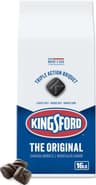
Kingsford Original Charcoal Briquettes (16 lb)

Kingsford Original Charcoal Briquettes (16 lb)

The right first charcoal, and it happens to be the cheap one. Briquettes are pressed to a uniform size, so they burn at a predictable rate — exactly what you want while you are still learning what your vents do. Lump burns hotter and less evenly; save it for searing and kamados. Start here and switch only when you have a specific reason.

Best for low and slow
$10.92 · View on Amazon

Price as of October 6, 2026. #ad How we’re funded

2
Jealous Devil Chunx XL Lump Charcoal

Jealous Devil Chunx XL Lump Charcoal

The lump worth paying for. Big, dense hardwood chunks burn hotter and longer than the dusty small stuff, throw very little ash, and do not spark — which matters in a kamado, where you close a lid on the fire and leave it for hours. This is the bag that makes the case for lump rather than just being different from briquettes.

Best lump, and best for kamados
$52.99 · View on Amazon

Price as of October 6, 2026. #ad How we’re funded

3
Royal Oak Natural Organic Premium Briquettes (15.4 lb)

Royal Oak Natural Organic Premium Briquettes (15.4 lb)

The briquette to buy if the smell of charcoal lighting bothers you. It keeps the predictable shape and burn rate that make briquettes good for long cooks, but with a simpler ingredient list, so there is less to smell off during the first twenty minutes. You pay a real premium per pound for that.

Best briquette for light-up smell
$27.98 · View on Amazon

Price as of October 6, 2026. #ad How we’re funded

4
FOGO Premium Hardwood Lump Charcoal (17.6 lb) + 30 Fogostarters

FOGO Premium Hardwood Lump Charcoal (17.6 lb) + 30 Fogostarters

The everyday lump bag that arrives ready to light. It pairs 17.6 lb of FOGO's Premium lump — Inga hardwood, which FOGO states is 100% natural with no chemicals or fillers — with a box of thirty aspen-and-wax fire starters, which is the other half of getting a charcoal fire going without lighter fluid anywhere near it. One honest caveat on piece size: this Amazon bundle calls the lumps large, while FOGO's own page for the Premium bag describes medium-size pieces. Buy it for the fuel and the starters rather than for a specific size of chunk — if you want guaranteed extra-large pieces for a deep kamado firebox, that is what the Jealous Devil Chunx XL bag is for.

Best everyday lump
$49.35 · View on Amazon

Price as of October 6, 2026. #ad How we’re funded

The picks in full

#1Best for low and slow

Kingsford Original Charcoal Briquettes (16 lb)

The right first charcoal, and it happens to be the cheap one. Briquettes are pressed to a uniform size, so they burn at a predictable rate — exactly what you want while you are still learning what your vents do. Lump burns hotter and less evenly; save it for searing and kamados. Start here and switch only when you have a specific reason.

What’s good

  • Uniform size means a predictable, controllable burn rate
  • Cheapest fuel per hour of any charcoal on this page
  • Stocked everywhere, so restocking is never a project

Trade-offs

  • Leaves more ash than lump — clear the ash pan between cooks
  • Contains binders, so light it properly and let it ash over first
TypeBriquettes
Weight16 lb
BurnLong and steady; more ash than lump
Best forLow-and-slow in a bullet, drum or offset

Specs read from the product listing, on August 18, 2026. “Not published” means the maker doesn’t state that figure there.

#2Best lump, and best for kamados

Jealous Devil Chunx XL Lump Charcoal

The lump worth paying for. Big, dense hardwood chunks burn hotter and longer than the dusty small stuff, throw very little ash, and do not spark — which matters in a kamado, where you close a lid on the fire and leave it for hours. This is the bag that makes the case for lump rather than just being different from briquettes.

What’s good

  • Large, dense pieces burn long and hot with very little ash
  • Almost no sparking or popping compared with cheap lump
  • Pure hardwood with no binders or additives, per the listing

Trade-offs

  • Several times the price per pound of standard briquettes
  • Irregular piece size makes a precise minion-method setup fiddlier
TypeLump (extra-large pieces)
Composition100% natural hardwood (per listing)
BurnHot and long, very low ash
Best forKamado cooking and searing

Specs read from the product listing, on August 18, 2026. “Not published” means the maker doesn’t state that figure there.

#3Best briquette for light-up smell

Royal Oak Natural Organic Premium Briquettes (15.4 lb)

The briquette to buy if the smell of charcoal lighting bothers you. It keeps the predictable shape and burn rate that make briquettes good for long cooks, but with a simpler ingredient list, so there is less to smell off during the first twenty minutes. You pay a real premium per pound for that.

What’s good

  • Uniform briquette burn with a simpler ingredient list
  • Noticeably less light-up smell than standard briquettes
  • Still burns long and steady enough for a full brisket cook

Trade-offs

  • Costs meaningfully more per pound than the standard bag
  • Harder to find in stores than the mainstream brand
TypeBriquettes
Weight15.4 lb
BurnSteady; cleaner light-up than standard briquettes
Best forCooks who dislike briquette light-up smell

Specs read from the product listing, on August 18, 2026. “Not published” means the maker doesn’t state that figure there.

#4Best everyday lump

FOGO Premium Hardwood Lump Charcoal (17.6 lb) + 30 Fogostarters

The everyday lump bag that arrives ready to light. It pairs 17.6 lb of FOGO's Premium lump — Inga hardwood, which FOGO states is 100% natural with no chemicals or fillers — with a box of thirty aspen-and-wax fire starters, which is the other half of getting a charcoal fire going without lighter fluid anywhere near it. One honest caveat on piece size: this Amazon bundle calls the lumps large, while FOGO's own page for the Premium bag describes medium-size pieces. Buy it for the fuel and the starters rather than for a specific size of chunk — if you want guaranteed extra-large pieces for a deep kamado firebox, that is what the Jealous Devil Chunx XL bag is for.

What’s good

  • Thirty fire starters in the box, so there is nothing else to buy to light it
  • FOGO states 100% natural Inga hardwood with no chemicals or fillers
  • FOGO states the starters are aspen wood and vegetable wax — no chemical taste near the food

Trade-offs

  • Piece size is described two ways — large on this listing, medium on FOGO's own page
  • More expensive per pound than briquettes
  • One 17.6 lb bag rather than a bulk pack — a long cook can use most of it
TypeLump — this listing says large pieces, FOGO's own page says medium
Weight17.6 lb bag, bundled with 30 fire starters
BurnQuick-lighting and long-burning Inga hardwood (FOGO)
Best forCharcoal smokers and everyday grilling

Specs read from the product listing, on September 11, 2026. “Not published” means the maker doesn’t state that figure there.

The comparison in one table

BriquettesLump charcoal
What it isCharcoal dust and binders, pressed to shapeHardwood burnt down to carbon, left whole
Piece sizeIdentical every timeIrregular — chunks and splinters in one bag
BurnLong, steady, predictable rateHotter, faster, less even
AshMore — clear the pan between cooksNoticeably less
Cost per poundCheapest fuel in barbecueSeveral times more
Where it shinesBullets, drums, offsets, long cooksKamados, searing, short hot cooks

Why uniformity wins on a long cook

A smoker is a device for holding one temperature for hours, and the way you do that with charcoal is to control how much fuel is burning at once. That is only possible if you know what one piece of fuel does. Twelve lit briquettes on an unlit pile is a known quantity; twelve pieces of lump might be twelve fist-sized chunks or a double handful of splinters, and those two produce very different fires.

It compounds over a ten-hour cook. Small lump burns through fast and then the temperature drops; a pocket of big chunks catches and the temperature climbs. You spend the day chasing it with vents. Briquettes sit where you put them. This is why Kingsford’s own lighting guidance counts briquettes, and why our how much charcoal guide can give you numbers at all.

Why lump wins in a kamado

Two reasons, and both are about the cooker rather than the fuel. A kamado is a sealed, insulated ceramic or double-walled steel box that you close a lid on and leave for hours, with a small firebox at the bottom. Ash in that firebox chokes the airflow, and lump produces far less of it — so a long kamado cook on lump stays stable where the same cook on briquettes slowly suffocates.

The second reason is heat. A kamado is also the cooker people use for searing at 600°F or more, and lump reaches those temperatures readily. Cheap lump sparks and pops when the lid comes off, which matters when you are leaning over a deep firebox — one of the reasons the Jealous Devil bag is the lump pick here is that large dense pieces do that far less.

Gravity-fed charcoal cookers are a related case: Masterbuilt publishes burn times for the Gravity 600 for both fuels, up to 18 hours at 225°F on 12 lb of lump or 18 lb of briquettes, which tells you lump carries more energy per pound. Our gravity-versus-pellet page covers that cooker.

The arguments that do not hold up

  • “Lump tastes better.” Charcoal of either kind is nearly pure carbon and contributes very little flavor. The flavor in barbecue comes from the woodyou add on top of the fuel — which is what our smoking wood roundup is for. Buying lump for flavor is paying for the wrong thing.
  • “Briquettes have chemicals in them.”Standard briquettes contain binders, which is why you light them properly and let them ash over before food goes on — that is true of any charcoal. What people are actually smelling during the first twenty minutes is the binders burning off, and if that bothers you the honest fix is a natural briquette like the Royal Oak on this page, not switching to lump. Never use charcoal pre-soaked with lighter fluid, in either format.
  • “Lump is more natural so it is cleaner.” Partly true and mostly irrelevant. It leaves less ash, which is a real practical benefit. It is not a food-safety difference. USDA’s smoking guidance says nothing about charcoal format; it is about holding 225–300°F and measuring the meat.

What we would actually buy

One bag of standard briquettes for every low-and-slow cook, because it is the cheapest fuel per hour and the most predictable. One bag of good lump if you own a kamado or you sear. The natural briquette if the light-up smell is the thing you dislike, accepting that you pay a real premium per pound for a simpler ingredient list. The FOGO bundle if you want lump and have no fire starters, since thirty of them come in the box.

And whichever you buy, light it in a chimney starter rather than with lighter fluid. That single habit does more for the taste of charcoal barbecue than the choice on this page does. If you have half a bag of part-burnt fuel left over afterwards, it is still perfectly good. For a ranked list of bags rather than this head-to-head, see best charcoal for smoking.
Frequently asked questions

Is lump charcoal or briquettes better for smoking?

Briquettes, for low-and-slow smoking specifically. They are pressed to a uniform size, so a given number of them burns at a given rate — which is the whole basis of holding one temperature for ten hours. Lump is irregular, so some pieces burn out fast and others catch late, and you spend the cook chasing the temperature with the vents.

Why do kamado owners use lump charcoal?

Because of ash and heat. A kamado has a small, deep firebox and a sealed body, so ash build-up slowly chokes the airflow over a long cook — and lump produces far less ash than briquettes. Lump also reaches the 600°F-plus temperatures a kamado is used for when searing. Most kamado makers recommend lump for exactly these reasons.

Does lump charcoal taste better than briquettes?

Not meaningfully. Both are close to pure carbon and contribute very little flavor of their own. The smoky taste in barbecue comes from the wood chunks you add on top of the charcoal, not from the charcoal itself. If you want more flavor, buy better wood rather than more expensive fuel.

Are charcoal briquettes bad for you?

No, when used properly. Standard briquettes contain binders that burn off during lighting, which is why you let charcoal ash over before food goes on — good practice with any charcoal. What you should avoid is charcoal pre-soaked with lighter fluid, and adding lighter fluid to coals that are already lit. A chimney starter removes the need for either.

Which charcoal burns longer?

Briquettes burn longer and more steadily at a given temperature; lump burns hotter and faster but carries more energy per pound. Masterbuilt's published burn figures for its gravity-fed cooker show the pattern: up to 18 hours at 225°F from 12 pounds of lump or 18 pounds of briquettes.

Can you mix lump charcoal and briquettes?

Yes, and plenty of people do — briquettes as the predictable base layer with lump on top for a faster start and higher peak. It works, but you lose the main benefit of briquettes, which is knowing what a given quantity of fuel will do. If you are still learning your cooker's vents, keep the fuel consistent first.

Which charcoal is cheaper?

Briquettes, by a wide margin per pound and per hour of cooking, and they are stocked in every supermarket and hardware shop. Good lump costs several times as much. On a long cook that difference adds up to real money, which is another reason to keep lump for the cooks that need it.

Does lump charcoal spark?

Cheap lump does, sometimes noticeably, because small and splintery pieces pop as they heat. It matters when you open a deep kamado lid and lean over the firebox. Larger, denser lump sparks far less, which is one of the things a premium bag is actually buying you.

Sources

  • USDA FSIS — Smoking Meat and Poultry — USDA guidance to keep the smoker between 225°F and 300°F, use two thermometers (food + smoker), and refrigerate within 2 hours (accessed July 22, 2026)
  • USDA FSIS — Safe Minimum Internal Temperature Chart — USDA safe minimum internal temperatures: 145°F for beef/pork/lamb steaks, chops and roasts (with a 3-minute rest), 160°F for ground meats, 165°F for all poultry (accessed July 22, 2026)
  • Kingsford — How to Use a Charcoal Chimney Starter — Kingsford states a standard chimney holds about 4 pounds of Kingsford Original briquets, which is about 100 briquets; that after about 15 to 20 minutes the coals start to glow through the vents; that you pour once all the coals are ashed over; and that you should use heat-resistant gloves because the chimney will be hot (accessed August 28, 2026)

Keep reading