How much cooking area a large family actually needs
Start from the food, not the cooker. The two things to know are how much raw meat you need and how much of a grate each piece occupies.
For raw weight, our meat-per-person guide works through it using USDA’s published cooking yields, which exist precisely because meat loses a great deal of weight between the shop and the plate. The short version: budget roughly double the raw weight of the cooked weight you want to serve on a fatty cut like pork shoulder, and rather less on a lean one.
For grate space, these are the shapes you are fitting. They are the dimensions of the cuts, not claims about any particular cooker:
- A bone-in pork shoulder is a rough cube. Two fit side by side on a 700-ish square-inch rack; four need two racks or a bigger cabinet.
- A full packer brisketis long and flat, and length beats area — a brisket that fits diagonally on a 700 sq in grate will not fit flat on a cabinet rack half as deep. This is the one cut where a wide cooker beats a tall one.
- Racks of ribs are the most space-efficient thing you can cook, especially cut in half or stood in a rack. A cabinet with four shelves will take six or more.
- A whole turkey needs height as much as area, which is why the 40-inch cabinet and the 22-inch bullet are both on this list and the shallow portable cookers are not. Our turkey roundup goes into it properly.
The five, sorted on published capacity
| Cooker | Published cooking area | Fuel | Hands-off? | The catch |
|---|
| Masterbuilt ThermoTemp 40 | 960 sq in, four racks | Propane | Yes — thermostatic gas valve | Dearest here; tall and heavy, wants a permanent spot |
| Traeger Pro 780 | 780 sq in | Pellets | Yes — app control, D2 controller | 165–500°F (Traeger); one probe included |
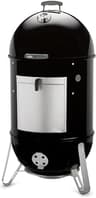
| Weber Smokey Mountain 22 | 726 sq in, two grates (Weber) | Charcoal | No — four dampers and a water pan | 48.5 in tall with the lid on; no thermostat at all |
| EAST OAK 30-inch Digital | 725 sq in | Electric | Yes — digital panel, 12-hour timer | Stated ceiling 275°F — smokes, will not crisp skin |
| Masterbuilt Gravity 600 | 600 sq in | Charcoal, fan-controlled | Yes — set a number, a fan holds it | Smallest here, and 52.8 in wide needs real patio space |
The trade nobody tells you about
Capacity and convenience pull in opposite directions at this size, and the table above shows it. The two cookers with the most room are the two with the lowest ceiling temperature: the ThermoTemp is a smoker and nothing else, and the EAST OAK states a 275°F maximum, which is ample for low and slow and useless for crisping poultry skin at the end of a cook.
Go the other way and the Gravity 600 publishes 225–700°F, so one cooker smokes a brisket and then sears steaks — but it has the least room on the page, needs power as well as charcoal, and carries a one-year warranty against the Traeger’s three and the Weber bowl’s ten. The Weber bullet is the honest middle: the most charcoal cooking area here, nothing electronic to fail, and no help whatsoever with the temperature.
Our gravity-versus-pellet comparison takes that last choice apart on its own terms, since those two cookers are the ones people genuinely cross-shop.
Two cooks instead of one bigger cooker
Worth saying, because it saves people real money. Barbecue reheats better than almost anything else you can cook. Pulled pork, beef ribs and brisket all survive a night in the fridge and a gentle reheat without much loss — which means a household that only cooks for twelve twice a year may be better off doing two cooks on a 700 square-inch cabinet than buying 960 and storing it for 363 days.
Where that logic breaks is a single large item: one turkey, one whole packer, one standing rib roast. You cannot cook half a turkey on Thursday. If your crowd cooking is one big centrepiece rather than lots of smaller cuts, buy the capacity. If it is volume, consider the calendar first. Our sizing guide has the same conversation without any picks in it, and the pulled pork roundup covers the cut most often cooked in quantity.
Whichever way you go, a cooker this size needs a multi-probe thermometer. USDA’s smoking guidance asks for two readings — the food and the chamber — and with four racks loaded you have four different microclimates and several pieces of meat finishing at different times. One probe is not enough information at this scale.