How to Reheat Smoked Meat Without Drying It Out
Low, slow, covered and with liquid added. That is the whole method — and it is the exact opposite of what most people do, which is to microwave a plate of brisket on full power and then conclude that leftovers are not worth keeping.
How this is funded:we earn a commission if you buy through our links, at no extra cost to you. It never changes which smoker we recommend, and we’ll tell you when we’d skip one. Full disclosure.
Reheat low, covered and with liquid added. A pan, a splash of stock or saved drippings, foil over the top, and a 225–275°F oven until the meat is hot through. That one method works for brisket, pulled pork, ribs, chicken and chuck roast, and it is the difference between leftovers that taste like the day you cooked them and leftovers that taste like a cafeteria.
Here is why it works. Smoked meat has already given up most of its free moisture in the cook, and the fridge pulls more out through evaporation. What is left is held in rendered fat and gelatin, and both of those are solid when cold and liquid when warm. Heat the meat gently in a humid, covered environment and that fat and gelatin melt back through the fibres. Heat it fast in dry air and they render out and run off, taking the texture with them.
The method, step by step
- Take it out of the fridge while the oven heats. Twenty minutes on the counter is fine and it shortens the time in the oven, which is the thing doing the damage. Do not leave it out longer than that — FDA’s rule is no more than two hours at room temperature, and one hour above 90°F.
- Set the oven low. 225°F to 275°F. The same band the meat was cooked in. A 350°F oven will get it hot faster and worse.
- Add liquid. Two or three tablespoons per portion is plenty. In order of preference: the drippings you saved from the original cook, then unsalted stock, then apple juice, then water. The liquid is there to create steam, not to poach the meat — do not submerge it.
- Cover it tightly. Foil crimped around the rim of the pan. This is the step people skip and it is the one that matters most: the cover is what turns a drying oven into a steaming one.
- Heat until it is hot through, then check with a probe. Time depends entirely on the size of the piece. USDA’s position on cooking applies just as well here: a thermometer is the only reliable way to know what is happening inside food, and poking the middle of the thickest part beats guessing from the clock.
- Uncover for the last few minutes if you want the bark back. Five to ten minutes with the foil off, or a minute under a hot broiler, firms the surface up again. Skip this for pulled pork, which does not have bark to save.
Worth being straight about what no reachable federal source publishes: FDA’s consumer storage guidance gives the two-hour rule and the appliance temperatures and noreheating temperature at all. The widely repeated “reheat leftovers to 165°F” figure is a sensible convention and we use it ourselves, but we are not going to attribute it to a page that does not say it. What we will say is that hot all the way through, verified with a probe rather than by touch, is the standard to hold yourself to.
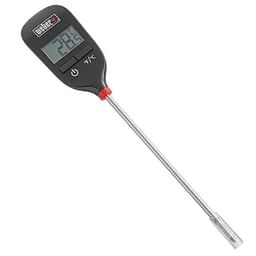
Weber Instant-Read Thermometer
Reheating is exactly the job a cheap instant-read thermometer is for: one quick poke into the thickest part of the piece to confirm the middle is hot, not just the outside. Guessing from the surface is how a brisket comes out scalding at the edges and cold in the centre.
The method per cut
| Cut | Best method | Liquid to add | Watch out for |
|---|---|---|---|
| Brisket | Covered pan, 250°F, whole or in a big chunk | Saved drippings, then beef stock | Reheating it already sliced — every cut face dries |
| Pulled pork | Covered pan 250°F, low hob, or slow cooker on low | Stock, apple juice or a little sauce | Adding so much sauce it becomes stew |
| Ribs | Wrapped in foil at 250°F, then opened to finish | A splash of juice inside the foil | Overshooting — they are thin and reheat fast |
| Smoked chicken or turkey | Covered pan, 250°F, skin side up | Stock, kept in the pan not on the skin | Soggy skin — uncover at the end |
| Sausage | Low pan or oven, barely any liquid | None needed — it has its own fat | Splitting the casings with high heat |
| Chuck roast, burnt ends | Covered pan, 250°F | Drippings or stock; sauce for burnt ends | Nothing much — these two reheat beautifully |
The pattern in that table is worth naming: the fattier and more collagen-rich the cut, the better it reheats. Pulled pork, burnt ends and chuck roast come back almost perfectly. A lean pork tenderloin or a turkey breast never quite does, which is an argument for slicing those cold into sandwiches rather than reheating them at all.
Store it properly and reheating gets much easier
Half of a good reheat is decided before the meat ever goes in the fridge.
- Save the drippings. Whatever is in the bottom of the wrap or the resting pan goes into a tub and into the fridge alongside the meat. It is the best possible reheating liquid and it costs nothing. The fat will set on top — that is fine, it goes in too.
- Store it in big pieces. Not sliced. Every cut surface is a place moisture leaves from. A brisket flat kept whole and sliced after reheating is noticeably better than the same flat sliced on Sunday and reheated on Tuesday.
- Get it cold fast. FDA is clear on this: never let food that needs refrigeration sit out for more than two hours, or one hour above 90°F — and that applies to leftovers, doggie bags and takeout alike. Its appliance guidance is at or below 40°F for the fridge and 0°F for the freezer, and it warns against packing a fridge so tightly that air cannot circulate.
- Wrap it in something that does not leak. For the fridge, a sealed tub with the drippings. For the freezer, wrap tightly first, then bag it — freezer burn is just dehydration, and it is permanent.
One thing not to do: do not reheat the meat in the same butcher paper it was wrapped in during the cook. Paper that has been sitting in the fridge wet is doing none of the job it did on the cooker, and it will fall apart. Paper is the right wrap for the cook and a sealed container is the right wrap for the fridge.
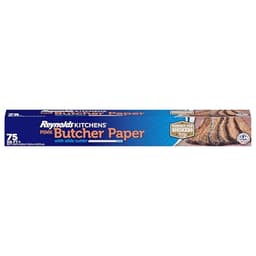
Reynolds Kitchens Pink Butcher Paper with Slide Cutter (75 sq ft)
Worth owning for the step before this one: wrapping a brisket or a shoulder in unwaxed pink butcher paper is what protects the bark through the stall and produces the drippings you will want for reheating. For the fridge itself, move the meat into a sealed tub — paper is not a storage wrap.
Price as of October 20, 2026. #ad How we’re funded
The sous vide and vacuum bag question
If you own a vacuum sealer and an immersion circulator, bagged meat in a water bath is genuinely the best reheating method there is — the meat cannot lose moisture to the air and the temperature cannot overshoot. It is how a lot of barbecue restaurants hold and serve.
We are not going to tell you to buy two appliances for leftovers. The covered-pan oven method gets you most of the way there for the price of a roll of foil, and the gap between the two is much smaller than the gap between either of them and a microwave.
When reheating is not the problem
If the meat was dry coming off the cooker, no reheating method will fix it, and it is worth checking which problem you actually have. Barbecue that was dry on day one usually got there through one of a short list of causes — cooked too hot, pulled too late, rested badly, or a lean cut treated like a fatty one — which our why is my smoked meat dry guide works through in order.
And if the question is really about serving later the same day rather than days later, you do not want reheating at all — you want a hold. A finished cut wrapped and dropped into an empty cooler stays hot and safe for hours without ever cooling down, which is a completely different and much better outcome. Our resting guide covers the cooler hold in full, and how much meat per person helps you avoid the leftovers question in the first place.
A note on food safety. Temperatures on this page follow USDA safe-minimum guidance. Always confirm doneness with a food thermometer, not by time or color. We’re enthusiasts sharing what we’ve researched, not professional pitmasters — when in doubt on safety, follow the USDA.
Frequently asked questions
How do you reheat smoked meat without drying it out?
Low oven heat, added liquid and a tight cover. Put the meat in a pan with a splash of stock, apple juice or its own saved drippings, cover the pan with foil, and reheat at 225–275°F until it is hot through. The cover traps steam so the meat reheats in a humid environment instead of a drying one, and the liquid replaces what the first cook and the fridge took out.
What temperature should you reheat smoked meat at?
Use a low oven — 225°F to 275°F is the band most barbecue cooks use, and it mirrors the temperature the meat was cooked at. Hot and fast reheating drives moisture out of the surface before the middle is warm. Note that FDA's consumer storage guidance publishes the two-hour rule and the appliance temperatures but no reheating temperature, so treat any specific reheat figure you see online as convention rather than federal guidance.
How do you reheat brisket?
Sliced or whole, the method is the same: into a pan with a little liquid, covered tightly with foil, in a 225–275°F oven until hot through. Whole or in a large chunk is far better than sliced — every cut face is a surface that loses moisture, so reheat the biggest piece you can and slice afterwards. Saving the drippings from the first cook and pouring them over before reheating is the single best thing you can do for it.
How do you reheat pulled pork?
Pulled pork is the most forgiving leftover in barbecue because it is already shredded and already mixed with its own fat. Put it in a covered pan with a splash of liquid — stock, apple juice, or a little sauce — and warm it at 250°F, stirring once or twice. It also reheats well in a covered pan on a low hob and in a slow cooker on low, which is the easy answer for a party.
How do you reheat ribs without them going tough?
Wrap the rack in foil with a splash of liquid, reheat at 250°F until hot, then open the foil and give it five minutes uncovered — brushing on sauce at that point if you want — to bring the surface back. Ribs are thin, so they reheat quickly and overshoot easily; check them earlier than you think you need to.
Can you reheat smoked meat in the microwave?
You can, and it is the worst option. A microwave heats unevenly and drives moisture out fast, which turns brisket leathery and chicken rubbery. If a microwave is all you have, use the lowest power setting, cover the plate, add a spoonful of liquid and work in short bursts, stopping to stir or turn. It will still be a worse result than ten minutes longer in an oven.
How long can you keep smoked meat in the fridge?
Get it refrigerated fast and judge it conservatively. FDA's rule is that food requiring refrigeration should never sit at room temperature for more than two hours — one hour if it is above 90°F — and that the fridge should be at or below 40°F (4°C), with the freezer at 0°F (-18°C). FDA does not publish a specific keeping time for cooked barbecue, so we are not going to invent one; freeze anything you will not eat in the next couple of days.
Is it better to freeze smoked meat whole or sliced?
Whole, or in the largest practical chunks. Every slice is two more surfaces exposed to air and to ice crystals, and sliced meat dries out both in the freezer and on reheating. Freeze big pieces with as much of their fat and juices as you can, and slice after reheating. FDA's guidance on appliance temperatures — 0°F for the freezer — is the other half of keeping it good.
Does reheated barbecue lose its smoke flavor?
Some, yes, and gently reheating is how you keep most of it. Smoke compounds sit on and just under the surface, and the things that strip them are high heat and liquid washing over the bark — which is another argument for covering the pan rather than submerging the meat, and for reheating in a low oven rather than boiling it in a bag of sauce.
Sources
- FDA — Are You Storing Food Safely? — FDA states the two-hour rule for leftovers, 'doggie bags' and take-out foods: 'Never allow meat, poultry, seafood, eggs, or produce or other foods that require refrigeration to sit at room temperature for more than two hours—one hour if the air temperature is above 90° F.' It also states 'Keep your appliances at the proper temperatures. Keep the refrigerator temperature at or below 40° F (4° C). The freezer temperature should be 0° F (-18° C)', and advises against crowding the refrigerator or freezer so tightly that air cannot circulate. The page publishes NO reheating temperature (accessed October 17, 2026)
- FDA — Safe Food Handling — FDA states 'There are three safe ways to defrost food: in the refrigerator, in cold water, and in the microwave', that you should 'Never thaw food at room temperature, such as on the counter top', and that 'Food thawed in cold water or in the microwave should be cooked immediately.' On doneness: 'Color and texture are unreliable indicators of safety. Using a food thermometer is the only way to ensure the safety of meat, poultry, seafood, and egg products for all cooking methods.' On leftovers: 'Refrigerate or freeze meat, poultry, eggs, seafood, and other perishables within 2 hours of cooking or purchasing. Refrigerate within 1 hour if the temperature outside is above 90° F.' The page carries a safe-minimum-internal-temperature table but states no danger-zone range and no bacterial multiplication rate (accessed October 11, 2026)
- USDA FSIS — Safe Minimum Internal Temperature Chart — USDA safe minimum internal temperatures: 145°F for beef/pork/lamb steaks, chops and roasts (with a 3-minute rest), 160°F for ground meats, 165°F for all poultry (accessed July 22, 2026)
- USDA FSIS — Food Thermometers — USDA on why a food thermometer is the only reliable way to know food has reached a safe temperature, and how to place the probe (accessed July 22, 2026)
- USDA FSIS — Smoking Meat and Poultry — USDA guidance to keep the smoker between 225°F and 300°F, use two thermometers (food + smoker), and refrigerate within 2 hours (accessed July 22, 2026)
Keep reading
How to Rest Smoked Meat
The other side of this question: holding meat hot from the moment it is done until you serve it.
Rest itHow to Smoke Pulled Pork
The cut that reheats best of all — and the cook that produces the drippings worth saving.
Cook itWhy Is My Smoked Meat Dry?
If it was dry before it ever hit the fridge, reheating is not the problem you need to solve.
Diagnose itBest Butcher Paper
What to wrap a big cut in for the fridge or the freezer, and why foil behaves differently.
See paper