Smoke & Slow

Best Wood Pellets for Smoking

Your pellet grill's fuel is also its only source of flavor. The blends worth buying, the one single wood to keep for beef, and how to spot a bag that is mostly filler.

By Stephen V.Last updated How we pick

On a pellet grill, the bag in the hopper is both your fuel and your entire flavor decision — there is no separate wood to add. That makes pellets more consequential than they look, and it also makes them simpler: one good all-round blend will cover everything you cook for your first year, and a single bag of hickory alongside it covers the one case where the blend is too polite.

The good news is that pellets are cheap and the differences between reputable brands are modest. The bad news is that a minority of bargain bags are mostly a cheap base wood — oak or alder — with flavor oil sprayed on, which burns differently and can leave more ash in your fire pot. Below are four bags worth buying and how to read a label so you can tell. Picks are chosen from what the listings actually state (how we pick), never from taste tests we did not run, and prices are pulled live.

How this is funded:we earn a commission if you buy through our links, at no extra cost to you. It never changes which smoker we recommend, and we’ll tell you when we’d skip one. Full disclosure.

Quick picks

Ranked on published specs, beginner-friendliness and value. Select a row to jump to the full write-up. We haven’t cooked on every one of these — here is exactly what we do instead.

#ProductBest forPrice
1
Traeger Signature Blend Hardwood Pellets (18 lb)

Traeger Signature Blend Hardwood Pellets (18 lb)

The default bag. Hickory for backbone, maple for sweetness, cherry for color — a blend that suits pork, poultry and beef without asking you to think about it. If you own a pellet grill and only ever want to buy one kind of pellet, buy this one and spend your attention on the cook instead.

Best overall / start here
$19.99 · View on Amazon

Price as of September 5, 2026. #ad How we’re funded

2
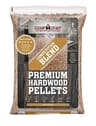
Camp Chef Competition Blend BBQ Pellets (20 lb)

Camp Chef Competition Blend BBQ Pellets (20 lb)

The value bag. A similar three-wood profile to the big-brand blend, two more pounds in the sack, and usually a lower price — which adds up quickly once you work out that a long cook eats one to three pounds an hour. It runs cleanly in any brand of pellet grill, whatever the sticker on your hopper says.

Best value
$18.99 · View on Amazon

$19.995% off

Price as of September 5, 2026. #ad How we’re funded

3
Traeger Hickory Hardwood Pellets (18 lb)

Traeger Hickory Hardwood Pellets (18 lb)

The bag to run when you cook beef. Straight hickory is the bacon-forward, unmistakably-barbecue smoke that brisket and beef ribs are supposed to taste like, and because a pellet grill produces lighter smoke than a charcoal pit, hickory is far harder to overdo here than it would be in a bullet. Keep a bag alongside your everyday blend.

Best for brisket and beef
$19.99 · View on Amazon

Price as of September 5, 2026. #ad How we’re funded

4
CookinPellets Perfect Mix Hardwood Pellets (40 lb)

CookinPellets Perfect Mix Hardwood Pellets (40 lb)

The bulk bag for when you have decided you are doing this properly. Forty pounds of four-wood blend with no cheap base wood underneath it, which is the thing worth checking on budget pellets — plenty of blends are mostly oak or alder with a flavor oil sprayed on. If you smoke most weekends, this is the cheapest honest way to keep the hopper full.

Best bulk buy
$39.89 · View on Amazon

$41.995% off

Price as of September 5, 2026. #ad How we’re funded

The picks in full

#1Best overall / start here

Traeger Signature Blend Hardwood Pellets (18 lb)

The default bag. Hickory for backbone, maple for sweetness, cherry for color — a blend that suits pork, poultry and beef without asking you to think about it. If you own a pellet grill and only ever want to buy one kind of pellet, buy this one and spend your attention on the cook instead.

What’s good

  • Balanced three-wood blend suits pork, poultry and beef alike
  • 100% hardwood with no oils or fillers, per the listing
  • Sold nearly everywhere, so you will not get stranded mid-cook

Trade-offs

  • 18 lb bag is smaller than most competitors' 20 lb
  • Milder than straight hickory if you want a bold beef smoke
WoodsHickory, maple, cherry blend
Weight18 lb
Composition100% all-natural hardwood (per listing)
Best forEverything — the safe default

Specs read from the product listing, on August 18, 2026. “Not published” means the maker doesn’t state that figure there.

#2Best value

Camp Chef Competition Blend BBQ Pellets (20 lb)

The value bag. A similar three-wood profile to the big-brand blend, two more pounds in the sack, and usually a lower price — which adds up quickly once you work out that a long cook eats one to three pounds an hour. It runs cleanly in any brand of pellet grill, whatever the sticker on your hopper says.

What’s good

  • 20 lb bag, usually cheaper per pound than the brand-name blend
  • Balanced maple-hickory-cherry profile works on any meat
  • Runs fine in any pellet grill regardless of brand

Trade-offs

  • Slightly sweeter than a hickory-forward blend
  • Bag closure is basic — decant it into a sealed bucket
WoodsMaple, hickory, cherry blend
Weight20 lb
CompositionHardwood pellets (per listing)
Best forEveryday cooking on a budget

Specs read from the product listing, on August 18, 2026. “Not published” means the maker doesn’t state that figure there.

#3Best for brisket and beef

Traeger Hickory Hardwood Pellets (18 lb)

The bag to run when you cook beef. Straight hickory is the bacon-forward, unmistakably-barbecue smoke that brisket and beef ribs are supposed to taste like, and because a pellet grill produces lighter smoke than a charcoal pit, hickory is far harder to overdo here than it would be in a bullet. Keep a bag alongside your everyday blend.

What’s good

  • Single-wood hickory gives the classic strong barbecue flavor
  • A pellet grill's lighter smoke output makes hickory hard to overdo
  • Pairs naturally with beef and heavy pork rubs

Trade-offs

  • Too assertive for delicate fish or a first chicken
  • 18 lb bag rather than the 20 lb most competitors sell
Woods100% hickory
Weight18 lb
Composition100% all-natural hardwood (per listing)
Best forBrisket, beef ribs, bold pork

Specs read from the product listing, on August 18, 2026. “Not published” means the maker doesn’t state that figure there.

#4Best bulk buy

CookinPellets Perfect Mix Hardwood Pellets (40 lb)

The bulk bag for when you have decided you are doing this properly. Forty pounds of four-wood blend with no cheap base wood underneath it, which is the thing worth checking on budget pellets — plenty of blends are mostly oak or alder with a flavor oil sprayed on. If you smoke most weekends, this is the cheapest honest way to keep the hopper full.

What’s good

  • 40 lb bag — the best price per pound of the picks here
  • Four real hardwoods, no filler base wood, per the listing
  • Balanced enough to be the only pellet you buy

Trade-offs

  • A 40 lb bag is awkward to lift and needs dry storage
  • Overkill if you only smoke a few times a year
WoodsHickory, cherry, hard maple, apple
Weight40 lb
CompositionNatural hardwood, no filler wood (per listing)
Best forBuying in bulk and cooking often

Specs read from the product listing, on August 18, 2026. “Not published” means the maker doesn’t state that figure there.

Blend or single wood?

A blend mixes two to four hardwoods so you get some backbone, some sweetness and some color in one bag. It is the sensible default: you are not swapping bags between cooks, and the flavor suits pork, poultry and beef without any thought. If you buy one bag ever, buy a blend.

A single wood — straight hickory, straight apple, straight mesquite — gives you a specific flavor rather than a balanced one. That is worth having for exactly one reason as a beginner: beef. Brisket and beef ribs carry a strong smoke better than anything else you will cook, and a hickory bag makes them taste the way people expect barbecue to taste. Everything else is a refinement you can get to later.

The species logic is the same as it is for chunks in a charcoal smoker, so our wood for smoking guide applies directly. One difference worth knowing: because a pellet grill burns more completely than a smoldering wood pan, the smoke it makes is lighter — so strong woods are considerably harder to overdo here than in a charcoal cooker.

How to read a pellet bag

Three things on the label decide whether a bag is honest.

  • “100% hardwood” versus a named species.A bag that says “100% hickory” is hickory. A bag that says “hickory flavor” or lists a flavor without a composition statement is very often a base wood carrying an additive. Neither is unsafe; the second is not what you think you bought.
  • No oils, binders or fillers.Food-grade pellets should be compressed sawdust held together by the wood’s own lignin and nothing else. Heating pellets, which do contain additives, are not food-grade and must never go in a cooker.
  • Bag weight. Bags are 18, 20 or 40 lb and are frequently priced as though they were identical. Work out the price per pound before deciding one bag is cheaper than another.

One warning that matters more than any flavor question: never use heating pellets or wood-stove pellets in a grill. They are made from mixed and treated wood with binders, and they are not intended to go anywhere near food.

How many pellets a cook actually uses

Roughly one to three pounds an hour, and the range is that wide because temperature dominates everything. A grill holding 225°F on a mild day sits near the bottom of that range; the same grill at 375°F on a cold windy afternoon sits at the top. Wind and an uninsulated chamber push it higher still.

In practical terms, a twelve-hour brisket at 250°F will usually finish comfortably inside a 20 lb bag, and a rack of ribs is a few pounds. What that means for buying is simple: if you smoke more than a couple of times a month, the 40 lb bulk bag is meaningfully cheaper per cook, and if you smoke occasionally the 18 or 20 lb bags are easier to store and stay fresher. Our cost-to-run guide puts the numbers beside charcoal and electricity.

Always start a long cook with a full hopper, and check it before you go to bed on an overnight. A pellet grill that runs out of fuel does not fail gracefully — it drops out of temperature, and on many models throws an error and shuts down.

Storage is the thing most people get wrong

Pellets are compressed sawdust, and they are held together only by pressure and the wood’s own lignin. Let them get damp and they swell, crumble back into sawdust, and jam the auger — which is the single most common cause of a pellet grill “breaking”. A bag left open in a humid garage can be ruined in a few weeks.

Decant into a sealed bucket or a lidded bin the day you open a bag, keep it off a concrete floor, and empty the hopper if the grill will sit unused for more than a couple of weeks — hoppers are not sealed and pull in moisture. If pellets rattle like gravel they are fine; if they feel soft or leave dust on your hand, throw them out rather than feeding them to the auger.

Do pellet brands have to match your grill?

No. Every pellet on this page is a standard six-millimeter food-grade pellet and will run in any pellet grill regardless of the badge on the hopper. Manufacturers would prefer you bought theirs, and some warranties have historically implied a requirement, but there is no mechanical reason to match brands.

What does matter is consistency of size and dryness, which is why sticking to reputable bags is worth a few cents a pound. A bag full of dust and short pieces feeds unevenly and produces temperature swings that look like a controller fault and are not. If your grill has started running erratically, change the pellets before you diagnose anything else — and see is a pellet smoker worth it for the wider ownership picture.

Frequently asked questions

What are the best wood pellets for a beginner?

A balanced hardwood blend of hickory, maple and cherry. It suits pork, poultry and beef without you having to think about matching wood to meat, which is one fewer decision while you are learning everything else. Add a bag of straight hickory later for brisket and beef ribs.

What pellets are best for brisket?

Hickory, or a hickory-forward blend. Beef carries a strong smoke better than any other meat, and because a pellet grill produces lighter smoke than a charcoal pit, hickory is much harder to overdo here. Oak is the traditional Texas answer and is milder if you want a middle ground.

Can you use any brand of pellets in any pellet grill?

Yes. Standard food-grade barbecue pellets are the same six-millimeter size across brands and will run in any pellet grill. What matters is that they are dry, consistent in size and free of dust — poor-quality pellets feed unevenly and cause temperature swings that look like a controller fault.

How many pounds of pellets does a smoker use per hour?

Roughly one to three pounds an hour. Low temperatures on a mild day sit at the bottom of that range and high temperatures on a cold, windy day at the top. A twelve-hour brisket at 250°F will usually finish inside a 20 lb bag.

How should you store wood pellets?

In a sealed bucket or lidded bin, off a concrete floor, out of humidity. Damp pellets swell and crumble into sawdust, which jams the auger and is the most common cause of a pellet grill appearing to fail. Empty the hopper too if the grill will sit unused for more than a couple of weeks.

Sources

  • USDA FSIS — Smoking Meat and PoultryUSDA guidance to keep the smoker between 225°F and 300°F, use two thermometers (food + smoker), and refrigerate within 2 hours (accessed July 22, 2026)

Keep reading