Smoke & Slow

Best Wood for Smoking Turkey

Turkey is lean, mild and large, which is the worst possible combination for a heavy smoking wood. It sits in the smoke for hours with very little fat to buffer it, so the wood that makes a pork shoulder excellent will make a turkey taste like an ashtray.

By Stephen V.Last updated How we pick

Buy apple. It is the mildest and sweetest of the common smoking woods, which is exactly what a lean bird wants, and it is nearly impossible to overdo. If you want a deeper mahogany skin for the table, buy cherry instead, or buy both and use three apple chunks to one cherry. If you own an electric or gas smoker, buy the chip variety pack rather than any of the chunk bags, because chips are the format your cooker is built for.

Turkey is the one cook where wood choice genuinely changes the outcome rather than nudging it. Three things stack against you. The bird is lean, so there is little fat to carry and soften strong smoke compounds. It is large, so it is in the smoke for four hours or more. And it is the centrepiece of a meal you cannot re-cook if it goes wrong, which is not a flavor argument but it is the reason to be conservative.

So the rule for turkey is the opposite of the rule for beef: use less wood than you think, and use a milder one.

How this is funded:we earn a commission if you buy through our links, at no extra cost to you. It never changes which smoker we recommend, and we’ll tell you when we’d skip one. Full disclosure.

Quick picks

Ranked on published specs, beginner-friendliness and value. Select a row to jump to the full write-up. We haven’t cooked on every one of these — here is exactly what we do instead.

#ProductBest forPrice
1
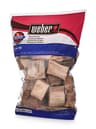
Weber Apple Wood Chunks (4 lb)

Weber Apple Wood Chunks (4 lb)

The wood to start with. Apple is mild and sweet, so it's very hard to over-smoke your food with it — which is exactly what a beginner wants while you learn how much smoke you actually like. It suits pork, poultry and even a first brisket.

Best overall for turkey
$10.99 · View on Amazon

Price as of October 6, 2026. #ad How we’re funded

2
Weber Cherry Wood Chunks (4 lb)

Weber Cherry Wood Chunks (4 lb)

The pretty one. Cherry is mild and slightly sweet like apple, but it also deepens the bark to a rich mahogany color — which is why so many people blend it with hickory. A great second bag once you've started with apple.

Best for color
$10.98 · View on Amazon

$13.9922% off

Price as of October 6, 2026. #ad How we’re funded

3
Western BBQ Smoking Wood Chips Variety Pack (4)

Western BBQ Smoking Wood Chips Variety Pack (4)

The best way to find out which wood you actually like. Four bags of chips — apple, cherry, hickory and mesquite — so you can taste the difference across a few cooks instead of committing to one flavor. Chips (not chunks) also make this the right pick for electric and gas smokers, which is what many beginners own.

Best for electric and gas smokers
$27.99 · View on Amazon

Price as of October 6, 2026. #ad How we’re funded

4
Weber Hickory Wood Chunks (4 lb)

Weber Hickory Wood Chunks (4 lb)

The taste most people picture when they think 'barbecue.' Hickory is bold and bacon-like, superb on pork ribs and shoulder — but strong enough that a little goes a long way, so use fewer chunks than you think until you know your tolerance.

Use one chunk, as a blend
$10.99 · View on Amazon

$13.9921% off

Price as of October 6, 2026. #ad How we’re funded

The picks in full

#1Best overall for turkey

Weber Apple Wood Chunks (4 lb)

The wood to start with. Apple is mild and sweet, so it's very hard to over-smoke your food with it — which is exactly what a beginner wants while you learn how much smoke you actually like. It suits pork, poultry and even a first brisket.

What’s good

  • Mild, sweet smoke that's very hard to overdo
  • Works with pork, chicken and beef alike
  • Clean, kiln-dried chunks in a cheap 4-lb bag

Trade-offs

  • Chunks suit charcoal smokers; electric/gas usually want chips
  • Milder than hickory if you want a bold, classic BBQ punch
WoodApple (mild fruit wood)
FormChunks
Weight4 lb
Best withPork, poultry, first briskets

Specs read from the product listing, on July 22, 2026. “Not published” means the maker doesn’t state that figure there.

#2Best for color

Weber Cherry Wood Chunks (4 lb)

The pretty one. Cherry is mild and slightly sweet like apple, but it also deepens the bark to a rich mahogany color — which is why so many people blend it with hickory. A great second bag once you've started with apple.

What’s good

  • Mild, forgiving smoke like apple
  • Gives ribs and poultry a beautiful dark color
  • Blends well with a stronger wood like hickory

Trade-offs

  • Mild flavor alone can be subtle on beef
  • Chunks are for charcoal, not electric smokers
WoodCherry (mild fruit wood)
FormChunks
Weight4 lb
Best withPoultry, ribs, color on bark

Specs read from the product listing, on July 22, 2026. “Not published” means the maker doesn’t state that figure there.

#3Best for electric and gas smokers

Western BBQ Smoking Wood Chips Variety Pack (4)

The best way to find out which wood you actually like. Four bags of chips — apple, cherry, hickory and mesquite — so you can taste the difference across a few cooks instead of committing to one flavor. Chips (not chunks) also make this the right pick for electric and gas smokers, which is what many beginners own.

What’s good

  • Four woods to compare — the fastest way to learn your taste
  • Chips are the correct format for electric and gas smokers
  • Covers mild (apple/cherry) through bold (hickory/mesquite)

Trade-offs

  • Chips burn faster than chunks — you refill more often
  • Mesquite is very strong; use it sparingly at first
WoodsApple, cherry, hickory, mesquite
FormChips (4 bags)
Best withElectric / gas smokers, experimenting
NoteUse mesquite lightly

Specs read from the product listing, on July 22, 2026. “Not published” means the maker doesn’t state that figure there.

#4Use one chunk, as a blend

Weber Hickory Wood Chunks (4 lb)

The taste most people picture when they think 'barbecue.' Hickory is bold and bacon-like, superb on pork ribs and shoulder — but strong enough that a little goes a long way, so use fewer chunks than you think until you know your tolerance.

What’s good

  • The quintessential smoky-BBQ flavor
  • Excellent on ribs, pulled pork and beef
  • Cheap and widely available

Trade-offs

  • Easy to overdo — go light at first
  • Can turn acrid on delicate foods like fish or chicken
WoodHickory (strong)
FormChunks
Weight4 lb
Best withPork ribs, pulled pork, beef

Specs read from the product listing, on July 22, 2026. “Not published” means the maker doesn’t state that figure there.

The four picks, and what each one does to a turkey

WoodStrengthFormatWhat it does to the bird
AppleMildestChunks, 4 lbLight sweetness, very hard to overdo. The safe default.
CherryMildChunks, 4 lbSimilar sweetness plus a noticeably darker, redder skin.
Variety chipsMild to strongChips, 4 bagsApple and cherry for the bird; hickory and mesquite for other cooks.
HickoryStrongChunks, 4 lbOne chunk among three fruit chunks adds backbone. Alone it dominates.

Chips or chunks: your smoker decides, not you

This is the single most common mistake on turkey day, and it has nothing to do with flavor. Chunks are fist-sized pieces that smoulder for an hour or more and are designed to sit on a charcoal fire. Chips are shavings that burn up in twenty to forty minutes and are designed for the small metal tray in an electric or gas smoker.

Put chunks in an electric smoker’s chip tray and they will barely smoulder, because there is not enough heat concentrated under them. Put chips on a charcoal fire and they are gone before the bird has warmed up. If you own a Masterbuilt or similar electric cabinet, buy the chip variety pack on this page. If you own a bullet, kamado, drum or offset, buy the chunks. Our chips-versus-chunks guide covers the rest of it, including the soaking question.

Pellet grill owners are a third case: your pellets are your wood, so you choose a bag rather than a chunk. The pellet roundup is the right page, and a fruit-forward or balanced blend is the turkey answer there too.

How much wood for a 14-pound bird

Less than you would use on pork, and front-loaded. Meat stops taking on smoke flavor meaningfully once the surface dries and the bark sets, so wood added in the last hour of a turkey is mostly wasted and can taste harsh.

  • Charcoal cooker, chunks: three to four fist-sized apple chunks, placed on and around the lit coals at the start, is plenty for a whole bird. Four chunks of hickory would be far too much.
  • Electric or gas, chips: two or three tray-loads over the first couple of hours, then stop. The EAST OAK listing states two to three hours of smoke per chip load, which is a useful indication of the interval these cabinets expect.
  • Pellet grill: nothing to do. The hopper handles it, and if you want more smoke the answer is a smoke tube, not more pellets.

Watch the smoke rather than the clock. Thin blue smoke is what you want; white billowing smoke means the wood is smouldering badly and that is where bitter flavors come from. On a lean bird you will taste the difference.

The thing that matters more than the wood

Temperature. USDA’s turkey guidance is specific and it is worth following on this cook above all others: poultry needs to reach 165°F internal, and USDA recommends against smoking a turkey at the very low end of the usual barbecue range because a large bird spends too long in the temperature danger zone getting there. Smoke a turkey hotter than you would smoke a brisket.

That has a knock-on effect on wood, which is why it is on this page: a hotter cook is a shorter cook, so there is less time for smoke to accumulate, which makes a mild wood even more clearly the right choice. The bird will also give you better skin, which is the other thing people complain about after their first smoked turkey.

Our whole smoked turkey guide has the temperatures and the timing, and the turkey breast guide covers the smaller version. If the cooker itself is the question, best smokers for turkey explains why a 275°F ceiling is a problem for poultry skin. And before any of it, a thermometer— USDA treats one as the only reliable way to know a bird is safe, and turkey is the cook where guessing has the highest cost.

Frequently asked questions

What is the best wood for smoking turkey?

Apple. It is the mildest and sweetest of the common smoking woods, and turkey is lean enough that a strong wood turns harsh over a four-hour cook. Cherry is an equally good choice if you want a darker skin, and a three-to-one blend of apple and hickory works if you want more backbone. Avoid mesquite entirely on poultry.

Can you use hickory on turkey?

In small amounts, as part of a blend. One hickory chunk among three apple or cherry chunks gives a recognisably barbecue flavor without taking over. A full load of hickory on a lean bird over four hours is the most common way a smoked turkey ends up tasting bitter and overpowering.

Is mesquite good for turkey?

No. Mesquite is the strongest common smoking wood and it turns acrid on delicate meat. It belongs on beef and on short, hot cooks. The variety pack on this page includes it, and the right use for that bag is a steak later in the year, not the turkey.

Should I use chips or chunks for turkey?

Whichever your smoker is built for, not whichever you prefer. Chunks smoulder for an hour or more and need a charcoal fire under them. Chips burn out in twenty to forty minutes and suit the small tray in an electric or gas cabinet. Using the wrong format is the most common reason a smoked turkey ends up with no smoke flavor at all.

How much wood do I need for a whole turkey?

On charcoal, three to four fist-sized fruit-wood chunks placed on the coals at the start. On an electric or gas cabinet, two or three chip loads over the first couple of hours, then stop. Wood added in the final hour contributes little flavor and can taste harsh, because the surface has already dried and set.

Do I need to soak the wood first?

No. Soaked wood mostly makes steam, because the water has to boil off before the wood can smoulder, so it delays the smoke rather than extending it. This matters more on turkey than on other cooks, since you want the smoke early while the skin is still taking it on.

What temperature should I smoke a turkey at?

Hotter than you would smoke a brisket. USDA's turkey guidance advises against the very low end of the barbecue range for a large bird, because it spends too long warming through, and the bird needs to reach 165°F internal. A hotter, shorter cook also gives better skin and takes on less smoke — which is another reason to pick a mild wood.

Can I use the same wood for turkey and ham?

Yes, and apple or cherry suits both. Cured ham is already strongly flavored and salty, so a mild fruit wood complements it rather than competing. If you are cooking both on the same day, one bag of apple chunks covers the pair.

Sources

  • USDA FSIS — Turkey: Alternate Routes to the Table (smoking a turkey) — USDA's smoking instructions for turkey: bring the smoker to 225 to 300°F before the bird goes on and add charcoal every 1 to 2 hours as necessary to maintain 225 to 300°F; place the smoker in an area shielded from winds to maintain a safe cooking temperature; do not stuff the turkey, because smoking cooks at a low temperature and it can take too long for the stuffing to reach 165°F; estimate 20 to 30 minutes per pound; use hardwood or fruitwood and never a softwood (pine, fir, cedar or spruce), which gives food a turpentine flavor; and the turkey is safely cooked when a food thermometer reads 165°F in the innermost part of the thigh and wing and the thickest part of the breast (accessed September 18, 2026)
  • USDA FSIS — Turkey Basics: Safe Cooking — USDA guidance for cooking a whole turkey: set the oven temperature no lower than 325°F, and the turkey (and the center of any stuffing) must reach a safe minimum internal temperature of 165°F, checked in the innermost part of the thigh and wing and the thickest part of the breast (accessed September 18, 2026)
  • USDA FSIS — Safe Minimum Internal Temperature Chart — USDA safe minimum internal temperatures: 145°F for beef/pork/lamb steaks, chops and roasts (with a 3-minute rest), 160°F for ground meats, 165°F for all poultry (accessed July 22, 2026)
  • USDA FSIS — Smoking Meat and Poultry — USDA guidance to keep the smoker between 225°F and 300°F, use two thermometers (food + smoker), and refrigerate within 2 hours (accessed July 22, 2026)

Keep reading