Do Wood Pellets Go Bad?
Not in the way food goes bad. Pellets have no expiry date and nothing in them spoils — they are compressed sawdust held together by the wood's own lignin. What ruins them is water, and it only takes a little.
How this is funded:we earn a commission if you buy through our links, at no extra cost to you. It never changes which smoker we recommend, and we’ll tell you when we’d skip one. Full disclosure.
Wood pellets do not expire, do not rot and have no shelf life printed on the bag. Kept genuinely dry, a bag you bought two years ago will cook exactly like a new one. There is nothing in a pellet that can spoil: it is sawdust compressed under enough pressure that the wood’s own lignin melts and glues it together, and that is the whole recipe. No binders, no oils, nothing organic that breaks down.
So the honest answer to the question is: pellets do not go bad, they get wet. And a wet pellet is not a slightly worse pellet. It is a different object, and your grill cannot use it.
What water actually does
The lignin bond that holds a pellet together releases when it takes on moisture. The pellet swells, softens, and then falls apart into the sawdust it was made from. You can watch it happen in a glass of water in about a minute.
That matters because of what a pellet grill is. An auger is a screw in a tube, sized for hard, dry, uniform cylinders, and the controller decides how much heat to make by deciding how fast to turn it. Feed it swollen pellets and they jam the screw. Feed it crumbled ones and the dust packs into a dense plug that will not move at all. Either way the fire pot stops getting fuel.
The failure modes, in rough order of how annoying they are:
- A low-temperature shutdown. The grill notices the chamber cooling and either alarms or cuts out. Irritating, but it tells you.
- A silent stall mid-cook. The auger keeps turning against a plug and no pellets arrive. This is the one that costs you a brisket, because it can happen at 3 a.m. and nothing complains.
- A jammed auger that needs stripping. Emptying a hopper of damp sawdust and clearing a packed auger tube is a genuinely unpleasant hour.
It is also the reason a leave-in thermometer that reads the pit is not optional on a pellet grill. USDA’s smoking guidance asks for two readings, the food and the chamber, and the chamber reading is what tells you the fire has gone out before the meat has been sitting in the danger zone for hours.
The three-test check on a suspect bag
| Test | Good pellets | Do not load these |
|---|---|---|
| Look at the bottom of the bag | A little fine dust, mostly whole pellets | Lots of dust and broken fragments; pellets stuck together |
| Squeeze one hard between finger and thumb | Hard, will not deform, feels like a dowel | Gives, crumbles, or feels slightly soft |
| Drop a few in a glass of water | Sink and hold their shape for a minute or more | Break up and cloud the water almost immediately |
The squeeze test is the one to learn, because it takes two seconds and you can do it at the hopper before you tip a bag in. The water test is useful for settling an argument about a bag you are not sure about — it is worth doing once on a known-good pellet so you know what the pass looks like.
How to store them properly
Everything here is about one idea: a paper bag folded over at the top is not storage.
- Use a sealed rigid container. A food-grade bucket with a gasket lid, or a metal bin with a tight lid. Rigid matters as much as sealed, because a bag that gets crushed turns pellets into dust on its own.
- Get it off the concrete. Concrete floors wick moisture upward continuously. A pallet, a plank or a shelf solves it.
- Keep the bag inside the container. Otherwise you will have a bucket of unidentifiable pellets by spring and no idea whether it is hickory or a competition blend.
- Do not store them in the hopper. A hopper has an opening for the auger and a lid that does not seal, and it lives outdoors. A few dry days is fine. A wet fortnight is how most people find out about this page.
- Empty the hopper at the end of the season. Tip the pellets back into the sealed container, run the last few through the fire pot, and leave the hopper empty.
Bag size interacts with all of this, which is why it is worth thinking about before you buy. A 40 lb bag is better value per pound and a bigger storage problem; an 18 lb bag is easier to keep dry and more expensive per cook.
Which bag to buy, given all that
Two picks from our pellet roundup, chosen here for how they fit the storage question rather than for flavor alone. Both state the actual woods in them, which matters because a cheap bag with a flavor oil sprayed over a base wood is the one case where a long-stored pellet really can disappoint.
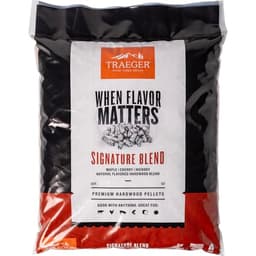
Traeger Signature Blend Hardwood Pellets (18 lb)
An 18 lb bag of hickory, maple and cherry fits in a single bucket with room to spare, which is the practical reason to buy the smaller bag if you cook a few times a month. The listing states 100% hardwood with no oils or fillers, so there is nothing in it to deteriorate even if it sits through a winter.
Price as of October 6, 2026. #ad How we’re funded
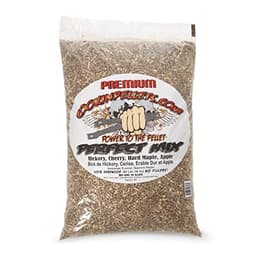
CookinPellets Perfect Mix Hardwood Pellets (40 lb)
40 lb of four real hardwoods with no cheap base wood underneath, at the best price per pound of the bags we rank — worth it only if you have somewhere genuinely dry to put it, because an open 40 lb bag in a damp shed is the single most expensive way to learn this lesson.
What to do with a ruined bag
Do not try to dry them out. Once the lignin has let go, drying gives you dusty fragments rather than pellets, and those are exactly what plugs an auger. There is no recovery step.
Plain hardwood pellets with no additives make decent garden mulch or bedding, and they are also perfectly good fuel for a smoke tubeif they are merely dusty rather than genuinely wet — a tube has no auger to jam, so it is far less fussy than a grill about what you put in it. Beyond that, bin them, and clear the hopper properly before you load good ones on top.
If this has put you off the fuel rather than the storage, the honest comparison is on our pellet versus charcoal page— charcoal does not care about getting wet nearly as much, which is a real advantage and one of several reasons people end up with both. Our gravity versus pellet comparison covers the cooker that holds a temperature the way a pellet grill does while burning charcoal instead.
Frequently asked questions
Do wood pellets expire?
No. Pellets are compressed sawdust bound by the wood's own lignin, with nothing in them that spoils, and makers do not print expiry dates on the bags. Kept genuinely dry they are good years later. What people are seeing when they say a bag has 'gone bad' is moisture damage, not age.
How long do wood pellets last in storage?
Indefinitely if they stay dry, and a few damp weeks if they do not. There is no clock running — the variable is humidity, not time. A sealed bucket in a garage will still be fine next season; an opened bag in an unheated shed through a wet winter very often is not.
What happens if wood pellets get wet?
They swell, soften and fall apart into sawdust. A pellet grill's auger is sized for hard, dry, uniform pellets, so swollen ones jam it and crumbled ones pack into a dense plug that will not feed. The grill then either shuts down on a low-temperature error or, worse, stops feeding mid-cook with meat inside it.
How can you tell if pellets have gone bad?
Three checks. Look for dust and broken fragments at the bottom of the bag rather than whole pellets. Squeeze one between finger and thumb — a good pellet is hard and will not deform, a damp one crumbles. And drop a few in a glass of water: a sound pellet sinks and holds together for a while, a compromised one breaks up almost at once.
Can you use wet pellets?
No, and do not try to dry them out either. Once the lignin bond has released, the pellet has lost the density and the shape the auger depends on, and drying it gives you crumbly, dusty fragments rather than a pellet. Use them as garden mulch or bin them, and empty the hopper rather than topping it up over the top of them.
Should I leave pellets in the hopper between cooks?
Not for long. A hopper is not weatherproof — it has gaps for the auger and usually a loose-fitting lid, and it sits outdoors through whatever the weather does. For a few days in dry conditions it is fine. Over a wet week or a season it is the single most common way people ruin pellets, and it is the one that stops a cook halfway through.
How should I store wood pellets?
In a sealed, rigid, airtight container, indoors or in a garage, off a concrete floor. A food-grade bucket with a gasket lid or a lidded metal bin both work. Concrete wicks moisture upward, so a pallet, a plank or a shelf matters more than people expect. Keep the original bag inside the container so you still know which wood it is.
Do pellets lose flavor over time?
Not meaningfully, if they stay dry. The flavor comes from the hardwood itself rather than from a volatile coating, and there is nothing to evaporate off a sealed, dry pellet. Bags that use a flavor oil sprayed over a cheap base wood are a different matter, which is an argument for buying pellets that state the actual woods in them.
Sources
- USDA FSIS — Smoking Meat and Poultry — USDA guidance to keep the smoker between 225°F and 300°F, use two thermometers (food + smoker), and refrigerate within 2 hours (accessed July 22, 2026)
- USDA FSIS — Safe Minimum Internal Temperature Chart — USDA safe minimum internal temperatures: 145°F for beef/pork/lamb steaks, chops and roasts (with a 3-minute rest), 160°F for ground meats, 165°F for all poultry (accessed July 22, 2026)
Keep reading
Best Pellets for Smoking
Which bag to buy, what the blends actually contain, and why a base wood with flavor oil on it is worth avoiding.
See the picksBest Pellet Smokers for Beginners
The cookers these pellets go in, and what the controller is actually doing with them.
CompareHow to Clean a Smoker
Includes the fire pot and hopper housekeeping that keeps an auger feeding properly.
Read itWhat It Costs to Run a Smoker
Pellets per cook, charcoal per cook, electricity per cook — the running costs nobody quotes you.
See the numbers