Smoke & Slow

Best BBQ Sauce for Brisket

Central Texas serves brisket with sauce on the side or not at all, and that is the right instinct. So the question is not which sauce to cook it in - it is which bottle belongs on the table, in the sandwich, and on burnt ends.

By Stephen V.Last updated How we pick

Buy Stubb’s Original if you want one bottle for brisket. It is the thinnest, least sweet tomato sauce here — the maker lists tomato puree and distilled vinegar first with sugar third and no high fructose corn syrup — which makes it the closest thing on a supermarket shelf to a Texas table sauce rather than a glaze. The budget pick is Head Country Original, reliably the cheapest bottle on this page. And if you are making burnt ends, the thick, brown-sugar-led Killer Hogs bottle is the one you actually want — burnt ends are the single part of a brisket cook where sauce is supposed to caramelize.

Before any of that: a well-cooked brisket does not need sauce, and the best barbecue in Texas is served without it. If your brisket needs rescuing, the problem is upstream — it was pulled too early, sliced the wrong way, or cooked without enough salt. Our brisket guidecovers all three, and no bottle on this page fixes any of them. What sauce legitimately does is give the people at your table a choice, make a sandwich out of yesterday’s leftovers, and turn the point end into burnt ends.

Every ingredient claim below is the maker’s own published statement, read on the dates in the sources at the foot of the page. We have not run a blind tasting and do not pretend to — here is exactly how we pick.

How this is funded:we earn a commission if you buy through our links, at no extra cost to you. It never changes which smoker we recommend, and we’ll tell you when we’d skip one. Full disclosure.

Quick picks

Ranked on published specs, beginner-friendliness and value. Select a row to jump to the full write-up. We haven’t cooked on every one of these — here is exactly what we do instead.

#ProductBest forPrice
1
Stubb's Original Bar-B-Q Sauce (36 oz)

Stubb's Original Bar-B-Q Sauce (36 oz)

The one to cook with rather than only to dip in. Sugar is the third ingredient rather than the first and there is no high fructose corn syrup at all, so it is markedly less likely to blacken when you glaze in the last half hour. It is thinner and sharper than a Kansas City sauce — closer to a Texas mop — which also makes it the easiest bottle here to stir through pulled pork without the whole bowl tasting like dessert.

Best for brisket
$5.32 · View on Amazon

Price as of November 23, 2026. #ad How we’re funded

2
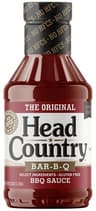
Head Country Bar-B-Q Sauce, Original (20 oz)

Head Country Bar-B-Q Sauce, Original (20 oz)

The cheapest bottle on this page by a wide margin, and the one we would put in a first-timer's hands. It is the Ponca City, Oklahoma classic: a middle-of-the-road sweet-savory tomato sauce with no strong regional accent, which is exactly what you want before you know what you like. Head Country also states it removed high fructose corn syrup from every recipe, which is unusual at this price.

Budget pick — cheapest bottle here
$3.48 · View on Amazon

Price as of November 23, 2026. #ad How we’re funded

3
Killer Hogs The BBQ Sauce + Vinegar Sauce (two 16 oz bottles)

Killer Hogs The BBQ Sauce + Vinegar Sauce (two 16 oz bottles)

The sauce to buy if you want the sticky, dark, competition-looking glaze you have seen on rib videos. It comes from the same Killer Hogs team whose rub we already recommend, and it is built to be brushed on at the end of a cook and set: brown sugar leads the maker's ingredient list, apple cider vinegar and Worcestershire keep it from being flatly sweet, and it is thick enough to cling to a rack of ribs instead of running off onto the grate. The single bottle has gone from Amazon — it now ships as a two-bottle pack that adds Killer Hogs' Vinegar Sauce, so the minimum spend is higher, though a sweet sauce plus a vinegar sauce is the two-bottle setup we tell beginners to own anyway.

Best for burnt ends
$23.99 · View on Amazon

Price as of November 23, 2026. #ad How we’re funded

4
Cattlemen's Carolina Tangy Gold BBQ Sauce (18 oz)

Cattlemen's Carolina Tangy Gold BBQ Sauce (18 oz)

The cheapest way to find out whether you like mustard sauce, which is the third great American barbecue style and the one almost nobody tries first. Mustard seed and vinegar do the work here instead of tomato, so it lands tangy and savory rather than sweet, and it belongs on pulled pork, chicken and sausage. It is a restaurant-supply sauce sold in a grocery bottle, which is why it costs roughly what a jar of mustard does.

Best for a chopped sandwich
$3.99 · View on Amazon

Price as of November 23, 2026. #ad How we’re funded

5
Lillie's Q ENC Barbeque Sauce (13.6 oz)

Lillie's Q ENC Barbeque Sauce (13.6 oz)

This is what pulled pork is traditionally dressed with, and it is the bottle most beginners have never tried. Water and two vinegars head the maker's ingredient list with only cane sugar and molasses behind them, so instead of coating the pork it seasons it, and the acid cuts eight hours of rendered fat in a way a thick sweet sauce cannot. Toss a couple of spoonfuls through a bowl of shredded shoulder and you may not reach for anything else.

Best thin sauce for sliced brisket
$8.09 · View on Amazon

Price as of November 23, 2026. #ad How we’re funded

The picks in full

#1Best for brisket

Stubb's Original Bar-B-Q Sauce (36 oz)

The one to cook with rather than only to dip in. Sugar is the third ingredient rather than the first and there is no high fructose corn syrup at all, so it is markedly less likely to blacken when you glaze in the last half hour. It is thinner and sharper than a Kansas City sauce — closer to a Texas mop — which also makes it the easiest bottle here to stir through pulled pork without the whole bowl tasting like dessert.

What’s good

  • Tomato puree and distilled vinegar lead the maker's ingredient list; sugar is third
  • Maker states no high fructose corn syrup, non-GMO, gluten free and kosher
  • Thin enough to brush or mop, so it never sits on the meat as a sugary layer

Trade-offs

  • Too thin to build the thick sticky glaze people picture on competition ribs
  • Vinegar-forward, which reads as sharp if you grew up on sweet grocery sauce
  • 36 oz is a lot of sauce to work through if you only cook occasionally
StyleThinner, tangy Texas-style tomato sauce
Size36 oz on this listing (McCormick publishes the same sauce in 18 oz)
SweetenerSugar third on the list, plus molasses and brown sugar; no HFCS
AllergensMaker states gluten free, non-GMO and kosher certified

Specs read from the product listing, on August 28, 2026. “Not published” means the maker doesn’t state that figure there.

#2Budget pick — cheapest bottle here

Head Country Bar-B-Q Sauce, Original (20 oz)

The cheapest bottle on this page by a wide margin, and the one we would put in a first-timer's hands. It is the Ponca City, Oklahoma classic: a middle-of-the-road sweet-savory tomato sauce with no strong regional accent, which is exactly what you want before you know what you like. Head Country also states it removed high fructose corn syrup from every recipe, which is unusual at this price.

What’s good

  • Reliably the lowest price per ounce of anything on this page
  • Maker states high fructose corn syrup was eliminated from all of its recipes
  • Maker states its sauces are gluten free, free of allergens and contain no added MSG

Trade-offs

  • Head Country does not publish the ingredient statement online — it is on the bottle only
  • Deliberately middle-of-the-road: nobody's favorite, nobody's least favorite
  • Still a sweet tomato sauce, so it darkens and can scorch if you brush it on early
StyleSweet, spicy and savory tomato sauce (maker's description)
Size20 oz
SweetenerNot published online; maker states no high fructose corn syrup
AllergensMaker states gluten free and free of allergens

Specs read from the product listing, on August 28, 2026. “Not published” means the maker doesn’t state that figure there.

#3Best for burnt ends

Killer Hogs The BBQ Sauce + Vinegar Sauce (two 16 oz bottles)

The sauce to buy if you want the sticky, dark, competition-looking glaze you have seen on rib videos. It comes from the same Killer Hogs team whose rub we already recommend, and it is built to be brushed on at the end of a cook and set: brown sugar leads the maker's ingredient list, apple cider vinegar and Worcestershire keep it from being flatly sweet, and it is thick enough to cling to a rack of ribs instead of running off onto the grate. The single bottle has gone from Amazon — it now ships as a two-bottle pack that adds Killer Hogs' Vinegar Sauce, so the minimum spend is higher, though a sweet sauce plus a vinegar sauce is the two-bottle setup we tell beginners to own anyway.

What’s good

  • Brown sugar, apple cider vinegar and Worcestershire lead the maker's ingredient list — sweet, but with acid behind it
  • Thick enough to cling and set into a glaze rather than run off the meat
  • Same flavor family as the Killer Hogs rub, so one brand covers both steps

Trade-offs

  • Contains high fructose corn syrup, which three of the four cheaper picks here do not
  • Contains anchovies (fish) through the Worcestershire — a real problem for some guests
  • Only sold as a two-bottle pack now, which makes it the most expensive pick on this page per ounce — and it is sweet enough to scorch if you sauce early
StyleSweet and tangy tomato sauce, mild spice
SizeTwo 16 oz bottles — The BBQ Sauce plus Killer Hogs' Vinegar Sauce
SweetenerThe BBQ Sauce: brown sugar first; also high fructose corn syrup and sugar
AllergensMaker states The BBQ Sauce contains anchovies (fish)

Specs read from the product listing, on September 11, 2026. “Not published” means the maker doesn’t state that figure there.

#4Best for a chopped sandwich

Cattlemen's Carolina Tangy Gold BBQ Sauce (18 oz)

The cheapest way to find out whether you like mustard sauce, which is the third great American barbecue style and the one almost nobody tries first. Mustard seed and vinegar do the work here instead of tomato, so it lands tangy and savory rather than sweet, and it belongs on pulled pork, chicken and sausage. It is a restaurant-supply sauce sold in a grocery bottle, which is why it costs roughly what a jar of mustard does.

What’s good

  • Distilled vinegar and mustard seed lead the maker's ingredient list, not tomato
  • Priced like a condiment rather than a craft sauce — the cheapest way into the style
  • Maker states it is made without high fructose corn syrup, starches, fillers or caramel color

Trade-offs

  • Contains soy sauce, so the maker declares wheat and soybeans — this one is not gluten free
  • Mustard divides a table; if your guests want sweet red sauce, this is not it
  • Contains corn syrup and sodium benzoate, which the craft bottles here avoid
StyleSouth Carolina mustard sauce, tangy with aged cayenne heat
Size18 oz
SweetenerSugar second on the list, plus corn syrup and molasses; no HFCS
AllergensMaker declares wheat and soybeans (from soy sauce)

Specs read from the product listing, on August 28, 2026. “Not published” means the maker doesn’t state that figure there.

#5Best thin sauce for sliced brisket

Lillie's Q ENC Barbeque Sauce (13.6 oz)

This is what pulled pork is traditionally dressed with, and it is the bottle most beginners have never tried. Water and two vinegars head the maker's ingredient list with only cane sugar and molasses behind them, so instead of coating the pork it seasons it, and the acid cuts eight hours of rendered fat in a way a thick sweet sauce cannot. Toss a couple of spoonfuls through a bowl of shredded shoulder and you may not reach for anything else.

What’s good

  • Water, distilled vinegar and apple cider vinegar lead the maker's ingredient list
  • Barely sweet, so it seasons pulled pork instead of turning it into dessert
  • Maker states no high fructose corn syrup and made with gluten-free ingredients

Trade-offs

  • Thin and watery by design — it will never glaze ribs or cling to chicken
  • Sharp and peppery, which is a shock if you were expecting a Kansas City sauce
  • Smallest bottle here at 13.6 oz, and the one style that is genuinely easy to make at home
StyleEastern North Carolina vinegar and pepper sauce
Size13.6 oz on this listing
SweetenerCane sugar and molasses, well down the list; no HFCS
AllergensMaker states made with gluten-free ingredients

Specs read from the product listing, on August 28, 2026. “Not published” means the maker doesn’t state that figure there.

Why brisket is the one cut you do not sauce on the cooker

Every other major barbecue cut has a reason for sauce. Ribs are glazed in the last half hour because a rack is a vertical surface and the glaze is part of the look. Pulled pork is dressed in a bowl because shredded shoulder is rich enough to need acid. Chicken is brushed at the end because the skin wants something.

Brisket has none of those. What a brisket has is bark— the dark, salty, peppery crust that takes ten to fourteen hours of dry surface and smoke to build, and which is the entire reason people cook the cut at all. Sauce is water and sugar. Brush it onto finished bark and the bark softens; brush it on earlier and the sugar sits on the meat through the hours when you are trying to dry the surface out. Our guide to getting good bark explains the mechanism, and it is the same reason our brisket rub page picks salt, pepper and garlic over the sweet all-purpose blends we recommend for pork.

So the sauce decision on brisket moves off the cooker entirely. It becomes a question about three places sauce genuinely belongs, and they want different things from a bottle.

The three jobs, and the bottle for each

1. On the table, in a bowl, on the side

This is where most brisket sauce should live. You want something thin enough to spoon rather than squeeze, savory rather than candy-sweet, and sharp enough to cut through fat without competing with the smoke. Stubb’s wins here: it is vinegar-forward with sugar third, so a spoonful alongside a slice reads as seasoning rather than dessert. Head Country is the cheaper version of the same idea — deliberately middle-of-the-road, which is exactly what you want for a table where nobody agrees.

2. In a sandwich the next day

Leftover brisket is drier than fresh brisket, full stop. Refrigeration firms the rendered fat and the surface gives up moisture overnight. A chopped-brisket sandwich is where sauce stops being optional, and where the thin, sharp bottles earn their place: Cattlemen’s mustard sauce and Lillie’s Q’s vinegar sauce both distribute through chopped meat in seconds and both put acid back where the fridge took moisture out. Lillie’s Q’s own page recommends the sauce on beef brisket alongside pulled pork, which is unusual for an Eastern North Carolina bottle and the reason it is on this page. How to reheat smoked meat matters more than the sauce does here, though — reheat it badly and no bottle will help.

3. Burnt ends

Burnt ends are the exception that justifies owning a thick sweet sauce at all. You cube the fatty point end, toss the cubes in sauce and put them back in the cooker for an hour so the sugar caramelizes and the edges candy. This is the one brisket application where a sauce leading with brown sugar is the right choice rather than a risk, because caramelizing is the goal. Killer Hogs is our pick for it, and our burnt ends guide has the method.

The five bottles side by side

SauceStyleWhere the sweetener sitsBrisket job it suits
Stubb’s Original (36 oz)Thinner, tangy Texas-style tomatoSugar third; molasses and brown sugar below it, no HFCSTable sauce, and a mop if you insist on mopping
Head Country Original (20 oz)Sweet-savory Oklahoma tomatoNot published online; maker states no HFCSA mixed table on a budget
Killer Hogs The BBQ Sauce (2 x 16 oz)Thick sweet-and-tangy competition tomatoBrown sugar first; also HFCS and sugarBurnt ends — the one place you want it to candy
Cattlemen’s Carolina Tangy Gold (18 oz)South Carolina mustardSugar second, after distilled vinegar; no HFCSChopped-brisket sandwiches
Lillie’s Q ENC (13.6 oz)Eastern North Carolina vinegar and pepperCane sugar fifth, after water and two vinegarsSliced leftovers that have dried out

Sizes differ enough to change the real cost per ounce: Lillie’s Q is the smallest bottle at 13.6 oz, Stubb’s the largest at 36 oz on the listing we link, and Killer Hogs now ships only as a two-bottle pack. Prices move daily, so the button on each card is the figure that counts.

If you want to mop a brisket anyway

Plenty of pitmasters mop, and it is not wrong — it is just not a sauce job. A mop is thin, mostly liquid, and its purpose is to keep the surface from drying past the point where smoke still sticks, not to add sweetness. If you want to mop, use the thinnest bottle you own cut roughly half and half with water, cider vinegar or beef stock, and only in the first half of the cook, before the bark has set.

One safety line applies the moment you do: a brush or a bowl of sauce that has touched raw or undercooked meat cannot go back on the table as a condiment unless it is boiled first. Pour off whatever you want for the table at the very start and keep the two containers apart.

The far more common mistake is wrapping, not saucing. Butcher paper is what protects bark through the stall, and paper versus foil is the decision that actually changes how your brisket turns out. Sauce is the last thing on the list.

What a bottle cannot fix

Brisket goes wrong in three reliable ways, and sauce addresses none of them.

  • Pulled too early. Brisket is cooked to tender, not to safe. USDA’s own guidance separates a safe internal temperature from the much higher point where collagen has broken down, which on a packer is usually somewhere north of 200°F and is judged by feel rather than a number. The stall is what makes people give up early.
  • Sliced the wrong way. The flat and the point run their grain in different directions, so a single straight cut through a whole packer gets one of them wrong. Our brisket knife page and cutting board page exist because of how much of the eating quality is decided in the last two minutes.
  • Under-salted. A twelve-pound cut needs far more rub than people expect, and sauce on the plate is a poor substitute for salt in the bark.

Get those right and you will find yourself using less sauce, which is the sign it is going well. If you are still choosing a cooker for the job, our best smokers for brisket roundup starts from the one spec a fourteen-hour cook actually depends on.

Frequently asked questions

What is the best BBQ sauce for brisket?

Stubb's Original is our pick. It is the thinnest and least sweet tomato sauce here - the maker lists tomato puree and distilled vinegar first, sugar third, and no high fructose corn syrup - which makes it closer to a Texas table sauce than a glaze. Head Country Original is the cheapest sensible bottle if you just want something for a mixed table.

Do you put BBQ sauce on brisket?

Not on the cooker, and traditionally not at all. Central Texas serves brisket with sauce on the side or without it, because the dark peppery bark is the point of the cut and sauce softens it. Sauce belongs in three places instead: on the table as a choice, in a chopped sandwich the next day, and on burnt ends.

Should you sauce brisket before or after smoking?

After, and ideally not at all until it is on a plate. Sauce brushed on during the cook adds sugar and moisture to the surface at exactly the hours you are trying to dry it out to build bark. If you want to add liquid during a cook, use a thin mop in the first half, before the bark sets - not a sweet sauce.

What sauce do you use for burnt ends?

A thick, sweet one - this is the single brisket application where caramelizing sugar is the goal rather than the risk. Killer Hogs The BBQ Sauce leads with brown sugar on the maker's list and sets into a glaze, which is what you want when you toss cubed point end in sauce and return it to the cooker for an hour.

Why is Texas brisket served without sauce?

Because a properly cooked brisket already carries everything sauce would add. Salt and coarse pepper build the bark, rendered fat supplies richness, and ten to fourteen hours of smoke supplies the flavor. Serving sauce on the side rather than on the meat lets the people who want it have it without covering what the cook spent all day building.

What sauce is best for a brisket sandwich?

A thin, sharp one. Leftover brisket is drier than fresh brisket because refrigeration firms the fat and the surface gives up moisture overnight, so you want acid rather than sweetness. Cattlemen's mustard sauce and Lillie's Q's vinegar sauce both distribute through chopped meat instantly - note that Cattlemen's contains soy sauce, so the maker declares wheat and soybeans.

Can you use rib sauce on brisket?

On burnt ends, yes - that is effectively what a rib sauce is built for. On sliced brisket it is the wrong tool, because a sauce thick enough to cling to a vertical rack sits on a slice as a sugary layer and buries the smoke. If a thick bottle is all you have, thin it with cider vinegar or beef stock before it reaches the table.

Will sauce fix a dry brisket?

No, and it is worth being blunt about that. A dry brisket was pulled before the collagen broke down, sliced with the grain, or cooked without enough salt - and sauce masks none of those for more than a bite. The honest fixes are to cook to feel rather than to a number, slice each muscle against its own grain, and rest the meat properly before cutting.

Sources

  • Stubb's / McCormick — Original Barbecue Sauce, 18 oz (maker's ingredient statement) — Maker lists: tomato puree (water, tomato paste), distilled vinegar, sugar, molasses, salt, spices (including black pepper, paprika, chili pepper), corn starch, brown sugar, and less than 0.5% of onion, garlic, guar gum, xanthan gum and natural flavor including hickory smoke; stated as non-GMO, no high fructose corn syrup, gluten free and kosher (accessed August 28, 2026)
  • Head Country — The Original Bar-B-Q Sauce (maker's product page) — Maker states a 20 oz bottle, describes the sauce as 'a well-balanced blend of sweet, spice, and savory', and states 'our sauce ingredients contain no glutens, or allergens'. No ingredient statement is published on the page (accessed August 28, 2026)
  • Head Country — FAQ (gluten, MSG and high fructose corn syrup) — Maker states all Head Country products are gluten-free; that all its Bar-B-Q sauces and seasonings are free of allergens except the Premium Marinade, which contains soy; that its sauces have no added MSG though MSG occurs naturally in tomatoes; that ingredients 'may be found on the back of every bottle'; and that high fructose corn syrup was eliminated from all its recipes (accessed August 28, 2026)
  • Killer Hogs — The BBQ Sauce (maker's ingredient statement) — Maker describes it as 'a perfectly balanced blend of tangy and sweet - with just the right level of spice', states 16 oz by volume, and lists: brown sugar, water, apple cider vinegar, Worcestershire sauce (molasses, corn syrup, caramel color, garlic powder, anchovies, tamarind, natural flavor), tomato paste, high fructose corn syrup, sugar, distilled vinegar, salt, modified corn starch, paprika, spices, garlic powder, xanthan gum, sodium benzoate, potassium sorbate, vanilla extract, onion powder and natural flavor. CONTAINS: ANCHOVIES (FISH) (accessed August 28, 2026)
  • Cattlemen's / McCormick For Chefs — Carolina Tangy Gold BBQ Sauce (maker's ingredient statement) — Maker lists: distilled vinegar, sugar, water, #1 grade mustard seed, soy sauce (water, wheat, soybeans, salt), aged cayenne red peppers, salt, apple cider vinegar, tomato paste, natural hickory smoke flavor, turmeric, corn syrup, paprika, oleoresin paprika, spices, molasses, garlic powder, natural flavors, onion powder, sodium benzoate and celery seed; declares allergens wheat and soybeans; states it is made without high fructose corn syrup, starches, fillers or caramel color and is kosher (accessed August 28, 2026)
  • Lillie's Q — ENC (Eastern North Carolina) Barbeque Sauce (maker's ingredient statement) — Maker lists: water, distilled vinegar, apple cider vinegar, yellow mustard, cane sugar, spices, salt, molasses, apple juice concentrate, xanthan gum and tamarind paste; the page carries 'No High Fructose Corn Syrup' and 'Gluten Free' seals and says 'vinegar and spices give this Eastern North Carolina sauce a flavorful kick', recommending it on pulled pork, oysters or beef brisket (accessed August 28, 2026)
  • USDA FSIS — Smoking Meat and Poultry — USDA guidance to keep the smoker between 225°F and 300°F, use two thermometers (food + smoker), and refrigerate within 2 hours (accessed July 22, 2026)
  • USDA FSIS — Doneness Versus Safety — USDA on the difference between a safe internal temperature and the higher 'done/tender' temperature cooks pull tough cuts to (accessed July 22, 2026)

Keep reading