Smoke & Slow

Best BBQ Rub for Turkey

Two facts decide this: a turkey is mostly skin, and most supermarket turkeys arrive already salted. That rules out the sugar-led rubs we recommend for ribs and the salt-led ones we recommend for brisket.

By Stephen V.Last updated How we pick

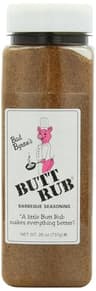
Buy Bad Byron’s Butt Rub for a whole turkey. The maker’s stated blend is onion, garlic, salt, pepper, paprika and chipotle with no sugar in it at all, which is the single most useful property a rub can have on a bird you are going to finish hot to crisp the skin. It is also the biggest shaker here at 26 oz, and a 14-pound turkey takes a genuinely surprising amount of rub. The budget pick is Killer Hogs The BBQ Rub, the lowest sticker price on this page — but it leads with brown sugar and sugar, so it belongs on a bird you keep inside USDA’s 225–300°F smoking band rather than one you blast at the end.

Turkey is not a scaled-up chicken, and it is not a pork shoulder with legs. It is the one cut on this site where the saltin a rub matters more than the flavor, because most supermarket birds have already had a salt solution added at the plant — USDA puts that at up to 3% by weight for bone-in and up to 8% for boneless poultry labelled self-basting, marinated or “for flavoring”. Put a salt-first rub on a bird that is already at 3% and you will taste it.

Every ingredient claim below is the maker’s own published statement, read on the dates in the sources at the foot of the page. We have not run a blind tasting and do not pretend to — here is exactly how we pick.

How this is funded:we earn a commission if you buy through our links, at no extra cost to you. It never changes which smoker we recommend, and we’ll tell you when we’d skip one. Full disclosure.

Quick picks

Ranked on published specs, beginner-friendliness and value. Select a row to jump to the full write-up. We haven’t cooked on every one of these — here is exactly what we do instead.

#ProductBest forPrice
1
Bad Byron's Butt Rub Barbeque Seasoning (26 oz)

Bad Byron's Butt Rub Barbeque Seasoning (26 oz)

The workhorse. Bad Byron's states the blend as onion, garlic, salt, pepper, paprika and chipotle — no sugar anywhere in it, which is why this is the bottle that never burns. Use it on hot-and-fast chicken, on anything you plan to sauce at the end, and on the vegetables nobody planned for. It is also the biggest bottle on this page by some distance, which is what makes it the value option once you start seasoning generously.

Best rub for turkey
$21.65 · View on Amazon

Price as of November 23, 2026. #ad How we’re funded

2
Killer Hogs The BBQ Rub (11 oz)

Killer Hogs The BBQ Rub (11 oz)

If you are only buying one bottle, buy this one. It is the competition rub from Malcom Reed's Killer Hogs team, and its brown-sugar-and-paprika base is exactly what builds the dark, sticky crust most beginners are picturing when they imagine ribs. It goes on pork and chicken without you having to think about it, and at normal low-and-slow temperatures there is no real way to make it taste wrong.

Budget pick — lowest sticker price
$13.49 · View on Amazon

Price as of November 23, 2026. #ad How we’re funded

3
Kosmos Q Dirty Bird BBQ Rub (16 oz)

Kosmos Q Dirty Bird BBQ Rub (16 oz)

A poultry rub that solves the specific problem of smoked chicken coming off the smoker looking pale. Paprika and chili pepper give skin the mahogany color that makes wings and thighs look like the photographs, and the brown sugar rounds off the heat. It is the third bottle we would buy, after an all-purpose pork rub and an SPG — and the first one if chicken is what you actually cook.

Best for color on the skin
4
SuckleBusters SPG All-Purpose Salt, Pepper & Garlic (14.5 oz)

SuckleBusters SPG All-Purpose Salt, Pepper & Garlic (14.5 oz)

Central Texas seasons brisket with salt and pepper, and this is that idea in a shaker with garlic added. It is the rub to reach for on beef, where a sweet pork rub fights the meat instead of helping it — and because it is almost all salt, pepper and garlic, it behaves at any temperature you cook at. If you would rather not mix your own, this is the pre-mixed version.

Best for a plain turkey breast
$12.47 · View on Amazon

Price as of November 23, 2026. #ad How we’re funded

The picks in full

#1Best rub for turkey

Bad Byron's Butt Rub Barbeque Seasoning (26 oz)

The workhorse. Bad Byron's states the blend as onion, garlic, salt, pepper, paprika and chipotle — no sugar anywhere in it, which is why this is the bottle that never burns. Use it on hot-and-fast chicken, on anything you plan to sauce at the end, and on the vegetables nobody planned for. It is also the biggest bottle on this page by some distance, which is what makes it the value option once you start seasoning generously.

What’s good

  • Maker's stated blend contains no sugar, so it will not scorch at high heat
  • 26 oz shaker is the biggest bottle on this page — the others run 11 to 16 oz
  • Mild chipotle warmth works on meat, potatoes and vegetables alike

Trade-offs

  • Without sugar you get less of the dark, sticky bark a sweet rub builds on ribs
  • The chipotle brings a smoky note not everyone wants on delicate cuts like fish
  • 26 oz is more than an occasional cook will get through before it fades
FlavorSavory and mildly smoky — onion, garlic, paprika, chipotle
Size26 oz shaker bottle
SugarNone in the maker's stated blend
Best forHot-and-fast poultry, sauced cooks, vegetables, everyday seasoning

Specs read from the product listing, on October 9, 2026. “Not published” means the maker doesn’t state that figure there.

#2Budget pick — lowest sticker price

Killer Hogs The BBQ Rub (11 oz)

If you are only buying one bottle, buy this one. It is the competition rub from Malcom Reed's Killer Hogs team, and its brown-sugar-and-paprika base is exactly what builds the dark, sticky crust most beginners are picturing when they imagine ribs. It goes on pork and chicken without you having to think about it, and at normal low-and-slow temperatures there is no real way to make it taste wrong.

What’s good

  • Brown sugar and paprika lead the ingredient list — the sweet, dark bark beginners want
  • One bottle covers pork and chicken, so there is no second purchase to think about
  • Maker states the recipe contains no gluten ingredients

Trade-offs

  • Sugar-forward, so it darkens fast and can scorch if you cook hot — not the rub for crisping chicken skin
  • 11 oz net weight is a small bottle; two rib cooks make a real dent in it
  • Includes natural flavor and an anti-caking agent if you want a pure spice blend
FlavorSweet and savory, mild heat
Size11 oz net weight (16 oz by volume)
SugarYes — brown sugar and sugar are the first two ingredients
Best forPork ribs, pork shoulder and chicken at 225-275°F

Specs read from the product listing, on August 28, 2026. “Not published” means the maker doesn’t state that figure there.

#3Best for color on the skin

Kosmos Q Dirty Bird BBQ Rub (16 oz)

A poultry rub that solves the specific problem of smoked chicken coming off the smoker looking pale. Paprika and chili pepper give skin the mahogany color that makes wings and thighs look like the photographs, and the brown sugar rounds off the heat. It is the third bottle we would buy, after an all-purpose pork rub and an SPG — and the first one if chicken is what you actually cook.

What’s good

  • Chili pepper and paprika give poultry the deep red-brown color smoke alone will not
  • Sweet-and-spicy balance is mild enough for a family cook, not a novelty heat rub
  • Built for poultry from the start rather than adapted from a pork rub

Trade-offs

  • Sugar and brown sugar sit high in the ingredient list, so it darkens quickly if you crank the heat to crisp skin
  • Contains disodium inosinate and guanylate — flavor enhancers some cooks avoid
  • The plain blend now only comes as a 16 oz shaker, so it is a bigger outlay for a rub you may reach for only when you cook chicken
FlavorSweet and spicy, red-pepper forward
Size16 oz shaker
SugarYes — sugar is second and brown sugar fourth on the maker's list
Best forChicken, wings and thighs smoked at 250-275°F

Specs read from the product listing, on October 9, 2026. “Not published” means the maker doesn’t state that figure there.

#4Best for a plain turkey breast

SuckleBusters SPG All-Purpose Salt, Pepper & Garlic (14.5 oz)

Central Texas seasons brisket with salt and pepper, and this is that idea in a shaker with garlic added. It is the rub to reach for on beef, where a sweet pork rub fights the meat instead of helping it — and because it is almost all salt, pepper and garlic, it behaves at any temperature you cook at. If you would rather not mix your own, this is the pre-mixed version.

What’s good

  • The classic salt-pepper-garlic profile Central Texas brisket is built on
  • Almost sugar-free, so it will not scorch when you cook hot or sear
  • Maker lists it for beef, pork, chicken, lamb and fish — genuinely all-purpose

Trade-offs

  • Contains turbinado sugar despite the SPG name, so it is not literally sugar-free
  • No sweetness and little color — pork ribs seasoned with it look pale next to a sugar rub
  • Sea salt is the first ingredient, so go easy if you are also dry-brining the meat
FlavorSalt, black pepper and garlic; no heat
Size14.5 oz shaker
SugarA little — turbinado sugar is fourth on the maker's list
Best forBrisket, beef ribs, steak, and hot cooks where sugar would burn

Specs read from the product listing, on August 28, 2026. “Not published” means the maker doesn’t state that figure there.

Check the label on the bird before you choose the rub

This is the step almost every turkey article skips, and it changes the answer. Turn the bird over and read the label. If it says self-basting, enhanced, marinated, bastedor “contains up to X% of a solution”, salt has already been added and your rub must not add much more. USDA states the limits plainly: up to 3% added solution by weight on bone-in poultry, up to 8% on boneless.

If the label says nothing of the kind — a plain, non-enhanced or kosher bird — then you are starting from zero and salt is your job. That is the only case where a salt-led rub like SuckleBusters SPG is the right call on turkey, and it is also the case where a brine makes most sense. USDA’s own brine ratio, if you go that way, is three quarters of a cup of salt per gallon of water, or three tablespoons per quart. Our dry brine versus wet brine page covers which to pick and why the dry version is easier to get right in a domestic fridge.

Two rules follow, and they cover nearly every bird sold in a US supermarket:

  • Pre-salted bird → low-salt rub. Bad Byron’s or Killer Hogs. Both carry salt, but neither leads with it.
  • Plain bird, brined yourself → still a low-salt rub. You have already salted it; the rub is there for flavor and color.
  • Plain bird, no brine → SPG. Sea salt is the first ingredient, which is what you want when nothing else has salted the meat.

Why sugar is riskier on turkey than on pork

Turkey skin is thin, dry and stretched over a very large surface, and the whole problem with smoked turkey is that the meat hits temperature before the skin has done anything worth eating. USDA’s smoking guidance for turkey is to hold the smoker at 225 to 300°F and estimate 20 to 30 minutes per pound, with the bird safely cooked at 165°F in the innermost part of the thigh and wing and the thickest part of the breast. At the bottom of that band, over four or five hours, you get pale rubbery skin. Almost everybody therefore either runs the cooker at the top of the band or finishes hot.

That is where sugar becomes a liability. A rub that leads with brown sugar will caramelize and then carbonize on thin skin well before the thigh reads 165°F — and unlike a rack of ribs, there is no fat cap underneath to buffer it. Kosmos Q Dirty Bird is a genuinely good poultry rub and it is built for chicken from the ground up, but sugar sits second and brown sugar fourth on the maker’s statement, so the color it gives you arrives early and keeps going. Our best wood for turkey page makes the same argument about smoke: a big bird sits in the smoke for hours and will take on more than you intend.

One more USDA line worth repeating here because it surprises people every November: do not stuff a turkey you are going to smoke. USDA is explicit that smoking cooks at a low temperature and it can take too long for the stuffing to reach 165°F. The same page also tells you to put the smoker somewhere shielded from wind and to add charcoal every one to two hours as needed to hold the band — practical advice our cold-weather smoking guide expands on, since turkey is cooked in the coldest month of the year.

The four shakers side by side

RubSizeSugar, per the makerWhere salt sits
Bad Byron’s Butt Rub26 oz shakerNone in the stated blendThird, after onion and garlic
Killer Hogs The BBQ Rub11 oz net weightBrown sugar first, sugar secondFourth, after the sugars and paprika
Kosmos Q Dirty Bird16 oz shakerSugar second, brown sugar fourthFirst
SuckleBusters SPG14.5 oz shakerTurbinado sugar fourth — a littleFirst (sea salt)

Size is not a detail on this page. A whole turkey has roughly twice the surface area of a pork shoulder, and you are seasoning under the skin as well as on it, so one bird can take an ounce and a half of rub or more. Bad Byron’s 26 oz shaker is both the biggest bottle here and the cheapest per ounce of the four; Killer Hogs’ 11 oz bottle is the lowest sticker price but the one you are most likely to run out of mid-bird. Prices move daily, so the button on each card is the figure that counts.

How to actually get the rub on a turkey

Most of the flavor people miss on smoked turkey is missing because the rub went only on the outside, where it seasons skin nobody eats much of.

  • Dry the skin first. Pat the bird down with paper towel. A wet surface turns rub into paste, and paste will not crisp. If you have the fridge space, leave it uncovered on a rack overnight.
  • Get under the skin. Slide your fingers between the skin and the breast to loosen it and work rub directly onto the meat. This is where the seasoning actually reaches what you eat.
  • Season the cavity. A generous shake inside the bird is free flavor. Aromatics in there are fine; stuffing is not.
  • Then a light coat outside. Lightly, and evenly. Thick exterior rub on a bird that is going to be finished hot is the main source of the bitter, blackened patches people blame on their cooker.
  • Skip the oil if you want crisp skin. Oil helps rub stick, and it also keeps the skin from drying out, which is the opposite of what you want here. If the rub will not stick to a dry bird, you dried it correctly.

For the cook itself — timings, the thigh-versus-breast problem and how to handle a bird that finishes early — our smoked turkey guide has the whole process, and smoked turkey breast covers the easier version most people should start with. If you have not bought the cooker yet, best smokers for turkey sorts them on the one spec a 14-pound bird depends on.

What about a turkey breast on its own?

A bone-in breast is the cut we recommend to most first-timers, and it changes the rub answer slightly. There is far less skin, the cook is two to three hours rather than five, and the meat is lean enough that salt genuinely improves it. That is the case for SuckleBusters SPG: sea salt first, black pepper and garlic behind it, almost no sugar, nothing to burn. It is the same logic our brisket rub pagereaches for beef, for the same reason — when the cut is lean and the cook is long, salt and pepper are not a compromise, they are the answer.

Check the breast’s label the same way, though. Pre-brined turkey breasts are even more common than pre-brined whole birds, and SPG on top of an 8% solution is the one combination on this page that will genuinely taste too salty.

Rubs we left out, and why

We did not include a dedicated “turkey rub” sold as such. The ones we looked at are the same onion, garlic, paprika and sugar as everything above, in a smaller bottle with a bird on the front, and we are not going to add a product to the registry so a page can have a fifth row. Our general rub roundup explains the broader shelf and why two bottles cover nearly everything a beginner cooks.

We also left out poultry seasoning — the sage, thyme and marjoram blend from the baking aisle. It is a fine thing to add to a turkey, but it is a herb blend rather than a barbecue rub: no salt to speak of, no paprika, and nothing that builds color on skin. If you love that flavor, use it alongside one of the four above rather than instead of one.
Frequently asked questions

What is the best BBQ rub for turkey?

Bad Byron's Butt Rub. The maker's stated blend is onion, garlic, salt, pepper, paprika and chipotle with no sugar at all, which matters because turkey skin is thin and most people finish a bird hot to crisp it - sugar carbonizes there before the thigh reaches 165°F. Its 26 oz shaker is also the cheapest per ounce of the four, and a whole turkey takes a lot of rub.

Should you use a sweet rub on turkey?

Only if you are keeping the cooker inside USDA's 225 to 300°F band the whole way and accepting softer skin. A sugar-led rub caramelizes and then burns on thin turkey skin, and there is no fat cap underneath to buffer it the way there is on ribs. If you want color without that risk, paprika and chili pepper give it - which is what Kosmos Q Dirty Bird is built around.

How much rub do I need for a whole turkey?

Plan on roughly an ounce and a half for a 12 to 14 pound bird, because you are seasoning under the skin and inside the cavity as well as on the outside. That is more than most people expect and the reason we favor the 26 oz shaker - an 11 oz bottle can run out partway through a bird if you are seasoning it properly.

Can you put rub on a pre-brined or self-basting turkey?

Yes, but choose a rub that does not lead with salt. USDA states that poultry labelled self-basting, marinated or 'for flavoring' may have had solution added up to 3% by weight bone-in and 8% boneless, so the bird is already salted. Bad Byron's and Killer Hogs both carry salt without leading with it; SPG leads with sea salt and will taste too salty on an enhanced bird.

Do you put the rub under the turkey skin?

Yes, and it is the step that makes the biggest difference. Slide your fingers between the skin and the breast to loosen it, then work rub directly onto the meat, season the cavity, and finish with a light even coat on the outside. Rub that sits only on the skin seasons the part of the bird you eat least of.

When should you apply rub to a turkey?

Anywhere from right before the cook to the night before. If you have fridge space, seasoning it uncovered on a rack overnight dries the skin out, which helps it crisp - that is effectively a dry brine, so use a low-salt rub if the bird is already enhanced. What you should not do is oil the skin first if crisp skin is the goal.

Should I brine a turkey as well as rubbing it?

Only if the bird is plain and not already enhanced, and in that case a dry brine is easier to get right at home than a wet one. If you do brine wet, USDA's ratio is three quarters of a cup of salt per gallon of water, or three tablespoons per quart. Either way the rub that goes on afterwards should be a flavor-and-color rub rather than a salt-first one.

What temperature is a smoked turkey done at?

165°F, measured in the innermost part of the thigh and wing and the thickest part of the breast, per USDA. USDA also puts the smoker at 225 to 300°F and estimates 20 to 30 minutes per pound, and is explicit that you should not stuff a turkey you intend to smoke - at smoking temperatures the stuffing takes too long to reach a safe temperature itself.

Sources

  • Bad Byron's — Butt Rub Barbeque Seasoning, 26 oz (maker's product page) — Maker describes the blend as onion, garlic, salt, pepper, paprika and chipotle (smoked jalapeno), and states the seasoning is gluten free — no sugar appears in the stated blend (accessed August 28, 2026)
  • Killer Hogs — The BBQ Rub (maker's ingredient statement) — Ingredients: brown sugar, sugar, paprika, salt, spices (red and black pepper), dehydrated garlic, oleoresin paprika, dehydrated orange peel, natural flavor and less than 2% tricalcium phosphate; sizes stated as 11 oz net weight, 7.3 oz and a 5 lb bulk bag (accessed August 28, 2026)
  • Kosmos Q — Dirty Bird Rub (maker's ingredient statement) — Ingredient statement: salt, sugar, chili pepper and other spices, brown sugar, paprika, garlic powder, dehydrated onion, disodium inosinate and disodium guanylate, and not more than 2% tricalcium phosphate (accessed August 28, 2026)
  • SuckleBusters — SPG All-Purpose (maker's ingredient statement) — Ingredients: sea salt, black pepper, garlic, turbinado sugar, spices and silica; maker lists it as best on beef, pork, chicken, lamb and fish (accessed August 28, 2026)
  • USDA FSIS — Turkey: Alternate Routes to the Table (smoking a turkey) — USDA's smoking instructions for turkey: bring the smoker to 225 to 300°F before the bird goes on and add charcoal every 1 to 2 hours as necessary to maintain 225 to 300°F; place the smoker in an area shielded from winds to maintain a safe cooking temperature; do not stuff the turkey, because smoking cooks at a low temperature and it can take too long for the stuffing to reach 165°F; estimate 20 to 30 minutes per pound; use hardwood or fruitwood and never a softwood (pine, fir, cedar or spruce), which gives food a turpentine flavor; and the turkey is safely cooked when a food thermometer reads 165°F in the innermost part of the thigh and wing and the thickest part of the breast (accessed September 18, 2026)
  • USDA FSIS — Turkey Basics: Safe Cooking — USDA guidance for cooking a whole turkey: set the oven temperature no lower than 325°F, and the turkey (and the center of any stuffing) must reach a safe minimum internal temperature of 165°F, checked in the innermost part of the thigh and wing and the thickest part of the breast (accessed September 18, 2026)
  • USDA FSIS — Poultry: Basting, Brining, and Marinating — FSIS states that "various liquids can be added to poultry by several methods such as injection, marinating, brining, or basting" and, under Safe Preparation, that to help infuse a marinade "you may use a fork to make random holes in the meat. A needle-like injector may also be used" — the only federal guidance we found that addresses a household injector directly. Other figures we cite from this page: poultry may be refrigerated up to 2 days in a marinade; "do not use marinade from raw poultry as a sauce unless it is boiled first to destroy bacteria"; a brine is three quarters of a cup of salt to 1 gallon of water, or three tablespoons per quart; and commercially "self-basting", "marinated" or "for flavoring" raw poultry has had solution added during processing up to 3% by weight bone-in and up to 8% by weight boneless. The page also quotes Dr. Alan Sams of Texas A&M on why salt works: it "dissolves protein in muscle, and the salt and protein reduce moisture loss during cooking" (accessed October 5, 2026)
  • USDA FSIS — Safe Minimum Internal Temperature Chart — USDA safe minimum internal temperatures: 145°F for beef/pork/lamb steaks, chops and roasts (with a 3-minute rest), 160°F for ground meats, 165°F for all poultry (accessed July 22, 2026)

Keep reading