The order matters more than the list
Most accessory pages give you a list and leave you to guess which parts are optional. All eight items below are worth owning eventually, but the first three change whether a cook succeeds, and the last three change how pleasant it is. Buy in this order and you never waste money.
- Thermometer. Without it you are guessing at the one number that decides whether dinner is safe and whether a tough cut is tender.
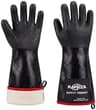
- Gloves. You will be moving hot grates, hot water pans and a nine-pound shoulder that is falling apart.
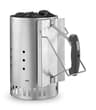
- Chimney starter— if you are on charcoal. Lighter fluid taints food and newspaper is unreliable.
- Wood. The flavor. Cheap, and easy to overdo.
- Butcher paper. Only once you are cooking brisket or pork shoulder, and not before.
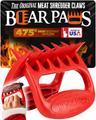
- Meat claws. For lifting, mostly. Shredding is the side-benefit.
- Smoke tube. Only if your cooker is electric, gas or pellet and the smoke flavor disappoints you.
- Tongs. Last on the list and first in your hand, because the ones in your kitchen drawer are too short for a lit cooker.
Why the thermometer is not negotiable
Every smoker lies to you, and the expensive ones lie just as confidently as the cheap ones. A lid thermometer reads the air at the dome, often tens of degrees away from the temperature at the grate where your food is. And nothing on the cooker at all tells you about the inside of the meat.
USDA’s guidance on smoking is to use two thermometers — one for the cooker and one for the food — and the safe-minimum chart is the reason: 165 °F for all poultry, 145°F with a three-minute rest for whole cuts of beef and pork. But the more interesting number is the other one. Tough cuts like brisket and pork shoulder are not cooked to safe, they are cooked to tender, which happens far higher, once collagen has broken down. You cannot find either number by looking.
The Weber Instant-Read is the honest starting point: cheap, fast, nothing to pair or charge. Its limit is that you have to be standing at the cooker to use it, and on a twelve-hour brisket you will not be. When that becomes annoying, the upgrade is a leave-in probe you can watch from indoors, and our wireless thermometer roundup covers them — several sit under $50 themselves. Our main thermometer roundup compares both kinds, and how to choose a meat thermometer walks the decision.
The eight, and what each one replaces
| Item | The job | Published figure worth knowing | Which cookers need it |
|---|
| Weber Instant-Read thermometer | The doneness check | Single built-in probe, read on the device | All of them |
| RAPICCA 14-inch gloves | Moving grates, pans and hot meat | Listing states up to 932°F; 14 in forearm coverage | All of them |
| Weber Rapidfire chimney | Lighting charcoal without fluid | 1.6 gal capacity, about 5.7 lb of briquettes (Weber) | Charcoal, kamado, drum, offset |
| Weber apple wood chunks | Smoke flavor | 4 lb bag of chunks (not chips) | Charcoal, kamado, drum, offset |
| Reynolds pink butcher paper | Wrapping through the stall | Recommended to 300°F; FDA compliant, added wet strength (Reynolds) | Any cooker, once you cook brisket |
| Bear Paws meat claws | Lifting and pulling pork shoulder | Nylon; heat rating not published | Any cooker, once you cook shoulder |
| Realcook 12-inch smoke tube | Adding smoke a clean fire will not make | 304 stainless; listing claims up to 5 hours per fill | Electric, gas and pellet |
| Winco UT-16HT tongs | Reaching into a lit cooker | 16 in long, 1.2 mm stainless steel (Winco) | All of them |
Where a maker publishes nothing — the heat rating on nylon claws, a warranty on the smoke tube — the card says so rather than filling the gap. That is deliberate, and it is why some rows here are shorter than you might expect.
Three of these depend on which cooker you own
The chimney starter and the wood chunks only apply if you burn charcoal. The smoke tube is the opposite — it exists because electric, gas and pellet cookers burn too cleanly to make much smoke.
On charcoal:buy the chimney and the chunks and skip the tube. Kingsford states that a standard chimney holds around 4 lb of briquettes, about 100 of them, and that the coals start glowing through the vents after 15 to 20 minutes — which is the only timing you need. Weber publishes 1.6 gallons, roughly 5.7 lb, for the Rapidfire, which is more than a 14-inch bullet needs, so you will often fill it partway. Both makers say the same thing about gloves, incidentally, and it is why they are second on our list.
On electric, gas or pellet: skip the chimney, buy chips rather than chunks if your cooker has a chip tray, and consider the tube. A smoke tube is a perforated steel pipe you fill with pellets, light at one end and let smoulder alongside whatever your cooker is doing — it is the standard fix for a pellet grill that does not taste as smoky as you hoped. Our smoke tube roundup compares five, and chips versus chunks explains why the form matters more than the species.
The wrapping and pulling pair
These two only become necessary when you graduate to the big cuts, which is also when they become indispensable.
Pink butcher paper is what protects bark when you wrap a brisket through the stall. Reynolds is the only maker in the category that publishes a temperature recommendation at all — up to 300°F — along with FDA compliance, unwaxed and unbleached paper and added wet strength so it stays together when greasy. Foil also works and does something different to the bark; our paper versus foil page settles it, and the butcher paper roundup compares five rolls if you want more than 75 square feet.
Meat claws are misunderstood. The shredding is not really the point — two forks shred fine. What claws do that forks cannot is lift nine pounds of falling-apart pork shoulder off a grate in one piece, which is the moment a cook most often goes wrong on the way to the kitchen. Bear Paws are nylon, so they will not scratch a board or a nonstick pan, and the listing states they are made in the USA. No heat rating is published, so do not leave them resting on a hot grate. Our meat claws roundup covers the nylon-versus-steel choice, and our pulled pork guide is where you will first want them.
One safety habit the tongs are for
Buy two pairs of the cheap tongs, not one. USDA’s grilling guidance is specific: do not use the same platter and utensils for raw and cooked meat and poultry, because bacteria in raw juices can contaminate food that was safely cooked. At the price of the Winco pair that is the cheapest food-safety upgrade available to you.
Sixteen inches is the length, and it is the real reason kitchen tongs do not do this job — they put your hand six inches from a lit grate. Winco states 1.2 mm stainless steel in its extra-heavyweight grade, scalloped tips and a heavy-duty coiled spring, which is the restaurant-trade design. The compromises are honest: no lock, so they store sprung open, and bare steel handles that conduct heat and get slippery with grease. If those bother you, our tongs roundupranks four better pairs — most of them also under $50.
What we deliberately left off
Plenty of popular accessories are fine purchases later and poor first ones.
- A rib rack. Genuinely useful, and the cheapest capacity upgrade a smoker can have — but only once you are cooking more racks than fit flat. Our rib rack roundup is there when you get to that point.
- A meat injector. The only way to get salt into the middle of a whole turkey, and completely unnecessary for your first ten cooks. See the injector roundup.
- A knife. A brisket genuinely needs a long blade, and it is the one thing on this list that usually costs more than $50 to do properly — which is why it has its own page rather than a slot here.
- An automatic temperature controller. A fan and controller that holds a charcoal fire steady for you. Excellent, over $50, and the wrong thing to buy before you understand what the vents do.
- Rubs and sauces. Consumables rather than accessories, and both are cheap. Start with one good rub and one sauce, not a cabinet of them.
And one thing we would actively avoid: a basting mop sold for sauce. If you want to mop a cut, a cheap silicone brush does the same job and goes in the dishwasher.