Why chicken punishes a sauce that pork forgives
Two things about chicken change the sauce decision, and neither of them is about taste.
The first is temperature. Poultry has to reach 165°F to be safe, per USDA’s own chart, and it gets there long before the skin has rendered into anything you want to eat. The standard fix is heat: finish the bird hot, either by opening the cooker up at the end or moving it over direct coals. That is why our best smokers for chicken roundup sorts cookers on the top of their published range rather than the bottom. Sauce applied before that final push is sitting on the one cut you deliberately overheat.
The second is the surface. A rack of ribs is flat, fatty and roughly vertical; a thigh is curved and skinned, and the skin is the part that burns first. There is no fat cap underneath to buffer the heat. A thick sauce pools in the low points of a quarter and blackens there while the high points stay pale, which is where the patchy, bitter chicken most people have eaten at a cookout comes from.
Put those together and the rule is short: sauce chicken last, sauce it thin, and sauce it twice rather than thickly once. Two light coats five minutes apart set into a glaze. One heavy coat steams, slides and scorches.
Read the ingredient list, not the front label
Ingredients are listed by weight, so the first three are most of the bottle. That one fact tells you more about how a sauce behaves on chicken than any description on the front of it.
- Sugar first means watch it. Brown sugar leads Killer Hogs’ statement, and it is the bottle here most likely to darken past where you wanted it. That is not a flaw — it is why it glazes wings so well — but it is a bottle that needs you present.
- Sugar third or lower means you can relax. Stubb’s leads with tomato puree and distilled vinegar, with sugar third. Lillie’s Q ENC leads with water and two vinegars and puts cane sugar fifth. Both tolerate a hot finish.
- Check the allergen line before a crowd cook. Cattlemen’s contains soy sauce, so the maker declares wheat and soybeans. Killer Hogs contains anchovies through its Worcestershire, which the maker states as fish. On chicken, which is what people bring to gatherings, that matters more often than it does on a brisket.
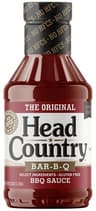
One honest gap: Head Country publishes no ingredient statement on its website. It states on its own FAQ that high fructose corn syrup was removed from every recipe, that its sauces are gluten free and free of allergens, and that the ingredients are “on the back of every bottle”. We print that rather than filling the gap with a list we have not read.
The five bottles side by side
| Sauce | Where the sweetener sits | Body | Declared allergens |
|---|
| Stubb’s Original (36 oz) | Sugar third, after tomato puree and distilled vinegar; no HFCS | Thin, brushable | None declared; maker states gluten free, non-GMO, kosher |
| Head Country Original (20 oz) | Not published online; maker states no HFCS | Medium | Maker states free of allergens and gluten free |
| Cattlemen’s Carolina Tangy Gold (18 oz) | Sugar second, after distilled vinegar; no HFCS | Thin, mustard-based | Wheat and soybeans (from soy sauce) |
| Killer Hogs The BBQ Sauce (2 x 16 oz) | Brown sugar first; also HFCS and sugar further down | Thick, sets into a glaze | Anchovies (fish) via Worcestershire |
| Lillie’s Q ENC (13.6 oz) | Cane sugar fifth, after water and two vinegars | Very thin, watery by design | None declared; maker states gluten-free ingredients |
Bottle sizes vary enough to change the real cost: Lillie’s Q is 13.6 oz, Stubb’s is 36 oz on the listing we link, and Killer Hogs now ships only as a two-bottle pack. Prices move daily, so the button on each card is the figure that counts — we never print a number in prose that could be stale by the time you read it.
When to put it on, by cut
Wings are the most forgiving, because they are small and you can watch them. Sauce them off the heat in a bowl, toss, then return them for three or four minutes to set. That is the one case where the thick Killer Hogs bottle is the right answer, and our smoked chicken wings guide walks the whole cook.
Thighs and quarters are where sauce most often goes wrong, because the skin renders slowly and tempts you into leaving them on longer. Brush thin, twice, in the last ten minutes — our thigh guide has the timings. A whole bird is the same logic over a longer window: sauce only the last fifteen minutes, and accept that the breast skin will never glaze as evenly as the thighs do. See how to smoke a whole chicken for the rest.
Pulled or shredded chicken is the exception that proves the rule. It has no skin left to burn and no surface to glaze, so it behaves like pulled pork: a thin vinegar sauce stirred through a bowl beats a thick one every time, which is why Lillie’s Q is on this page at all.
The rub matters more than the sauce here
Sauce is the last four minutes of a chicken cook. Rub is the whole thing, and on poultry it is also a sugar question — which is why we keep a separate rub roundup. A sugar-forward rub and a sugar-forward sauce on the same hot-finished thigh is how you get bitter black patches, and the fix is to change one of them rather than to cook cooler.
Wood is the other lever, and chicken wants less of it than people expect. A bird picks up smoke fast and has nowhere to hide an acrid note, so our best wood for chicken page argues for mild fruit wood and a small amount of it. Get the rub, the wood and the final heat right and the sauce becomes what it should be: a finish, not a rescue.
A food-safety line that only applies if you mop
If you brush sauce onto raw or part-cooked chicken, that brush and that bowl of sauce cannot come back to the table as a condiment unless the sauce is boiled first. The simple version is to pour off a serving portion at the very start, before anything touches raw bird, and keep the two containers apart. And the doneness check is a thermometer, not a color: 165°F in the thickest part of the thigh and the breast, per USDA. Our thermometer roundup covers what to check it with, and smoke times and temps has the figures for every cut.
Bottles we deliberately left out
We left out the two biggest supermarket brands, for the same reason our general sauce roundup does: they are cheap on a shelf and poor value shipped, and you do not need a website to find them in a grocery store.
We also left out Alabama white sauce, even though it is genuinely excellent on smoked chicken and is the one regional style built specifically for it. The reason is plain and we would rather say it than pad the page: there is no white-sauce bottle in our registry that we have checked and can make buyable, so there is nothing honest for us to rank. If that changes, this page changes. In the meantime it is two ingredients you probably already own — mayonnaise and cider vinegar — and no bottle required.