Smoke & Slow

Best Pellets for Ribs

A rack of ribs is a short cook on a sweet rub, which makes it the one cut where a fruitwood-forward blend genuinely beats straight hickory. Four bags ranked on the woods, the weight and the composition each listing actually states.

By Stephen V.Last updated How we pick

Buy the Traeger Signature Blend. It is hickory for backbone, maple for sweetness and cherry for color — the three things a rack of ribs wants from smoke, in one bag you can buy almost anywhere. It is the right pick for the person cooking their first few racks, because it is hard to overdo and it makes pork look the way people expect barbecue to look. The budget pick is the Camp Chef Competition Blend: a near-identical maple-hickory-cherry profile in a 20 lb sack rather than Traeger’s 18 lb, which is the most pellet per dollar on this page and runs in any brand of hopper.

Ribs are not a brisket, and the pellet decision follows from that. A rack is done in roughly four to six hours inside the 225–275°F band — the low end of the 225–300°F range USDA names for smoking — and it is almost always wearing a sweet rub. Short cook, sweet surface, lean meat: that is the profile fruitwood was made for. Straight hickory is not wrong on ribs, but it is the bag you reach for when you want beef to taste like a Texas pit.

Nobody here has run a four-way blind rib test, and we are not going to pretend otherwise. What we have done is read what each bag’s listing states about its woods, its weight and its composition, and ranked them for a cut that cooks fast and sweet. Here is exactly how we pick, and our general pellet roundup is the version of this page for everything else you will cook.

How this is funded:we earn a commission if you buy through our links, at no extra cost to you. It never changes which smoker we recommend, and we’ll tell you when we’d skip one. Full disclosure.

Quick picks

Ranked on published specs, beginner-friendliness and value. Select a row to jump to the full write-up. We haven’t cooked on every one of these — here is exactly what we do instead.

#ProductBest forPrice
1
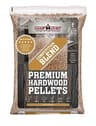
Traeger Signature Blend Hardwood Pellets (18 lb)

Traeger Signature Blend Hardwood Pellets (18 lb)

The default bag. Hickory for backbone, maple for sweetness, cherry for color — a blend that suits pork, poultry and beef without asking you to think about it. If you own a pellet grill and only ever want to buy one kind of pellet, buy this one and spend your attention on the cook instead.

Best pellets for ribs
$19.99 · View on Amazon

Price as of November 23, 2026. #ad How we’re funded

2
Camp Chef Competition Blend BBQ Pellets (20 lb)

Camp Chef Competition Blend BBQ Pellets (20 lb)

The value bag. A similar three-wood profile to the big-brand blend, two more pounds in the sack, and usually a lower price — which adds up quickly once you work out that a long cook eats one to three pounds an hour. It runs cleanly in any brand of pellet grill, whatever the sticker on your hopper says.

Budget pick — most pellets per dollar
$19.99 · View on Amazon

Price as of November 23, 2026. #ad How we’re funded

3
CookinPellets Perfect Mix Hardwood Pellets (40 lb)

CookinPellets Perfect Mix Hardwood Pellets (40 lb)

The bulk bag for when you have decided you are doing this properly. Forty pounds of four-wood blend with no cheap base wood underneath it, which is the thing worth checking on budget pellets — plenty of blends are mostly oak or alder with a flavor oil sprayed on. If you smoke most weekends, this is the cheapest honest way to keep the hopper full.

Best bulk buy for a rib habit
$42.99 · View on Amazon

Price as of November 23, 2026. #ad How we’re funded

4
Traeger Hickory Hardwood Pellets (18 lb)

Traeger Hickory Hardwood Pellets (18 lb)

The bag to run when you cook beef. Straight hickory is the bacon-forward, unmistakably-barbecue smoke that brisket and beef ribs are supposed to taste like, and because a pellet grill produces lighter smoke than a charcoal pit, hickory is far harder to overdo here than it would be in a bullet. Keep a bag alongside your everyday blend.

Best if you want a bolder, beefier smoke
$19.99 · View on Amazon

Price as of November 23, 2026. #ad How we’re funded

The picks in full

#1Best pellets for ribs

Traeger Signature Blend Hardwood Pellets (18 lb)

The default bag. Hickory for backbone, maple for sweetness, cherry for color — a blend that suits pork, poultry and beef without asking you to think about it. If you own a pellet grill and only ever want to buy one kind of pellet, buy this one and spend your attention on the cook instead.

What’s good

  • Balanced three-wood blend suits pork, poultry and beef alike
  • 100% hardwood with no oils or fillers, per the listing
  • Sold nearly everywhere, so you will not get stranded mid-cook

Trade-offs

  • 18 lb bag is smaller than most competitors' 20 lb
  • Milder than straight hickory if you want a bold beef smoke
WoodsHickory, maple, cherry blend
Weight18 lb
Composition100% all-natural hardwood (per listing)
Best forEverything — the safe default

Specs read from the product listing, on August 18, 2026. “Not published” means the maker doesn’t state that figure there.

#2Budget pick — most pellets per dollar

Camp Chef Competition Blend BBQ Pellets (20 lb)

The value bag. A similar three-wood profile to the big-brand blend, two more pounds in the sack, and usually a lower price — which adds up quickly once you work out that a long cook eats one to three pounds an hour. It runs cleanly in any brand of pellet grill, whatever the sticker on your hopper says.

What’s good

  • 20 lb bag, usually cheaper per pound than the brand-name blend
  • Balanced maple-hickory-cherry profile works on any meat
  • Runs fine in any pellet grill regardless of brand

Trade-offs

  • Slightly sweeter than a hickory-forward blend
  • Bag closure is basic — decant it into a sealed bucket
WoodsMaple, hickory, cherry blend
Weight20 lb
CompositionHardwood pellets (per listing)
Best forEveryday cooking on a budget

Specs read from the product listing, on August 18, 2026. “Not published” means the maker doesn’t state that figure there.

#3Best bulk buy for a rib habit

CookinPellets Perfect Mix Hardwood Pellets (40 lb)

The bulk bag for when you have decided you are doing this properly. Forty pounds of four-wood blend with no cheap base wood underneath it, which is the thing worth checking on budget pellets — plenty of blends are mostly oak or alder with a flavor oil sprayed on. If you smoke most weekends, this is the cheapest honest way to keep the hopper full.

What’s good

  • 40 lb bag — the best price per pound of the picks here
  • Four real hardwoods, no filler base wood, per the listing
  • Balanced enough to be the only pellet you buy

Trade-offs

  • A 40 lb bag is awkward to lift and needs dry storage
  • Overkill if you only smoke a few times a year
WoodsHickory, cherry, hard maple, apple
Weight40 lb
CompositionNatural hardwood, no filler wood (per listing)
Best forBuying in bulk and cooking often

Specs read from the product listing, on August 18, 2026. “Not published” means the maker doesn’t state that figure there.

#4Best if you want a bolder, beefier smoke

Traeger Hickory Hardwood Pellets (18 lb)

The bag to run when you cook beef. Straight hickory is the bacon-forward, unmistakably-barbecue smoke that brisket and beef ribs are supposed to taste like, and because a pellet grill produces lighter smoke than a charcoal pit, hickory is far harder to overdo here than it would be in a bullet. Keep a bag alongside your everyday blend.

What’s good

  • Single-wood hickory gives the classic strong barbecue flavor
  • A pellet grill's lighter smoke output makes hickory hard to overdo
  • Pairs naturally with beef and heavy pork rubs

Trade-offs

  • Too assertive for delicate fish or a first chicken
  • 18 lb bag rather than the 20 lb most competitors sell
Woods100% hickory
Weight18 lb
Composition100% all-natural hardwood (per listing)
Best forBrisket, beef ribs, bold pork

Specs read from the product listing, on August 18, 2026. “Not published” means the maker doesn’t state that figure there.

Why ribs change the answer

Three things about a rack push the decision toward fruitwood, and all three are about time rather than taste.

  1. The cook is short. A rack of spares is usually off the cooker in five or six hours and baby backs in four or five. Smoke accumulates on meat for the whole cook, so a wood that is pleasant for five hours can be punishing over the twelve a packer brisket takes — and the reverse is true too. A bold hickory that mellows across a long brisket cook never gets the chance to mellow on a rack.
  2. The surface is sweet. Rib rubs are built on brown sugar, because 225–275°F is the band where sugar caramelizes instead of scorching. Cherry and maple are sweet-leaning woods that sit with that rub rather than fighting it. Our rib rub roundup is the other half of this decision.
  3. Color matters more here than on any other cut. Ribs get served on the bone and photographed, so the mahogany people associate with good barbecue is part of the result. Cherry is the wood that produces it, which is why every blend on this page contains some.

One thing that does not change the answer: brand lock-in. Hopper stickers imply otherwise, but every bag here is sold in its own listing as hardwood pellets, and running another brand is a flavor choice rather than a mechanical one.

How much to buy, and the one spec nobody prints

A pellet grill burns roughly one to three pounds of pellets an hour depending on the temperature, the weather and how often you open the lid. At the low end of that a single 18 lb bag covers two or three rib cooks; at the high end you are through it in two. That arithmetic, not the flavor note on the front of the bag, is what makes the bulk sack worth a look once ribs become a habit.

The spec that would actually settle a pellet comparison — ash content, or moisture at the mill — is published by nobody on this shelf, and we are not going to invent one. What is published is the species list, the bag weight and the composition claim, and those three are enough to sort a rib bag from a beef bag.

The four side by side

PelletWoods (listing)Bag weightComposition (listing)Why it is here
Traeger Signature BlendHickory, maple, cherry18 lb100% all-natural hardwoodSweet enough for pork, smoky enough to taste like barbecue
Camp Chef Competition BlendMaple, hickory, cherry20 lbHardwood pelletsSame profile, two more pounds in the sack
CookinPellets Perfect MixHickory, cherry, hard maple, apple40 lbHardwood pelletsTwo fruitwoods in the mix; one sack lasts a season
Traeger Hickory100% hickory18 lb100% all-natural hardwoodThe bolder option, and the one to run on beef

Every bag above carried a live Amazon price when we last read the feed, as of November 23, 2026. Pellets are a commodity and the per-pound math moves with the sticker, so the button on each card is the number that counts — we never print a price in prose that could be stale by the time you read it.

What we would actually buy

  • “First rack, just tell me.” Traeger Signature Blend. The bag that makes ribs look and taste the way you are hoping they will.
  • “Same thing, cheaper.” Camp Chef Competition Blend — 20 lb instead of 18, and the same three woods in a different order.
  • “I cook ribs most weekends.” CookinPellets Perfect Mix. Four woods including two fruitwoods, in a sack you will not re-order for months.
  • “I want people to know it has been smoked.” Traeger Hickory, and lean on it harder once you are also cooking beef ribs and brisket.

Then store the bag properly, because the one thing that genuinely ruins pellets is water: a damp pellet swells, crumbles and jams an auger, and no flavor note survives that. Decant into a sealed bucket, keep it off a concrete floor, and read do wood pellets go bad for the full version. When the rack is on, our rib walkthrough has the temperatures and the bend test, and a rib rack is how you fit four or five racks into the grate space one used to take.

Frequently asked questions

What are the best pellets for ribs?

The Traeger Signature Blend, on what the bags publish: hickory, maple and cherry in one 18 lb sack. Ribs cook for four to six hours on a sweet rub, which suits a fruitwood-forward blend better than straight hickory, and the cherry in the mix is what produces the mahogany color people associate with good ribs. The Camp Chef Competition Blend is the same three woods in a 20 lb bag and is the budget pick here.

Is hickory too strong for ribs?

Not in a pellet grill, but it is the bolder choice. A pellet cooker produces lighter smoke than a charcoal pit, so straight hickory is much harder to overdo in one than it would be in a bullet smoker. If you want ribs that taste assertively smoked, run hickory; if you want the sweeter, fruitier profile most rib recipes assume, run a blend with cherry and maple in it.

Can I use another brand's pellets in my pellet grill?

Yes. Every bag on this page is sold as hardwood pellets in its own listing, and hopper branding is marketing rather than a mechanical requirement. Keep the pellet size standard, keep the bag dry, and run whatever wood suits the cut.

How many pellets does a rib cook use?

A pellet grill burns roughly one to three pounds an hour depending on temperature, weather and how often the lid comes off, so a five-hour rib cook at 250°F typically lands somewhere between five and twelve pounds. That is why an 18 lb bag covers two or three cooks and why a 40 lb sack is worth it once ribs become a weekly thing.

Do I need different pellets for baby backs and spare ribs?

No. Spares are fattier and bigger and take an hour or two longer than baby backs, but both sit in the same 225-275°F band on the same sweet rub, so the same blend suits them. The difference between the two cuts is timing and trimming, not wood.

What temperature should ribs be cooked to?

Ribs are judged by tenderness rather than a single number: most cooks pull them when the rack bends and cracks on the surface as it is lifted, which usually happens between 195 and 203°F internal. USDA's safe minimum for pork is 145°F with a three-minute rest, which ribs pass hours before they are tender.

Sources

  • USDA FSIS — Smoking Meat and Poultry — USDA guidance to keep the smoker between 225°F and 300°F, use two thermometers (food + smoker), and refrigerate within 2 hours (accessed July 22, 2026)
  • USDA ARS — Table of Cooking Yields for Meat and Poultry (Release 2) — USDA Agricultural Research Service measurements of how much weight cuts of meat and poultry lose to moisture and fat during cooking, under defined laboratory protocols. Figures quoted on our page, read from the Release 2 data table downloadable here: beef brisket flat half trimmed to 1/8 inch fat, braised — 69% cooking yield (n=20, range 65-76%); pork shoulder arm picnic, braised — 74% (n=12, range 70-78%); pork spareribs, baked or roasted — 76% (n=12, range 68-79%); pork loin back ribs bone-in, baked or roasted — 82% (n=12, range 74-90%); turkey from whole, non-enhanced, dark meat with skin, roasted — 69%; turkey breast retail part, non-enhanced, with skin, roasted — 72%. These are cooking losses only, measured on the cut as prepared for the protocol — they are NOT barbecue yields and do not account for trimming or bone (accessed September 18, 2026)
  • USDA FSIS — Doneness Versus Safety — USDA on the difference between a safe internal temperature and the higher 'done/tender' temperature cooks pull tough cuts to (accessed July 22, 2026)

Keep reading